How Eli Lilly's Price Cut Impacts Weight-Loss Drug Market
TL;DR
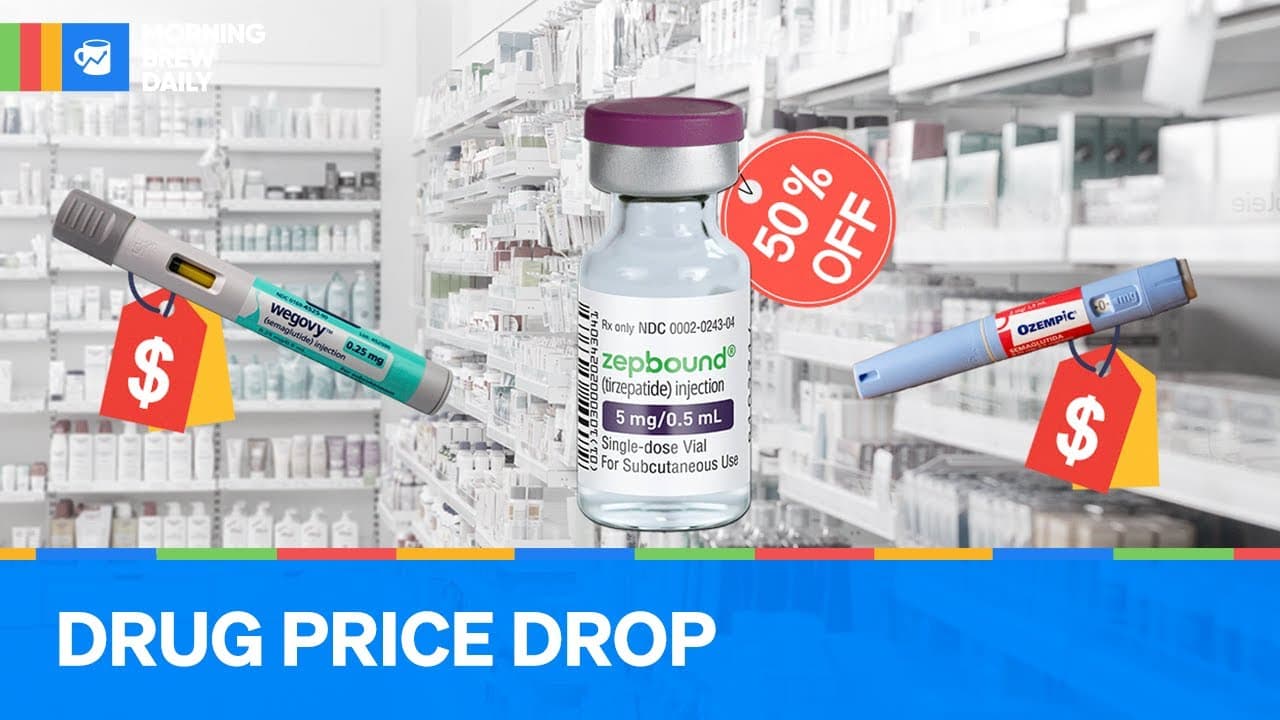
Eli Lilly has introduced a lower-priced version of its weight-loss drug, Zepbound, aiming to increase accessibility and challenge competitors. The new pricing strategy is enabled by a different delivery method, using vials instead of auto-injector pens, which helps reduce costs. This move is expected to shake up the market and pressure other companies to adjust their pricing.
Transcript
Good Morning Brew Daily Show. I'm Neal Freyman. And I'm Toby Howell. Today Mark Zuckerberg accused the government of censoring Facebook posts about Covid. What's behind this surprise admission then? The Kelsey brothers are the latest podcast to land themselves a mega-deal as a yapping. A new microphone continues to be a very viable career path. It'... Read More
Key Insights
- Eli Lilly introduced a cheaper version of its weight-loss drug, Zepbound, to increase market accessibility.
- The new Zepbound version is priced at $399 per month, significantly less than competitors like Novo Nordisk's products.
- This price reduction is possible due to a change in the drug's delivery method, shifting from pens to vials.
- The move aims to undercut competitors and address competition from generic knockoffs.
- Eli Lilly's strategy targets increasing its market share amid a shortage of weight-loss drugs.
- The lower price applies only to the smallest two doses of Zepbound, which may not be effective for all users.
- Clinical trials indicate that lower doses may not yield desired weight-loss results for one-third of patients.
- Eli Lilly's stock has surged, reflecting investor confidence in its market strategy.
Install to Summarize YouTube Videos and Get Transcripts
Explore YouTube Video Summarizer or Get YouTube Transcript Extractor
Questions & Answers
Q: How does Eli Lilly's new Zepbound version compare to competitors?
Eli Lilly's new version of Zepbound is priced at $399 per month, which is significantly lower compared to competitors like Novo Nordisk, whose products are priced around $1,000 per month. This price reduction is made possible by changing the drug's delivery method from auto-injector pens to vials, enabling cost savings and increased production capacity.
Q: What is the impact of Eli Lilly's pricing strategy on the weight-loss drug market?
Eli Lilly's pricing strategy is expected to significantly impact the weight-loss drug market by increasing accessibility and putting pressure on competitors to lower their prices. By offering a more affordable option, Eli Lilly aims to expand its market share and counter the competition from generic knockoffs, potentially leading to a more competitive pricing landscape in the industry.
Q: Why is Eli Lilly able to offer Zepbound at a lower price?
Eli Lilly can offer Zepbound at a lower price due to a change in the drug's delivery method. Instead of using auto-injector pens, the new version uses vials, which are less costly to produce and allow for increased manufacturing capacity. This innovation enables Eli Lilly to reduce costs and pass the savings onto consumers, making the drug more accessible.
Q: What are the limitations of the new Zepbound version?
The new Zepbound version's limitations include its applicability only to the smallest two doses, which may not be effective for all users. Clinical trials have shown that about one-third of patients may not achieve the desired weight-loss results at these lower doses. Consequently, the reduced price may not benefit all patients seeking significant weight-loss outcomes.
Q: How does the new delivery method of Zepbound work?
The new delivery method for Zepbound involves using vials instead of auto-injector pens. Patients draw the medication into a syringe and administer it themselves. This change allows Eli Lilly to produce the drug more efficiently, reducing costs and increasing availability, which supports the company's strategy to offer a more affordable weight-loss solution.
Q: What challenges does Eli Lilly face with the new Zepbound pricing?
Despite the lower price, Eli Lilly faces challenges such as ensuring the new delivery method's acceptance among patients and healthcare providers. Additionally, the effectiveness of lower doses may not meet all patients' needs, potentially limiting the drug's appeal. The company must also navigate competitive responses from other pharmaceutical companies in the market.
Q: How might competitors respond to Eli Lilly's pricing strategy?
Competitors may respond to Eli Lilly's pricing strategy by reevaluating their pricing structures to remain competitive. This could involve lowering prices, introducing new products, or enhancing existing offerings to attract cost-conscious consumers. The move may trigger a broader industry shift towards more competitive pricing and increased focus on affordability and accessibility.
Q: What are the broader implications of Eli Lilly's market strategy?
Eli Lilly's market strategy could lead to broader implications such as increased competition in the weight-loss drug market and potential shifts in industry pricing dynamics. By setting a precedent for affordability, Eli Lilly may influence other companies to adopt similar strategies, ultimately benefiting consumers with more accessible and cost-effective treatment options.
Summary & Key Takeaways
-
Eli Lilly's introduction of a cheaper Zepbound aims to increase accessibility and challenge competitors by offering a more affordable weight-loss drug. The lower price is achieved through a new delivery method, using vials instead of pens, allowing for cost reductions. This strategic move is expected to disrupt the market by pressuring competitors to lower their prices.
-
The pharmaceutical industry is witnessing a power play as Eli Lilly leverages its abundant active ingredient supply to offer a cost-effective weight-loss solution. This initiative is particularly aimed at countering the influx of generic knockoffs and maintaining its competitive edge in a market facing drug shortages.
-
Despite the price cut, Zepbound's new version may not be suitable for all users, as lower doses might not provide the expected weight-loss results for some patients. The move, however, indicates a significant shift towards making weight-loss drugs more affordable and accessible, potentially reshaping the industry's pricing dynamics.
Read in Other Languages (beta)
Share This Summary 📚
Summarize YouTube Videos and Get Video Transcripts with 1-Click
Try YouTube Summary with ChatGPT & Claude or YouTube Transcript Generator
Explore More Summaries from Morning Brew Daily 📚




Summarize YouTube Videos and Get Video Transcripts with 1-Click
Try YouTube Summary with ChatGPT & Claude or YouTube Transcript Generator