Refactoring and decoupling some react code (dry, kiss, yagni, wet)
TL;DR
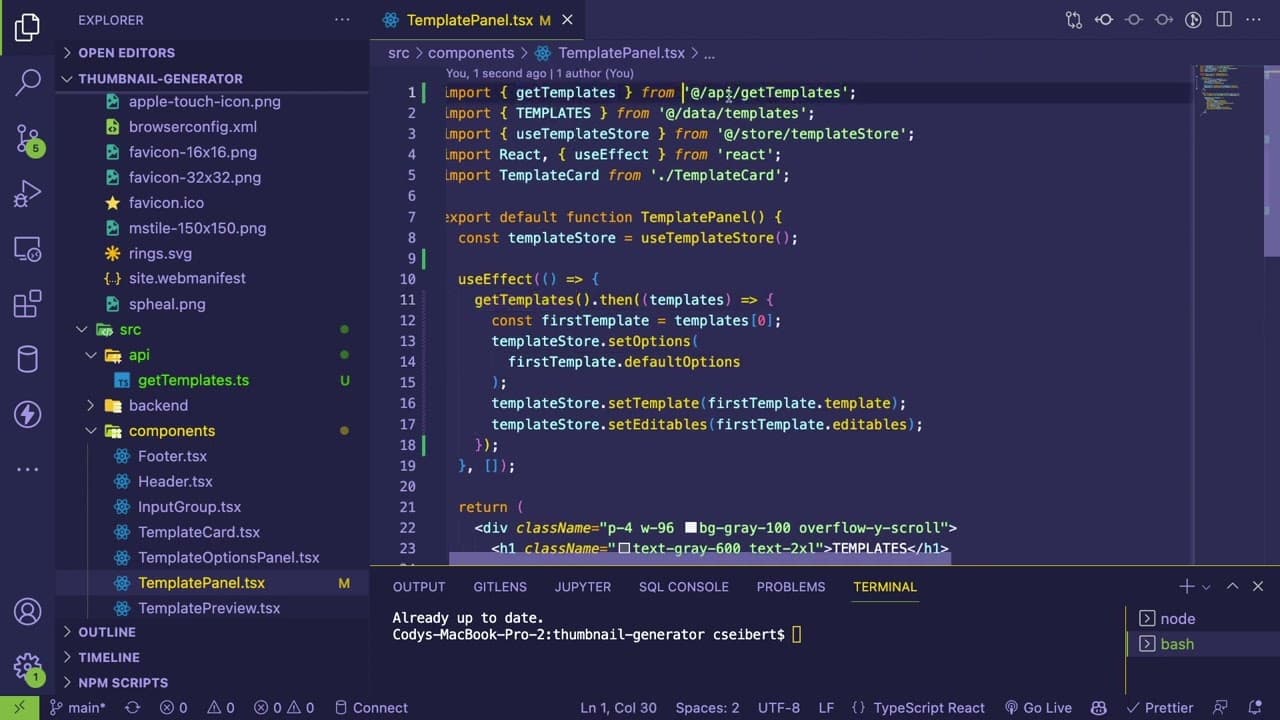
Refactoring improves code manageability in a Next.js application by separating data from components.
Transcript
all right how is it going everyone so i want to kind of show you a quick little example of refactoring some code um i made a video previously on like refactoring some react code and it seems like it's pretty popular so i want to kind of follow with the same approach so i have an application here that's using next.js and it split up the different pa... Read More
Key Insights
- 👨💻 Refactoring helps streamline complex code into smaller, manageable components, enhancing readability.
- 🥺 Starting with simple solutions can lead to better problem-solving strategies in software development.
- 🦻 Separating concerns is a foundational principle in coding that aids in managing large codebases.
- 👨💻 Using clear naming conventions for constants and variables is essential in maintaining code clarity.
- 🔁 Employing strategies like DRY (Don't Repeat Yourself) helps reduce redundancy, while being cautious of premature optimization.
- 🔠 Establishing an API layer can facilitate easier data manipulation and integration in the future.
- 🤩 The balance between simplicity and structure is key; simpler code should be prioritized until a better solution is required.
Install to Summarize YouTube Videos and Get Transcripts
Explore YouTube Video Summarizer or Get YouTube Transcript Extractor
Questions & Answers
Q: Why is refactoring important when coding?
Refactoring is crucial as it enhances code readability and maintainability. It allows developers to simplify code structures, separate concerns, and improve data management. Regular refactoring can prevent a codebase from becoming overly complicated, facilitating future updates and feature enhancements.
Q: What does the acronym YAGNI stand for, and why is it relevant?
YAGNI stands for "You Aren't Gonna Need It." It suggests that developers should avoid adding unnecessary features or complexity during the development process. This philosophy helps keep the codebase simple and focused, eliminating the risks associated with over-engineering.
Q: How can one approach refactoring in an application?
One effective approach to refactoring is to start by identifying areas in the codebase that are becoming unwieldy or difficult to manage. Gradually separate concerns by moving data structures or logic into different files, ensuring each component has a single responsibility, making the overall code easier to navigate and modify.
Q: What is the purpose of separating the template data from the component?
Separating template data from the component serves to decouple the user interface from the underlying data structure. This abstraction allows for easier updates and changes in the data source, such as pulling templates from an API, without altering the component's core logic.
Summary & Key Takeaways
-
The video demonstrates a refactoring process for a Next.js application, focusing on separating hard-coded templates into manageable files to enhance code clarity and maintainability.
-
The presenter emphasizes starting with the simplest code solution, gradually evolving it into a more structured format as complexity increases to avoid an unmanageable codebase.
-
Key principles discussed include separation of concerns, working towards cleaner code by decoupling components from hard-coded data, and adopting best practices such as YAGNI and DRY.
Read in Other Languages (beta)
Share This Summary 📚
Summarize YouTube Videos and Get Video Transcripts with 1-Click
Try YouTube Summary with ChatGPT & Claude or YouTube Transcript Generator
Explore More Summaries from Web Dev Cody 📚


Summarize YouTube Videos and Get Video Transcripts with 1-Click
Try YouTube Summary with ChatGPT & Claude or YouTube Transcript Generator