Why Did Sudan's Leaders Turn Against Each Other?
TL;DR
Sudan's transition to democracy was disrupted by the rivalry between military leaders Abdel Fattah al-Burhan and Mohamed Hamdan Dagalo (Hemeti). Initially allies in ousting dictator Omar al-Bashir, their power struggle has led to widespread violence and undermined hopes for democracy. The conflict has caused significant civilian casualties and displacement, with international efforts to mediate proving ineffective.
Transcript
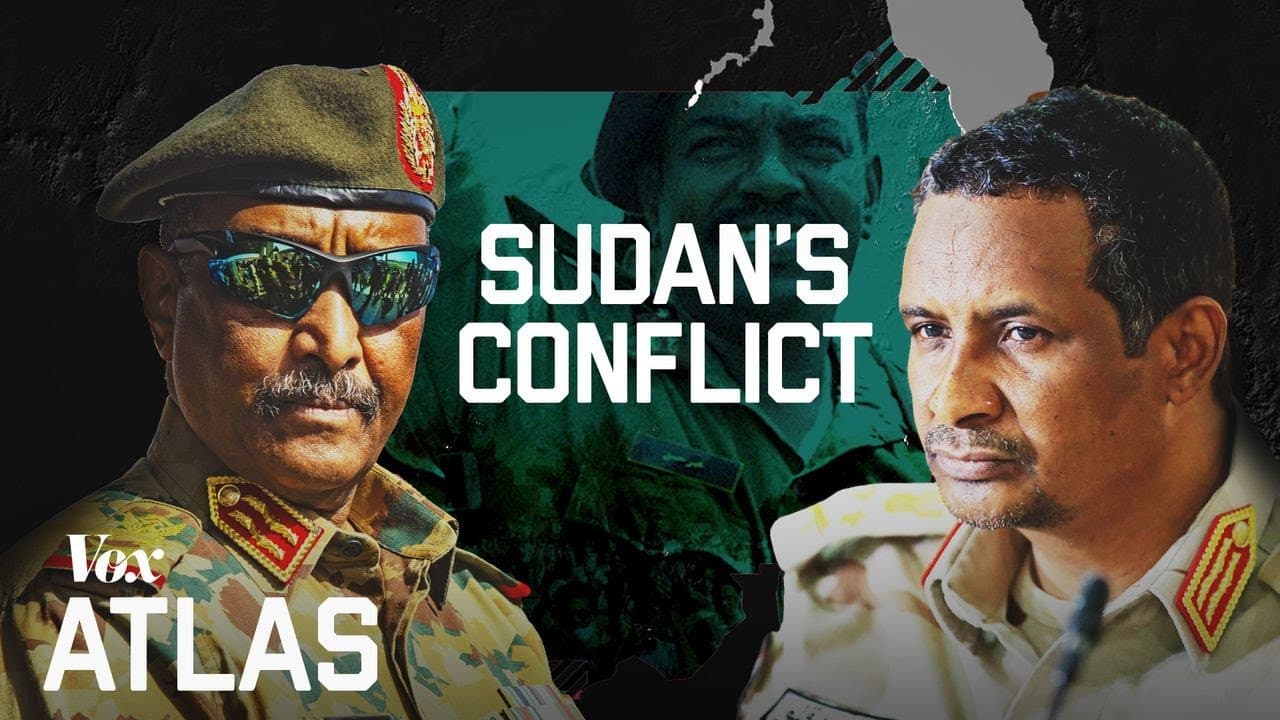
On December 19th, 2018... a revolution started to spread throughout Sudan. After decades of living under President Omar Bashir’s brutal military regime... civilians pushed back. They wanted a democracy in their country. A few months later, this man and this man helped take down Bashir in a coup... and then promised protesters the future they h... Read More
Key Insights
- Sudan's revolution began in December 2018 due to economic crises and demands for democracy.
- Omar al-Bashir maintained power through a strategy called coup-proofing, using multiple security forces.
- The Sudanese Armed Forces (SAF) and Rapid Support Forces (RSF) overthrew Bashir in April 2019.
- Abdel Fattah al-Burhan and Mohamed Hamdan Dagalo (Hemeti) assumed control post-coup, promising democracy.
- Tensions between Burhan and Hemeti arose over integrating RSF into the national army.
- The conflict between Burhan and Hemeti has resulted in civilian casualties and displacement.
- International mediation efforts have failed to resolve the leadership conflict in Sudan.
- The power struggle has derailed Sudan's hopes for a democratic transition.
Install to Summarize YouTube Videos and Get Transcripts
Explore YouTube Video Summarizer or Get YouTube Transcript Extractor
Questions & Answers
Q: How did Sudan's revolution begin?
Sudan's revolution began on December 19, 2018, amid an economic crisis that led to widespread protests across the country. These protests were driven by demands for democracy and the removal of long-time dictator Omar al-Bashir. The movement quickly gained momentum, eventually reaching the capital, Khartoum, and posing a significant challenge to Bashir's regime.
Q: What was Omar al-Bashir's strategy for maintaining power?
Omar al-Bashir employed a strategy known as coup-proofing to maintain power, which involved surrounding himself with multiple security forces to prevent any single group from overthrowing him. He relied heavily on the Sudanese Armed Forces (SAF) and the Rapid Support Forces (RSF), granting them significant resources and autonomy to ensure their loyalty and suppress opposition.
Q: Who are Abdel Fattah al-Burhan and Mohamed Hamdan Dagalo?
Abdel Fattah al-Burhan and Mohamed Hamdan Dagalo, also known as Hemeti, are Sudanese military leaders who played key roles in the overthrow of Omar al-Bashir in 2019. Burhan is a senior figure in the Sudanese Armed Forces, while Hemeti leads the Rapid Support Forces. Initially allies, their rivalry has since escalated into a violent power struggle.
Q: What caused the conflict between Burhan and Hemeti?
The conflict between Burhan and Hemeti arose from disagreements over the integration of the Rapid Support Forces (RSF) into Sudan's national army. Burhan wanted this process completed in two years, while Hemeti proposed a ten-year timeline, fearing a loss of power. This disagreement led to a power struggle, resulting in widespread violence and instability.
Q: How has the conflict affected Sudanese civilians?
The conflict between Burhan and Hemeti has had devastating effects on Sudanese civilians, resulting in significant casualties and displacement. The fighting has spread across the country, with both leaders deploying armed forces that have caused substantial harm to the population. Ceasefires have repeatedly failed, leaving civilians caught in the crossfire and facing dire humanitarian conditions.
Q: What role has the international community played in Sudan's conflict?
The international community, including the United States, United Kingdom, UAE, and Saudi Arabia, has attempted to mediate Sudan's conflict by pressuring the military leaders and protesters to reach power-sharing agreements. Despite these efforts, the agreements have not been fully implemented, and the power struggle between Burhan and Hemeti continues, undermining hopes for a peaceful resolution.
Q: What was the outcome of the power-sharing agreement in Sudan?
The power-sharing agreement in Sudan, signed in December 2020, aimed to establish a civilian-led transitional government by April 2023. However, disagreements between Burhan and Hemeti over the integration of the RSF into the national army stalled progress. The conflict between the two leaders has persisted, preventing the successful implementation of the agreement and prolonging Sudan's political instability.
Q: Why do Sudanese protesters feel betrayed?
Sudanese protesters feel betrayed because the promises of a democratic transition following Omar al-Bashir's overthrow have not been fulfilled. The power struggle between Burhan and Hemeti has derailed the revolution's goals, leading to violence and instability. Additionally, the international community's failure to effectively mediate the conflict has left protesters disillusioned with both their leaders and external allies.
Summary & Key Takeaways
-
Sudan's revolution began in 2018, driven by economic hardship and demands for democracy. The overthrow of Omar al-Bashir in 2019 by the SAF and RSF brought hope but skepticism about the new military leaders. Abdel Fattah al-Burhan and Mohamed Hamdan Dagalo (Hemeti) took control, promising democratic transition but ultimately turning against each other.
-
The rivalry between Burhan and Hemeti has led to widespread violence, particularly affecting civilians. Their disagreement over integrating the RSF into the national army escalated into conflict. Despite international mediation efforts, the power struggle persists, undermining Sudan's democratic aspirations.
-
The ongoing conflict has caused significant civilian casualties and displacement, with no resolution in sight. The international community's attempts to mediate have been ineffective, leaving Sudan's future uncertain. The once hopeful revolution has been interrupted by the leaders' power struggle, leaving protesters feeling betrayed.
Read in Other Languages (beta)
Share This Summary 📚
Summarize YouTube Videos and Get Video Transcripts with 1-Click
Try YouTube Summary with ChatGPT & Claude or YouTube Transcript Generator
Explore More Summaries from Vox 📚



Summarize YouTube Videos and Get Video Transcripts with 1-Click
Try YouTube Summary with ChatGPT & Claude or YouTube Transcript Generator