Financial crisis in Thailand caused by speculative attack | Macroeconomics | Khan Academy
TL;DR
Speculative attacks on currency can lead to a banking crisis, as seen in the case of Thailand in the 1990s.
Transcript
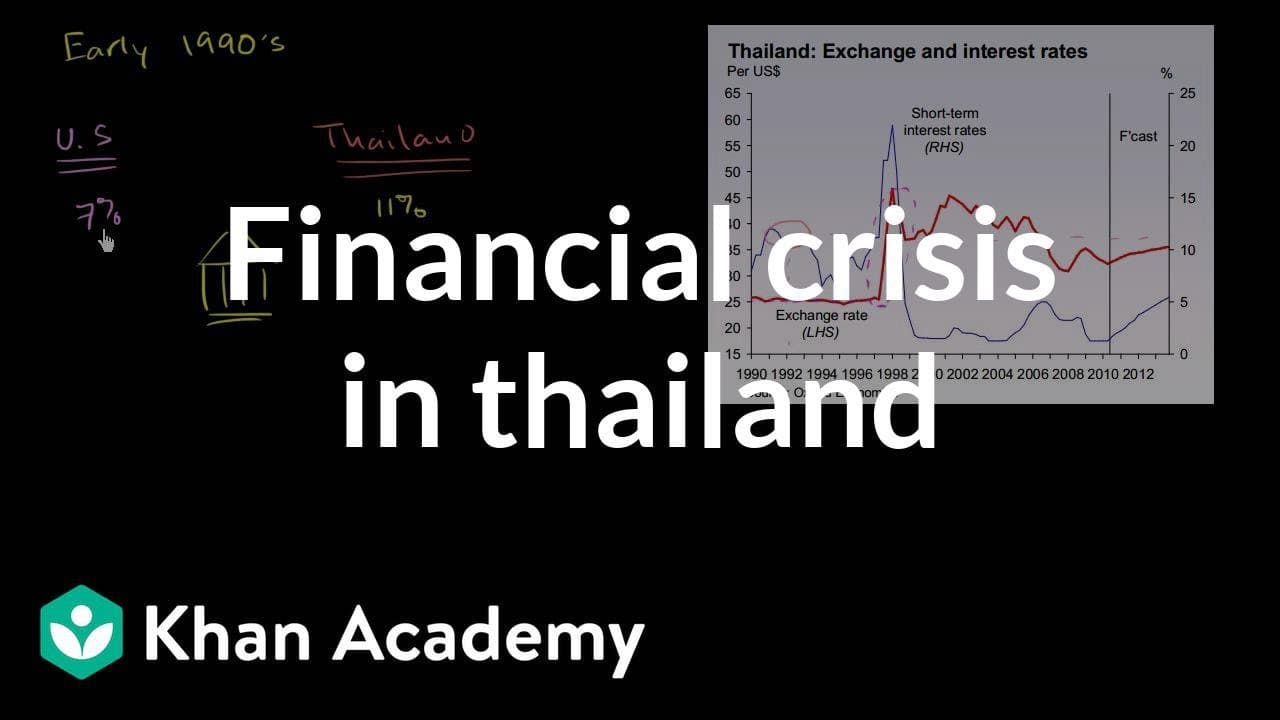
What I want to do in this video is show you that some of the things that we've been talking about in the last few videos actually do happen. In particular, talk about how one of these speculative attacks on accuracy can turn into a banking crisis. So, this right over here, this is a chart from Oxford economics and it's a chart of two things of Thai... Read More
Key Insights
- 🥺 Speculative attacks on currency can lead to a banking crisis, as seen in Thailand in the 1990s.
- ☠️ High interest rates attract foreign investors and encourage borrowing and lending in foreign currency.
- 🥺 When a speculative attack leads to a devaluation, banks that borrowed in foreign currency face significant losses.
Install to Summarize YouTube Videos and Get Transcripts
Explore YouTube Video Summarizer or Get YouTube Transcript Extractor
Questions & Answers
Q: How did Thailand's exchange rate change in 1997?
In 1997, Thailand experienced a devaluation of its currency due to a speculative attack, causing the exchange rate to shift from being fixed to floating.
Q: Why did foreign investors borrow from abroad and invest in Thailand?
Foreign investors were attracted to Thailand's high interest rates, creating demand for converting their currency into the Thai baht and encouraging Thai banks to borrow abroad and invest in the country.
Q: How did the speculative attack affect Thai banks?
The devaluation caused by the attack meant that Thai banks who had borrowed in foreign currency and lent in Thailand faced significant losses, leading to the collapse of the entire banking sector.
Q: What were the consequences of the banking crisis in Thailand?
The banking crisis not only resulted in expensive imports but also the collapse of the entire Thai financial system, causing widespread economic turmoil.
Summary & Key Takeaways
-
The chart shows Thailand's exchange rate being relatively fixed to the US dollar until 1997 when a devaluation occurred due to a speculative attack on the currency.
-
High interest rates in Thailand attracted foreign investors, leading to Thai banks borrowing abroad and investing in the country.
-
When the speculative attack caused a devaluation, Thai banks faced significant losses and the entire banking sector collapsed.
Read in Other Languages (beta)
Share This Summary 📚
Summarize YouTube Videos and Get Video Transcripts with 1-Click
Try YouTube Summary with ChatGPT & Claude or YouTube Transcript Generator
Explore More Summaries from Khan Academy 📚



Summarize YouTube Videos and Get Video Transcripts with 1-Click
Try YouTube Summary with ChatGPT & Claude or YouTube Transcript Generator