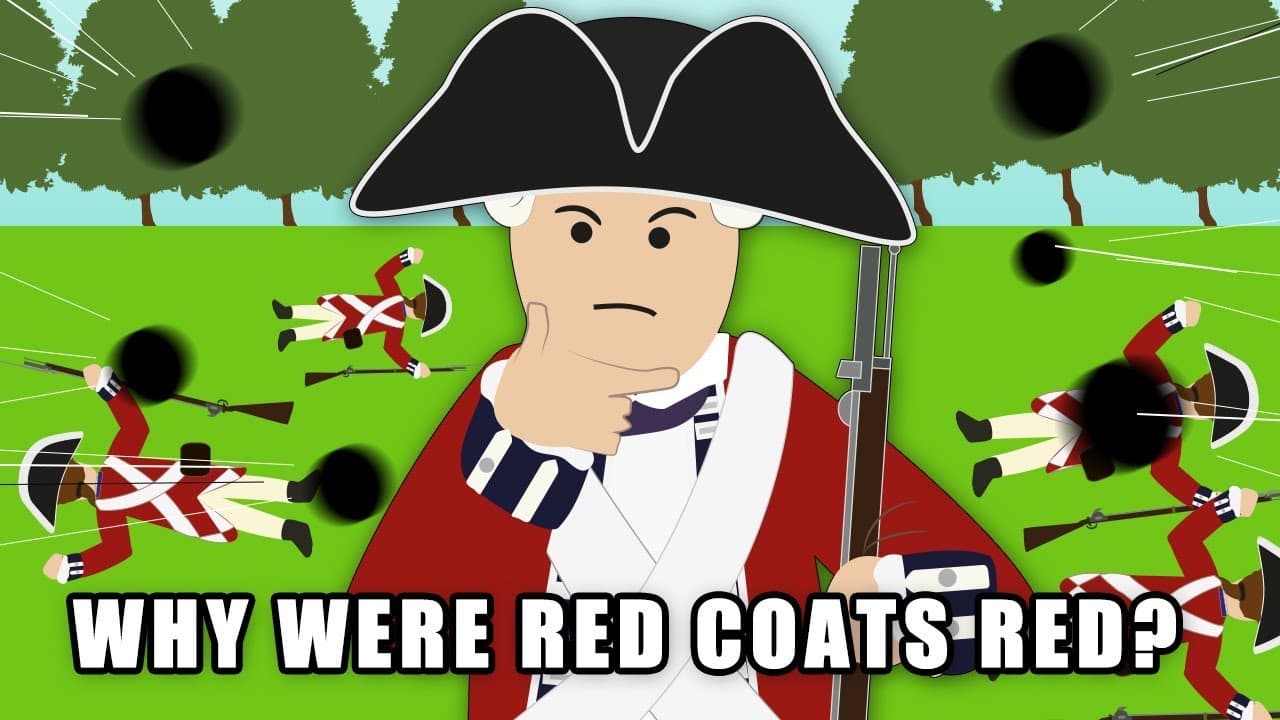
Why were Red Coats red?
TL;DR
The British Army wore red uniforms for visibility on the battlefield and due to the availability and affordability of red dye.
Transcript
This video is sponsored by Wix. Go to wix.com/go/simplehistory to create a website now. Why were red coats red? Everyone knows that the British Army wore red uniforms for a long time in its history. But do you know why red was the color of choice? The red tunic conjures up images of colonial militia Easily picking off British Redcoat targets during... Read More
Key Insights
- 😩 The British Army wore red uniforms for visibility and to easily identify friend from foe during musket fire.
- 😪 Red dye was chosen for its availability and affordability, making it the color of choice.
- 😪 The theory that red uniforms were chosen to hide bloodstains is a myth with no evidence to support it.
- 😩 The tradition of wearing red uniforms continued even after the introduction of more drab camouflage colors.
- 🇮🇴 The British Army introduced a khaki uniform in India in 1848, signaling the shift towards more practical and camouflage colors.
- 😪 The last time red uniforms were used on the battlefield was at the Battle of Guinness in the Sudan in 1885.
- 😒 The British Army's adoption of more drab colors aligned with the changing nature of warfare and the use of rifles.
Install to Summarize YouTube Videos and Get Transcripts
Explore YouTube Video Summarizer or Get YouTube Transcript Extractor
Questions & Answers
Q: Why did the British Army wear red uniforms?
The British Army wore red uniforms for visibility on the battlefield, as it made it easier to identify friend from foe during musket fire. Additionally, red dye was readily available and affordable, making it the color of choice.
Q: Did red uniforms hide bloodstains?
The theory that red uniforms were chosen to hide bloodstains and maintain morale is a myth. There is no evidence to suggest that this was the reason for the color choice.
Q: When did the British Army start wearing red uniforms?
The tradition of wearing red uniforms dates back to the English Civil War in 1645 when the parliamentarians formed the New Model Army. Red dye was chosen as it was the cheapest option available.
Q: When did the British Army switch to more drab camouflage colors?
The British Army introduced a khaki uniform in India in 1848, signaling the shift towards more drab and camouflage colors. This was due to the evolving battlefield and the replacement of muskets with rifles.
Summary & Key Takeaways
-
The British Army wore red uniforms for visibility on the battlefield, making it easier to distinguish friend from foe during musket fire.
-
Red was chosen as the color of choice due to the availability and affordability of red dye, as well as its ability to hide bloodstains.
-
The tradition of wearing red uniforms continued even after the introduction of more drab camouflage colors.
Read in Other Languages (beta)
Share This Summary 📚
Summarize YouTube Videos and Get Video Transcripts with 1-Click
Try YouTube Summary with ChatGPT & Claude or YouTube Transcript Generator
Explore More Summaries from Simple History 📚





Summarize YouTube Videos and Get Video Transcripts with 1-Click
Try YouTube Summary with ChatGPT & Claude or YouTube Transcript Generator