How "Spider-Verse" forced animation to evolve
TL;DR
Spider-Verse redefined animation with non-photorealistic rendering.
Transcript
Pixar...the studio behind this, and this, and this has mastered a sort of photo-surrealistic style where there’s a sense of cartoony-ness but most things look and feel like they could exist in the real world. Like these fibers on Mr. Incredible’s shirt. And this tree stump and grass from this scene from Up. Or the glimmering, out-of-focus bokeh beh... Read More
Key Insights
- Pixar's realistic animation style dominated the industry, setting a standard that many studios tried to replicate for commercial success.
- Non-photorealistic rendering offers a new direction in animation, allowing for more artistic and creative freedom, as seen in 'Into the Spider-Verse'.
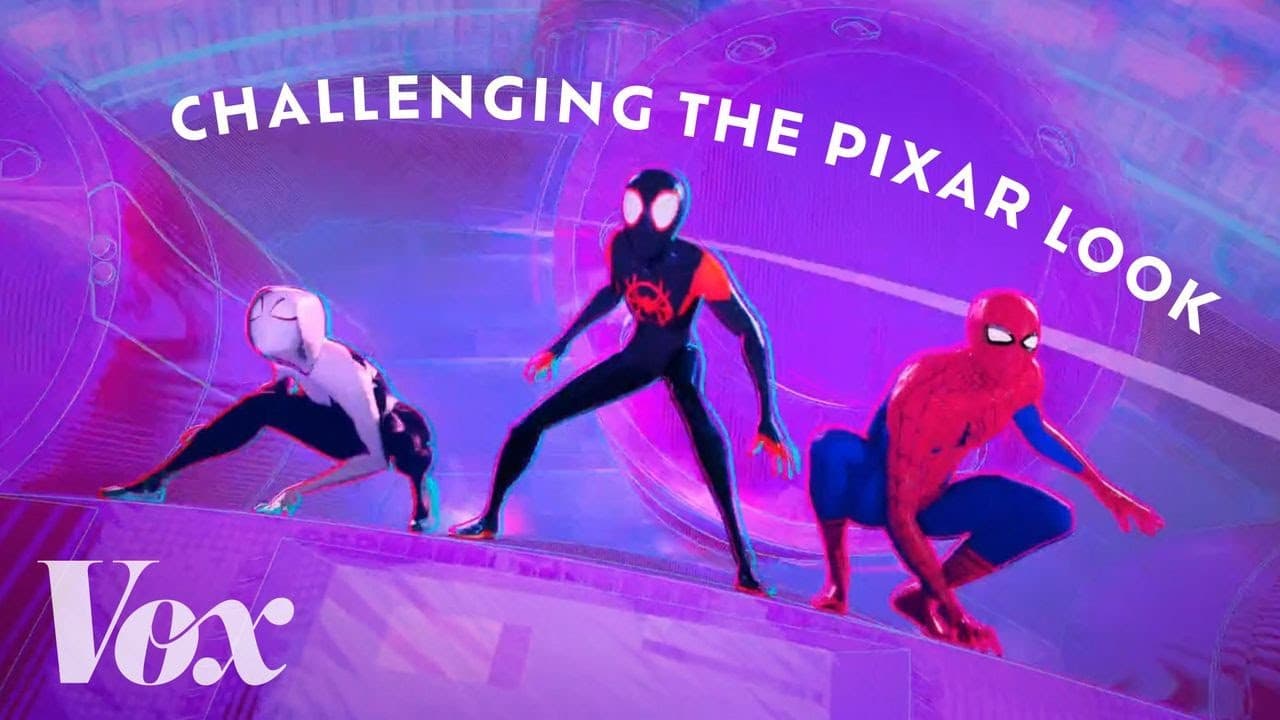
- 'Into the Spider-Verse' broke away from the traditional Pixar look, introducing a more stylized, comic-book-inspired visual style.
- The success of 'Into the Spider-Verse' demonstrated the commercial viability of non-photorealistic rendering, encouraging other studios to explore similar styles.
- Non-photorealistic rendering involves breaking traditional rendering rules, such as using custom data passes to achieve unique visual effects.
- The new trend in animation emphasizes texture, simplified shapes, and artistic elements, moving away from photorealism.
- 'Spider-Verse' inspired films like 'The Mitchells vs the Machines' and 'Puss in Boots' to adopt more painterly and graphic styles.
- The animation industry is now more open to experimentation, with studios planning more stylized projects in the coming years.
Install to Summarize YouTube Videos and Get Transcripts
Explore YouTube Video Summarizer or Get YouTube Transcript Extractor
Questions & Answers
Q: What was the dominant animation style before 'Into the Spider-Verse'?
Before 'Into the Spider-Verse', the dominant animation style was the realistic, physically-based rendering popularized by Pixar. This style aimed to replicate real-world physics and details, creating a photo-surrealistic look that many studios sought to emulate due to its commercial success and high-quality appearance.
Q: How did 'Into the Spider-Verse' differ in its animation approach?
'Into the Spider-Verse' differed in its animation approach by using non-photorealistic rendering. This technique broke away from the traditional realistic rendering methods, instead opting for a stylized, comic-book-inspired visual style. The film incorporated graphic bursts, texture, and unique lighting effects, creating a distinct look that set it apart from other CGI animated films.
Q: What impact did 'Into the Spider-Verse' have on the animation industry?
'Into the Spider-Verse' had a significant impact on the animation industry by proving that non-photorealistic rendering could be commercially successful. Its unique style inspired other studios to explore more artistic and creative approaches, leading to a wave of stylized animated films. This shift encourages more experimentation and diversity in animation styles, moving away from the homogeneous look that previously dominated the industry.
Q: What are some examples of films influenced by 'Into the Spider-Verse'?
Films influenced by 'Into the Spider-Verse' include 'The Mitchells vs the Machines' and 'Puss in Boots'. These films adopted more painterly and graphic styles, moving away from photorealism. They incorporated elements like simplified shapes, artistic textures, and unique lighting effects, demonstrating the industry's shift towards more stylized and creative animation approaches.
Q: What is non-photorealistic rendering?
Non-photorealistic rendering is an animation technique that breaks away from traditional realistic rendering methods. It involves using custom data passes and unique visual effects to create stylized, artistic animations. This approach allows for greater creative freedom, enabling animators to explore different textures, shapes, and lighting effects that are not bound by real-world physics or details.
Q: Why did studios initially hesitate to adopt stylized animation?
Studios initially hesitated to adopt stylized animation due to the commercial success and reliability of the realistic, Pixar-inspired style. This approach was seen as a safe investment, as it consistently performed well at the box office. The fear of financial risk and the uncertainty of audience reception made studios reluctant to fully commit to a stylized look for feature-length films.
Q: How did 'Into the Spider-Verse' redefine visual goals for animation studios?
'Into the Spider-Verse' redefined visual goals for animation studios by showcasing the potential and success of non-photorealistic rendering. Its innovative style demonstrated that audiences appreciated and embraced unique, artistic visuals. This encouraged studios to reconsider their approach to animation, leading to a greater emphasis on creativity and experimentation in future projects.
Q: What are the benefits of non-photorealistic rendering in animation?
The benefits of non-photorealistic rendering in animation include increased creative freedom and the ability to explore diverse visual styles. This approach allows animators to break away from the constraints of realistic rendering, enabling them to incorporate artistic elements like texture, simplified shapes, and unique lighting effects. It opens up new possibilities for storytelling and artistic expression, making animated films more visually engaging and distinct.
Summary & Key Takeaways
-
Pixar's realistic animation style became the industry standard, with many studios striving to replicate it for box office success. However, this led to a homogeneous look across CGI animated films. 'Into the Spider-Verse' broke this mold by using non-photorealistic rendering, introducing a more stylized, comic-book-inspired visual style.
-
'Into the Spider-Verse' utilized non-photorealistic rendering, which involves breaking traditional rendering rules to create unique visual effects. This approach allowed for more creative freedom and artistic expression, moving away from the realistic, physically-based rendering that dominated the industry.
-
The success of 'Into the Spider-Verse' demonstrated the commercial viability of non-photorealistic rendering, inspiring other studios to explore similar styles. Films like 'The Mitchells vs the Machines' and 'Puss in Boots' adopted more painterly and graphic styles, signaling a new era of experimentation and creativity in animation.
Read in Other Languages (beta)
Share This Summary 📚
Summarize YouTube Videos and Get Video Transcripts with 1-Click
Try YouTube Summary with ChatGPT & Claude or YouTube Transcript Generator
Explore More Summaries from Vox 📚

Summarize YouTube Videos and Get Video Transcripts with 1-Click
Try YouTube Summary with ChatGPT & Claude or YouTube Transcript Generator