Contractionary Fiscal Policy | Macroeconomics
TL;DR
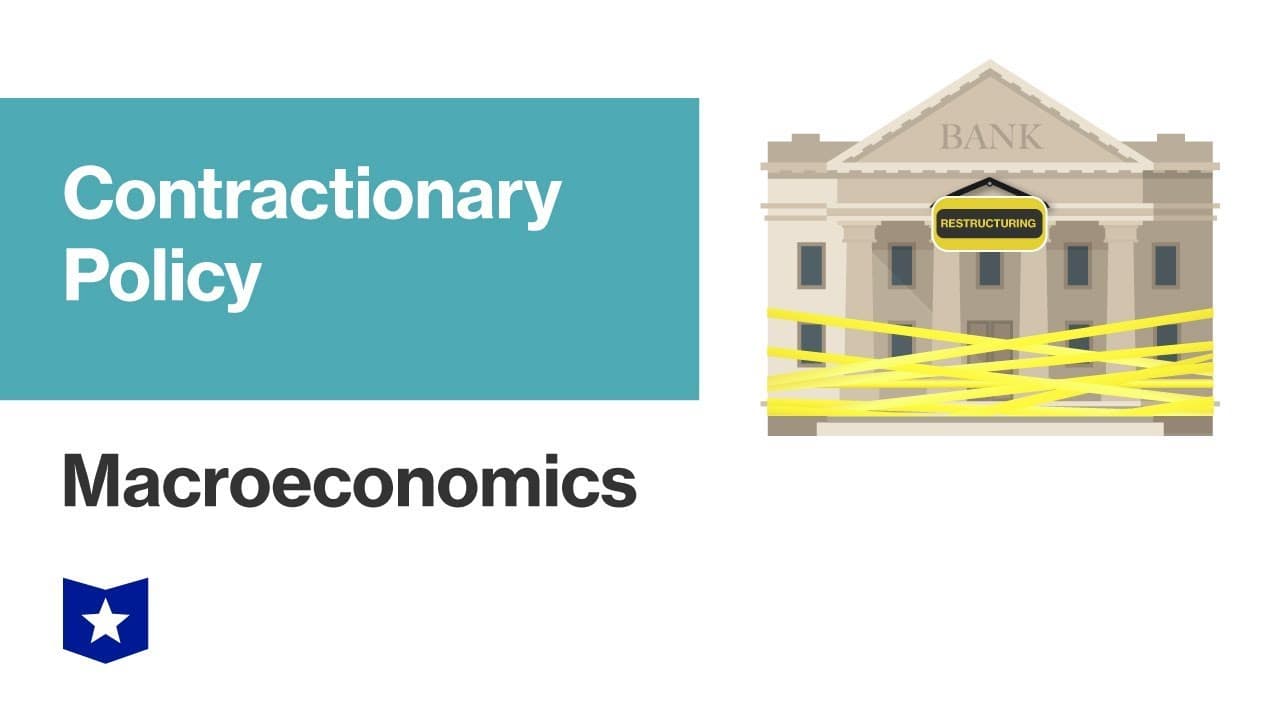
Governments use contractionary fiscal policy to slow economic growth and prevent inflation by reducing consumer spending through tax increases and government spending cuts.
Transcript
in order to slow the economy governments will pursue contractionary fiscal policy contractionary fiscal policy aims to reduce consumer spending and slow economic growth when aggregate demand has increased beyond full employment GDP meaning there are more jobs than people to work an upward pressure is placed on prices and wages this upward pressure ... Read More
Key Insights
- 💇 Contractionary fiscal policy aims to slow economic growth and combat inflation by reducing consumer spending through tax increases and government spending cuts.
- 😮 Inflationary gaps occur when the economy is beyond full employment, leading to rising prices and wages.
- 🥺 Unsustainable rapid growth can lead to economic crises and inflationary periods.
- ☠️ A low unemployment rate below the natural rate can cause labor shortages and push wages higher, leading to inflation.
- 💇 Contractionary policies are generally unpopular due to tax increases and cuts to government spending.
- 💇 Government measures to reduce aggregate demand include tempering consumer demand through social welfare cuts and tax increases.
- ☠️ Higher corporate tax rates limit business investment and expansion, affecting overall economic growth.
Install to Summarize YouTube Videos and Get Transcripts
Explore YouTube Video Summarizer or Get YouTube Transcript Extractor
Questions & Answers
Q: What is the purpose of contractionary fiscal policy?
Contractionary fiscal policy aims to slow economic growth and combat inflation by reducing consumer spending through tax increases and government spending cuts.
Q: When does an inflationary gap occur?
An inflationary gap occurs when the economy is beyond full employment, leading to upward pressure on prices and wages, causing inflation.
Q: Why is unsustainable growth a concern for economies?
Unsustainable growth can lead to economic crises when rapid growth suddenly stops, causing inflation, labor shortages, and challenges in placing skilled workers in jobs.
Q: How do contractionary fiscal policies impact consumer spending?
Contractionary fiscal policies can temper consumer demand by cutting social welfare spending, unemployment insurance, and government purchases, which reduce disposable income and discourage spending.
Summary & Key Takeaways
-
Contractionary fiscal policy is used by governments to slow economic growth and combat inflation caused by excess demand.
-
Inflationary gaps occur when the economy is beyond full employment, leading to rising prices and wages.
-
Implementing contractionary fiscal policies involves tax hikes and cuts to government spending to reduce aggregate demand.
Read in Other Languages (beta)
Share This Summary 📚
Summarize YouTube Videos and Get Video Transcripts with 1-Click
Try YouTube Summary with ChatGPT & Claude or YouTube Transcript Generator
Explore More Summaries from Course Hero 📚


Summarize YouTube Videos and Get Video Transcripts with 1-Click
Try YouTube Summary with ChatGPT & Claude or YouTube Transcript Generator