Why Do We Get Allergies?
TL;DR
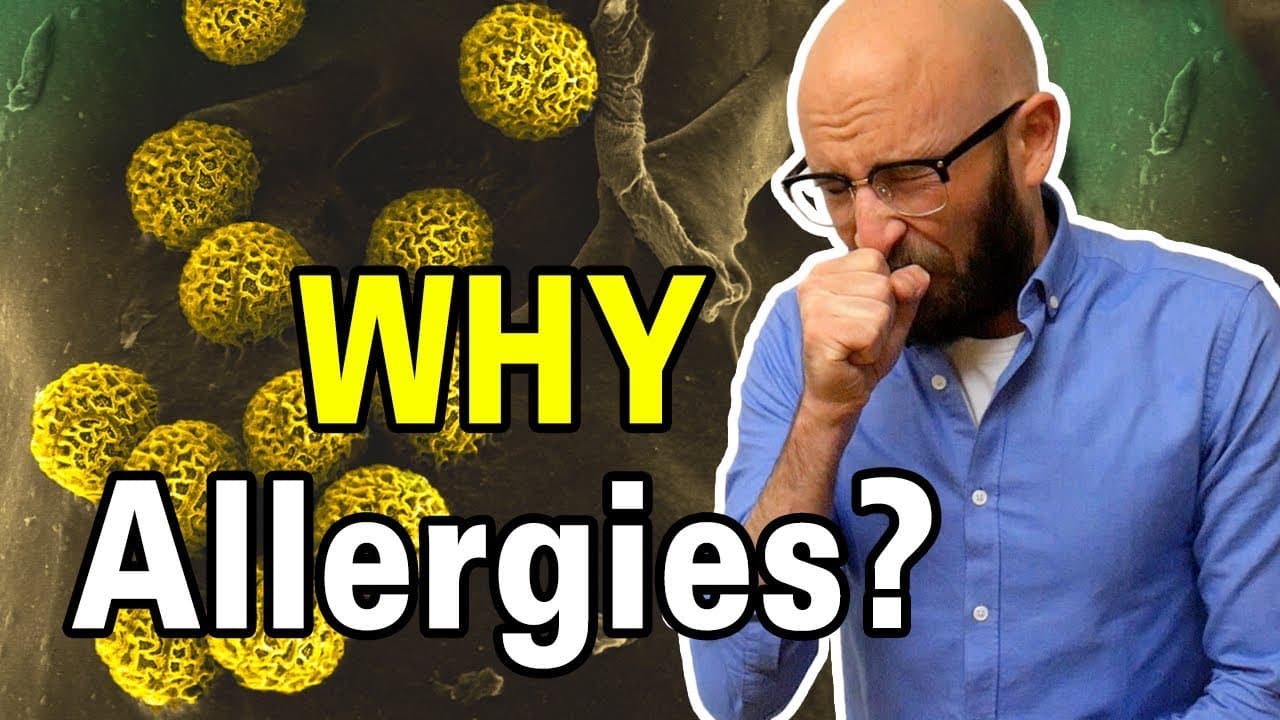
Allergies occur when our immune system reacts to seemingly harmless substances as if they were parasitic worms.
Transcript
It’s that time of year when tissue companies nationwide rejoice at the excessive mucus caused by allergies. If you’re one of the unlucky, you might ask yourself why we get them anyway? Why would our immune systems react to seemingly harmless things like pollens, dust mites, and the dander from cats and dogs? There are two proposed theories here; t... Read More
Key Insights
- 🛄 Allergies are the result of the immune system's response to potential allergens, aiming to expel them or kill them.
- 🖐️ IgE antibodies play a significant role in initiating allergy symptoms, such as histamine release and inflammation.
- 👋 The hygiene hypothesis suggests that the promotion of good hygiene may reduce exposure to pathogens, potentially affecting the immune system's ability to respond correctly.
- 💪 Parasitic worms may have influenced the development of allergies by triggering a strong immune system reaction.
- ☠️ The exact reasons for increased allergy rates are still debated, but genetics, environment, and changes in exposure to pathogens may all play a role.
- 🪱 Helminthic therapy, introducing parasitic worms to the body, is being explored as a potential treatment for certain allergies and immune disorders.
- 🍉 The long-term benefits and efficacy of helminthic therapy for allergies are still being studied.
Install to Summarize YouTube Videos and Get Transcripts
Explore YouTube Video Summarizer or Get YouTube Transcript Extractor
Questions & Answers
Q: Why does the immune system react to harmless things like pollen and dust mites?
The immune system's reaction to allergens is believed to be an evolutionary mechanism to expel parasitic worms, as well as a response to mast cell degranulation.
Q: Are allergies primarily caused by IgE antibodies?
While IgE antibodies are the main force behind allergic reactions, studies have shown that they are not strictly necessary to fight off parasites or other allergens.
Q: Can allergies be linked to the proteins on the surface of parasitic worms?
The proteins on parasitic worms are structurally similar to those found in other aspects of our lives, leading the immune system to react to allergens that resemble these proteins.
Q: Why do allergy rates continue to increase?
Allergy rates may be increasing due to a combination of genetics, environmental factors, exposure to synthetic chemicals, and the hygiene hypothesis, which suggests that a lack of exposure to pathogens may affect the immune system's development.
Summary & Key Takeaways
-
Allergies are caused by the immune system's response to potential allergens, either by attempting to expel them from the body or by killing them.
-
When an allergen attaches to a B cell, it becomes activated and multiplies, producing antibodies that attach to the invader and mark it for destruction.
-
IgE, an antibody, plays a significant role in starting a cascade of events leading to allergy symptoms, such as histamine release and inflammation.
Read in Other Languages (beta)
Share This Summary 📚
Summarize YouTube Videos and Get Video Transcripts with 1-Click
Try YouTube Summary with ChatGPT & Claude or YouTube Transcript Generator
Explore More Summaries from Today I Found Out 📚






Summarize YouTube Videos and Get Video Transcripts with 1-Click
Try YouTube Summary with ChatGPT & Claude or YouTube Transcript Generator