Conservation of Mechanical Energy: Example Problems
TL;DR
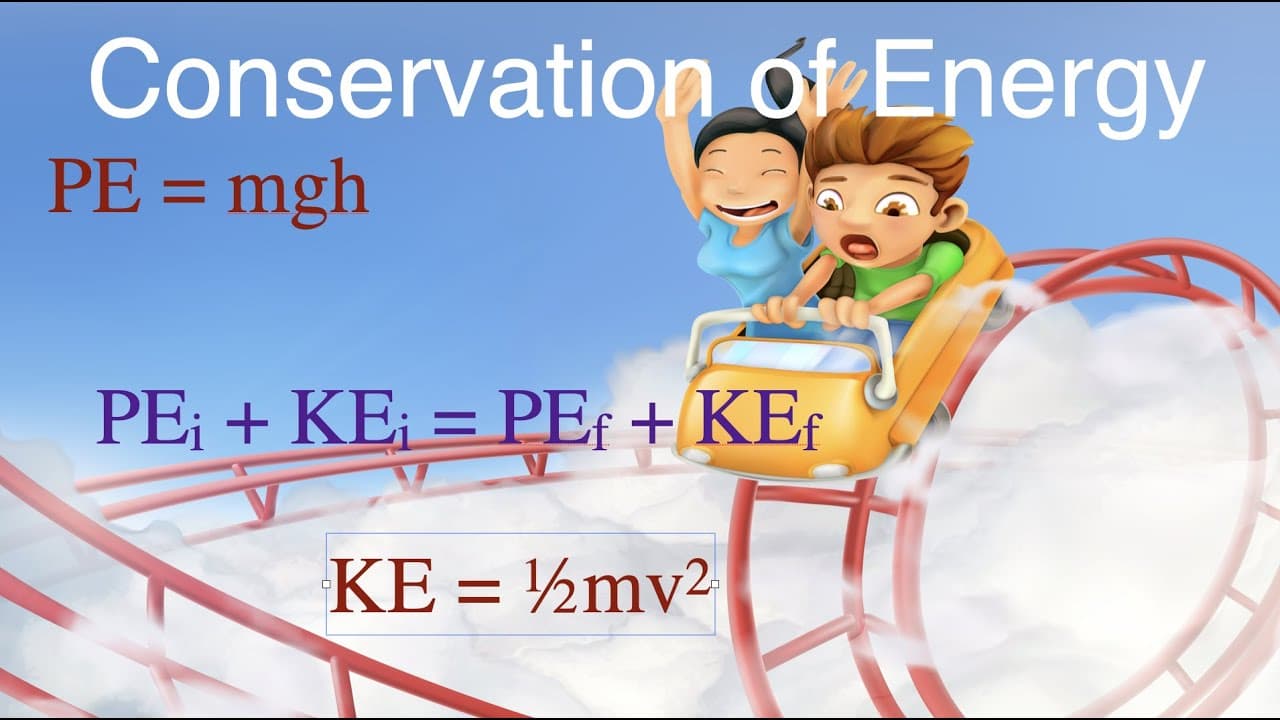
Detailed examples of conservation of energy calculations with potential, kinetic, and mechanical energy explained.
Transcript
in today's video i'm going to go over two separate example problems for calculating potential energy kinetic energy and total mechanical energy using conservation of energy now before we get started please don't forget to subscribe to my channel step by step science get all my excellent physics chemistry and math videos when i look at my youtube as... Read More
Key Insights
- ❓ Conservation of energy principle applied to potential and kinetic energy calculations.
- 🖐️ Height plays a crucial role in determining potential energy and its conversion to kinetic energy.
- 🦾 Friction's absence simplifies energy calculations, ensuring mechanical energy remains constant in ideal scenarios.
- 💆 Velocity calculations based on the relationship between kinetic energy, mass, and potential energy.
- 💁 Understanding how energy is transformed and transferred between potential and kinetic forms in various scenarios.
- 💱 Height changes indicate energy transformations from potential to kinetic energy, highlighting the concept of total energy conservation.
- 💁 Importance of considering all energy forms and components in conservation of energy problems.
Install to Summarize YouTube Videos and Get Transcripts
Explore YouTube Video Summarizer or Get YouTube Transcript Extractor
Questions & Answers
Q: What are the key components of conservation of energy in the provided examples?
The key components include potential energy, kinetic energy, mechanical energy, velocity calculations, and the concept of energy conservation throughout the systems.
Q: How does the height affect potential and kinetic energy in the examples?
The height determines the amount of potential energy present, which can then be converted into kinetic energy, as seen in the calculations at different points on the ramp and roller coaster.
Q: Why is it important to consider friction in energy conservation problems?
Friction can lead to energy loss in a system, complicating calculations and affecting the total mechanical energy, making it crucial to account for friction when analyzing the conservation of energy.
Q: How does the path affect the velocity of objects in these energy conservation examples?
The path chosen by the object does not affect the final velocity, as energy conservation ensures that potential energy is converted into kinetic energy, resulting in the same velocity regardless of the chosen route.
Summary & Key Takeaways
-
Examples of calculating potential, kinetic, and mechanical energy using conservation of energy.
-
Two problems analyzed: a ball rolling down a ramp and a roller coaster ride.
-
Emphasis on energy conservation, mechanical energy remaining constant, and energy transformation from potential to kinetic.
Read in Other Languages (beta)
Share This Summary 📚
Summarize YouTube Videos and Get Video Transcripts with 1-Click
Try YouTube Summary with ChatGPT & Claude or YouTube Transcript Generator
Explore More Summaries from Step by Step Science 📚

Summarize YouTube Videos and Get Video Transcripts with 1-Click
Try YouTube Summary with ChatGPT & Claude or YouTube Transcript Generator