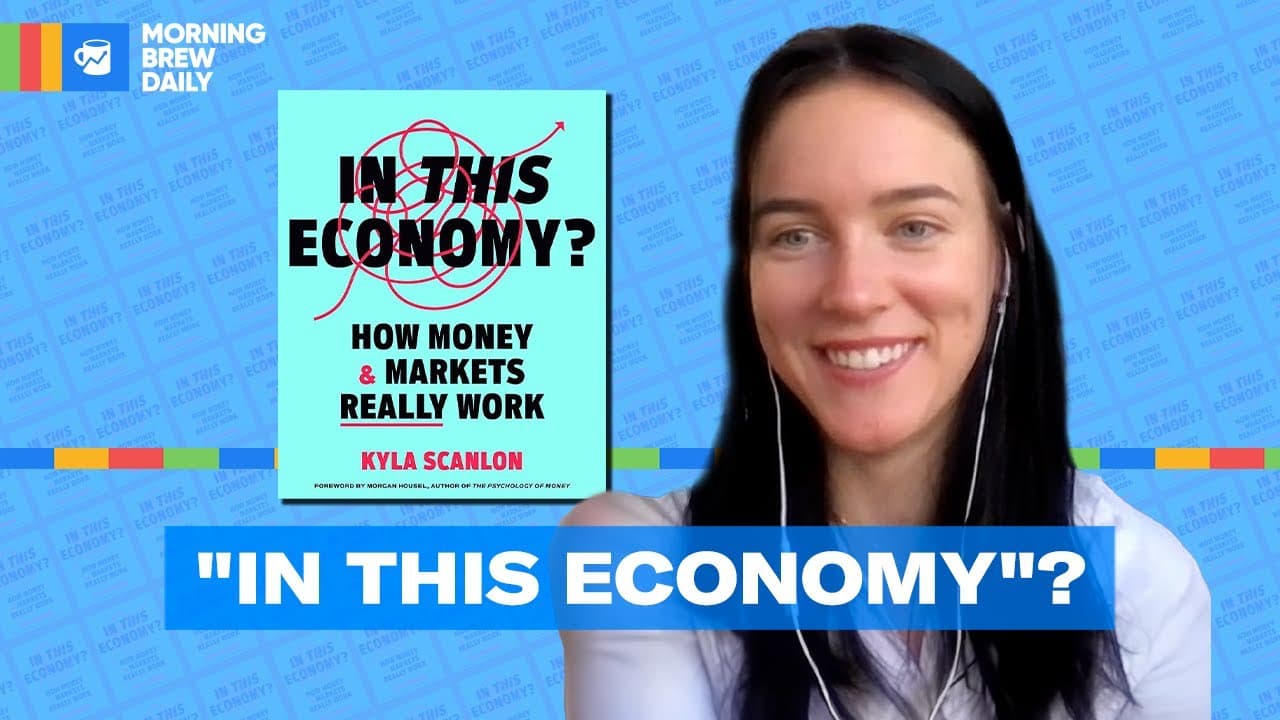
Kyla Scanlon on the US Economy, 'Vibecession', the Insurance Market
TL;DR
Kyla Scanlon discusses the impact of consumer sentiment on the economy.
Transcript
Good morning, brew daily show. I'm Neal Freyman, and I'm Toby Howell. Today, an interview with economics educator and content creator Kyla Scanlan. You'll hear about why vibes matter to the economy if AI is a bubble, and the wisdom of the YouTube commenters. It's Monday, September 2nd. Let's ride. Happy Labor Day, everyone! Hope you are somewhere w... Read More
Key Insights
- Kyla Scanlon emphasizes the importance of consumer sentiment, or 'vibes', in influencing economic outcomes, highlighting how emotional factors can drive market trends.
- She discusses the disconnect between consumer sentiment and economic data, suggesting that structural issues like affordability and negative media headlines contribute to this gap.
- Globalization and the internet have amplified the role of 'vibes' in the economy, as people are now exposed to a vast amount of information and stories from around the world.
- The stock market and the overall economy are interconnected but should not be viewed as direct indicators of each other's performance.
- Home insurance is a growing concern, with rising costs potentially leading to an economic crisis, as many people's wealth is tied up in their homes.
- Kyla argues that relying on housing as a primary asset is risky due to market volatility and suggests diversifying into other investment areas.
- She believes that fears about the de-dollarization of the global economy are exaggerated, as there is currently no viable alternative to the US dollar.
- Kyla sees potential 'bubble' tendencies in the AI sector due to the significant venture capital investments and the gap between spending and revenue.
Install to Summarize YouTube Videos and Get Transcripts
Explore YouTube Video Summarizer or Get YouTube Transcript Extractor
Questions & Answers
Q: What role do 'vibes' play in the economy?
According to Kyla Scanlon, 'vibes', or consumer sentiment, play a significant role in the economy by influencing how people feel about economic conditions. This sentiment can dictate market trends and prices, as emotions and perceptions often drive economic behavior. She argues that consumer sentiment is an underappreciated driver of the economy.
Q: Why is there a gap between consumer sentiment and economic data?
Kyla Scanlon suggests that the gap between consumer sentiment and economic data is due to structural issues like affordability, which are not reflected in economic metrics, and the negative tone of media headlines. These factors contribute to a disconnect where people may feel worse about the economy than the data suggests.
Q: How has globalization affected consumer sentiment?
Globalization has amplified the role of consumer sentiment by exposing people to a vast amount of information and stories from around the world. With the internet, individuals can access diverse perspectives and economic situations, which can influence their own perceptions and feelings about the economy, contributing to the 'vibes' that impact market trends.
Q: What concerns does Kyla have about the housing market?
Kyla Scanlon expresses concern about the rising costs of home insurance, which could lead to an economic crisis as many people's wealth is tied up in their homes. She highlights the risk of relying on housing as a primary asset due to market volatility and suggests diversifying investments to mitigate potential financial instability.
Q: Is the stock market a reliable indicator of economic success?
Kyla Scanlon explains that while the stock market and the economy are interconnected, the stock market should not be used as a direct indicator of economic success or failure. Economic conditions affect business performance and credit availability, but the stock market does not fully represent the broader economic landscape.
Q: What is Kyla's view on the de-dollarization of the global economy?
Kyla Scanlon believes that fears about the de-dollarization of the global economy are exaggerated. She argues that the US dollar remains the reserve currency of the world, with no clear alternative, and that the global financial system is heavily reliant on the dollar. While the dollar may weaken, its complete replacement is unlikely.
Q: Does Kyla think AI is a bubble?
Kyla Scanlon acknowledges that there are 'bubbly' tendencies in the AI sector due to the significant venture capital investments and the disparity between spending and revenue. She notes that while AI holds potential for growth, the current gap between investment and actual revenue generation indicates speculative behavior.
Q: What policies would Kyla focus on as Treasury Secretary?
If appointed Treasury Secretary, Kyla Scanlon would focus on housing market policies, particularly addressing the home insurance crisis. She would work on developing support for private insurers and government-sponsored insurance plans, aiming to stabilize the housing market and provide more affordable options for homeowners.
Summary & Key Takeaways
-
Kyla Scanlon discusses the concept of 'vibes' or consumer sentiment as a crucial factor in economic trends, arguing that emotional and perceptual factors can significantly impact market behavior.
-
She highlights the disconnect between consumer sentiment and economic data, attributing this to structural issues and negative media influence, and emphasizes the need to pay attention to people's feelings about the economy.
-
Kyla also addresses the role of globalization and technology in amplifying 'vibes', the risks of tying wealth to housing, and the exaggerated fears of de-dollarization, while expressing concern over a potential AI bubble.
Read in Other Languages (beta)
Share This Summary 📚
Summarize YouTube Videos and Get Video Transcripts with 1-Click
Try YouTube Summary with ChatGPT & Claude or YouTube Transcript Generator
Explore More Summaries from Morning Brew Daily 📚



Summarize YouTube Videos and Get Video Transcripts with 1-Click
Try YouTube Summary with ChatGPT & Claude or YouTube Transcript Generator