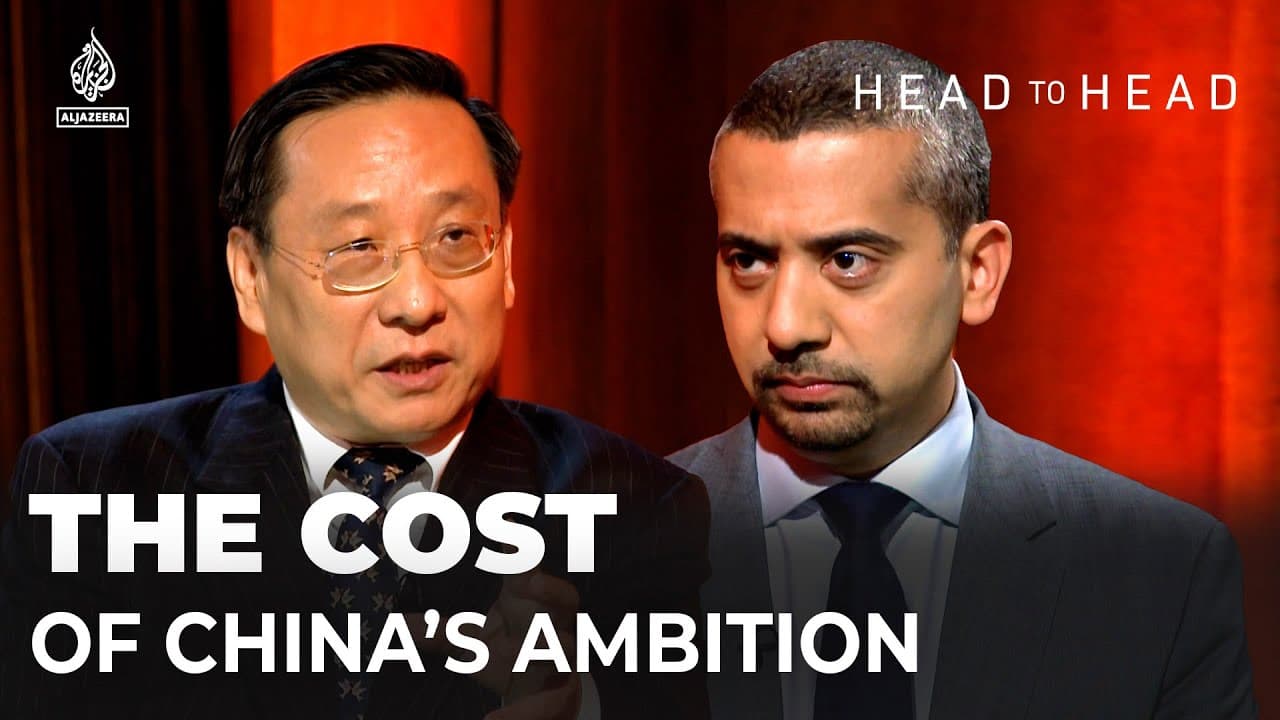
Is Xi Jinping’s China on a path to war? Mehdi Hasan & Victor Gao | Head to Head
TL;DR
China faces scrutiny over military expansion and human rights abuses under Xi Jinping's leadership.
Transcript
from Ukraine to Gaza the world seems more divided and uncertain than it's been for years Global powers and Western alliances have been put to the test and amid the turmoil China is rising to challenge the world order Chinese president Xi Jinping now in his third term in office has high ambitions territorial disputes have sparked fears of a larger c... Read More
Key Insights
- 🌍 China has the world's largest navy and aims for military capability to "fight and win" under Xi Jinping's directives.
- 🤨 Neighboring countries have raised alarms about China's military expansion and geopolitical strategies, reacting with increasing concern over their own security.
- 🇨🇳 Assertions of "one China" policy raise complexities, particularly regarding Taiwan, where attitudes towards reunification contrast sharply with China's stance.
- 💆 China’s policies in Xinjiang continue to attract international criticism, with allegations of mass detentions and systematic oppression of the Uighur population.
- 🤩 The narrative surrounding China's human rights record is key in shaping perceptions in the West, where debates persist regarding the legitimacy of the claims.
- 🗯️ Expert opinions reveal differing perspectives on China's growth trajectory, with some viewing its authoritarian model as effective despite human rights concerns.
- 🤨 The political atmosphere under Xi Jinping emphasizes state control and censorship, raising questions about the possibility of dissent and free speech in China.
Install to Summarize YouTube Videos and Get Transcripts
Explore YouTube Video Summarizer or Get YouTube Transcript Extractor
Questions & Answers
Q: What are the implications of China's military buildup for regional stability?
China's military buildup, particularly its naval expansion and increased drills around Taiwan, raises significant concerns among its neighbors. Countries like Japan, India, and the Philippines express worry about their national security, fearing potential aggression from China. This situation contributes to a militarized atmosphere in the region, increasing the risk of conflict. Many analysts suggest that the stakes have grown higher as alliances are tested and how the region navigates these evolving threats will be crucial for future stability.
Q: How does Xi Jinping's leadership style compare to previous Chinese leaders?
Xi Jinping's consolidation of power marks a departure from previous leaders, who typically operated within more collective decision-making frameworks. His removal of term limits has enhanced perceptions of authoritarian rule, drawing parallels to historical dictatorships. Critics argue this centralization undermines personal freedoms and democratic principles, while supporters claim it allows for decisive action and economic growth. The contrasting interpretations of Xi's leadership highlight the ongoing debate about governance models in contemporary China.
Q: What is the significance of the Uighur situation in Xinjiang?
The Uighur situation represents a critical point of contention between China and the international community. Reports of mass detentions, forced labor, and cultural assimilation in Xinjiang are perceived by many as severe human rights violations and potential genocide. The Chinese government claims these measures are necessary for national security and terrorism prevention. However, the contrasting narratives underline a broader discussion on human rights, sovereignty, and the responsibilities of global powers in responding to these claims.
Q: What challenges does China face in maintaining its global influence?
China exherts growing influence internationally through initiatives like the Belt and Road Initiative and increased military presence, but faces substantial challenges. Criticism of human rights abuses, territorial assertiveness, and economic dependencies of partner countries generates pushback. Additionally, tensions with Western countries may threaten its global ambitions. China must navigate these complexities while maintaining positive diplomatic relations and addressing the concerns over its international conduct.
Summary & Key Takeaways
-
The discussion highlights China's increased military spending, territorial disputes in the South China Sea, and potential threats to Taiwan, which have sparked concerns among its neighboring countries.
-
Human rights abuses in Xinjiang against the Uighur population are examined, with contrasting views on the nature and extent of these violations, raising questions about China's domestic policies and international accountability.
-
The interview formats an engaging dialogue with Chinese intellectuals and international experts, weighing China's autocratic vision against Western responses and the implications for global power dynamics.
Read in Other Languages (beta)
Share This Summary 📚
Summarize YouTube Videos and Get Video Transcripts with 1-Click
Try YouTube Summary with ChatGPT & Claude or YouTube Transcript Generator
Explore More Summaries from Al Jazeera English 📚



Summarize YouTube Videos and Get Video Transcripts with 1-Click
Try YouTube Summary with ChatGPT & Claude or YouTube Transcript Generator