What Are the Historical Context and Current Impacts of Israel's Actions in Gaza?
TL;DR
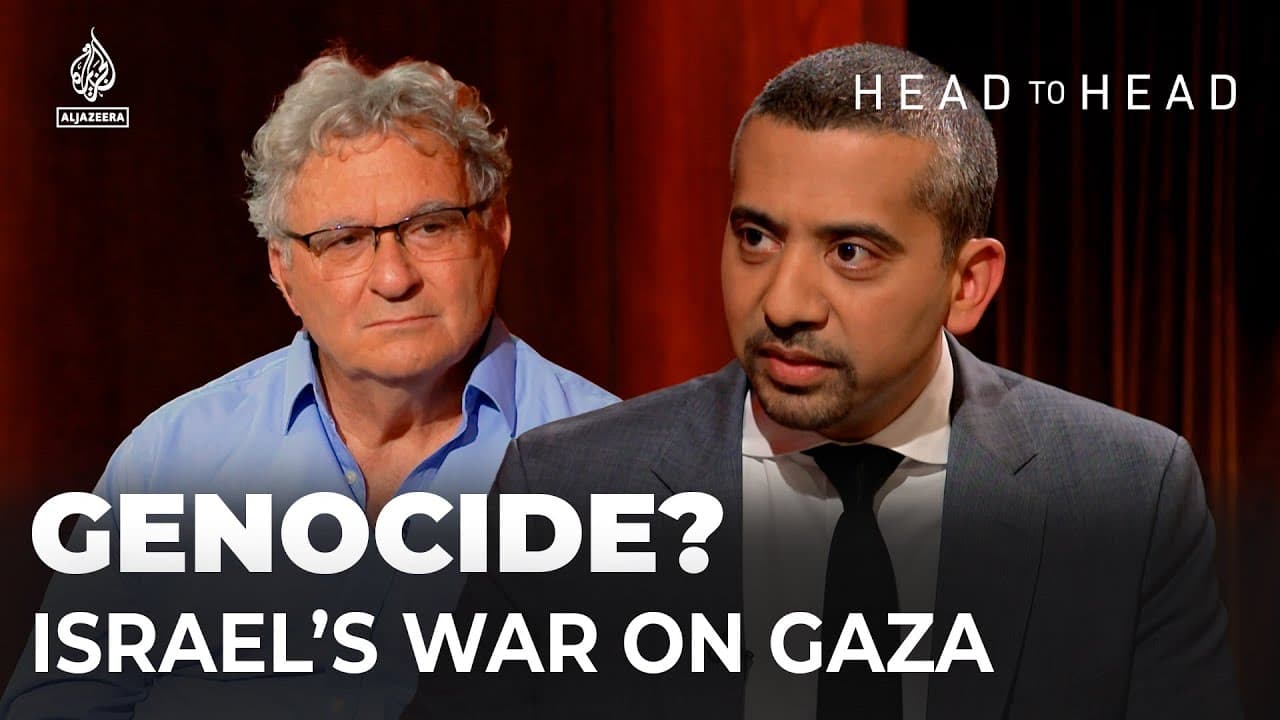
The discussion examines the historical narrative of the Israeli-Palestinian conflict alongside Israel's military actions against Hamas, addressing the contentious classification of these actions as genocide. Historian Benny Morris argues that intent matters in defining genocide, suggesting that accusations against Israel do not meet this criterion. The dialogue reveals deep divides on the legitimacy of Israeli policy and the implications of demographics on radicalization within Israeli society.
Transcript
Israel will fight until we destroy hamas's military capabilities end its rule in Gaza and bring all our host's home since hamas's attack on October the 7th Israel has been laying waste to the Gaza strp tens of thousands killed and the Israeli government now accused of committing genocide but what can the history of the conflict tell us about how we... Read More
Key Insights
- 🙃 Historical narratives from both sides significantly influence current perspectives on the Israeli-Palestinian conflict.
- 🤩 The definition of genocide is heavily debated, with key considerations including intent and contextual factors surrounding military actions.
- 🫵 Israeli actions are framed by many as a response to attacks rather than a systematic effort to destroy a people; however, this view is rigorously contested.
- 🙃 The panel's members represent a spectrum of opinions, emphasizing the complexity of emotions and legitimacies on both sides.
- 🫱 International scrutiny, particularly from human rights organizations, has increased with accusations of war crimes against Israel during its military operations.
- 🎵 The demographic shift in Israeli society is noted as contributing to increasing radical politics, a trend acknowledged by Morris.
- 🗯️ Political and cultural ties of Arab states complicate the narrative around Palestinian agency and rights.
Install to Summarize YouTube Videos and Get Transcripts
Explore YouTube Video Summarizer or Get YouTube Transcript Extractor
Questions & Answers
Q: What historical context does Benny Morris provide for understanding the current conflict?
Benny Morris highlights that historical tensions between Israelis and Palestinians date back to the 1948 war. He refers to his previous work documenting Israeli actions during that conflict, contrasting it with the current situation where he argues that intentions matter significantly in defining actions as genocide.
Q: How does Benny Morris justify Israeli military actions in Gaza?
Morris argues that Israel's military response is proportional to the attacks from Hamas on October 7, contending that no country would respond differently if faced with similar attacks. He also emphasizes the challenge of targeting Hamas, which is embedded within civilian infrastructure, leading to collateral damage that he asserts is a result of war rather than genocidal intent.
Q: What is Morris's stance on the accusations of genocide against Israel?
Morris finds the accusation of genocide absurd, citing his understanding of genocidal intent. He argues that the situation in Gaza involves collateral damage in a war context rather than a calculated effort to annihilate the Palestinian people.
Q: How does the panel react to Morris's views on genocide and occupation?
The panel, including Palestinian lawyer Diana Buu, openly challenges Morris, arguing that the collective experiences of Palestinians and the historical violence experienced under occupation support claims of genocide and ethnic cleansing, highlighting the international community's growing concern regarding human rights violations.
Q: What are the implications of the Russian-U.S. support for Israel in the context of international law?
The discussion emphasizes that Western support, notably from the U.S., often enables Israeli actions that critics argue violate international law. The panelists express concern that this complicity contributes to ongoing violence and neglects Palestinian rights.
Q: How does Morris view the role of the Israeli government and its foreign policy?
Morris critiques the Israeli government’s approach, suggesting that its strategies have been misguided, particularly in its dealings with Hamas and its historical dependence on Qatari support for Gaza, which he deems irresponsible.
Summary & Key Takeaways
-
The interview features historian Benny Morris, discussing Israel's military actions against Hamas and accusations of genocide, emphasizing historical perspectives.
-
Morris argues against the classification of current events in Gaza as genocide, citing the intent required for such a description and contrasting it with historical genocides.
-
The dialogue includes critiques of Israel’s government, accusations of war crimes, and differing views on Zionism, revealing a complex discourse surrounding the Israeli-Palestinian conflict.
Read in Other Languages (beta)
Share This Summary 📚
Summarize YouTube Videos and Get Video Transcripts with 1-Click
Try YouTube Summary with ChatGPT & Claude or YouTube Transcript Generator
Explore More Summaries from Al Jazeera English 📚
Summarize YouTube Videos and Get Video Transcripts with 1-Click
Try YouTube Summary with ChatGPT & Claude or YouTube Transcript Generator