Lathe Fixtures - Jigs and Fixtures - Production Process 2
TL;DR
Learn about designing principles for lathe and milling fixtures, focusing on balancing, safety, and efficient machining.
Transcript
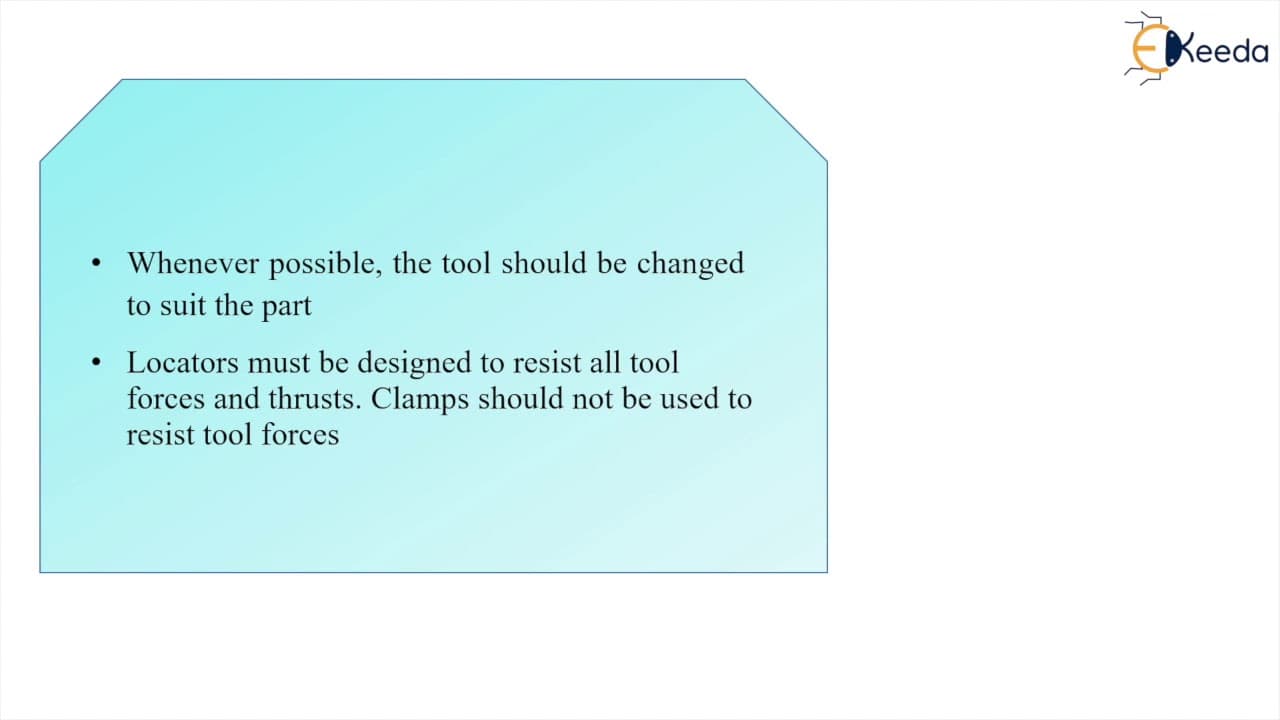
now in this video we are going to learn some designing principle for the fixtures that is turning fixture or milling fixture so as explained earlier the function of the feature is to securely fasten the part to the machine tool table with the accurate location of the part during the machining operation but in addition to the function of the holding... Read More
Key Insights
- 🥳 Fixtures are essential for securing parts during machining operations.
- 🎨 Lathe fixtures require consideration of centrifugal forces and lightweight design.
- 🔨 Milling fixtures should maximize machinable surfaces and resist tool forces effectively.
- 🦺 Avoiding sharp corners and projections in fixtures is crucial for operator safety.
- 🥳 Proper positioning of clamps and parts can enhance machining efficiency.
- 🤩 Balancing fixtures and utilizing setting blocks are key aspects of designing efficient fixtures.
- 😘 Efficient machine operation can be achieved by designing fixtures with low profiles and adequate clearances.
Install to Summarize YouTube Videos and Get Transcripts
Explore YouTube Video Summarizer or Get YouTube Transcript Extractor
Questions & Answers
Q: What is the purpose of a fixture in machining operations?
A fixture securely fastens a part to a machine tool table for accurate machining operations, providing stability and precise cutting tool setups.
Q: Why should lathe fixtures be lightweight?
Lathe fixtures should be lightweight to handle centripetal forces during rotation, ensuring stability and safety in machining operations.
Q: How can milling fixtures be designed for efficient machining?
Milling fixtures should allow for machining multiple surfaces without part removal, provide adequate space for tool changes, and resist tool forces effectively.
Q: Why is it important to avoid sharp corners in fixtures?
Sharp corners can cause serious injuries during machining operations, so fixtures should avoid projections and sharp edges to ensure operator safety.
Summary & Key Takeaways
-
Fixtures securely hold parts during machining operations.
-
Lathe fixture design principles include dealing with centrifugal force, being lightweight, and balanced.
-
Milling fixture design principles focus on maximizing surface machinability, tool adaptability, and safety.
Read in Other Languages (beta)
Share This Summary 📚
Summarize YouTube Videos and Get Video Transcripts with 1-Click
Try YouTube Summary with ChatGPT & Claude or YouTube Transcript Generator
Explore More Summaries from Ekeeda 📚




Summarize YouTube Videos and Get Video Transcripts with 1-Click
Try YouTube Summary with ChatGPT & Claude or YouTube Transcript Generator