What Are the Signs of Being a Good Driver?
TL;DR
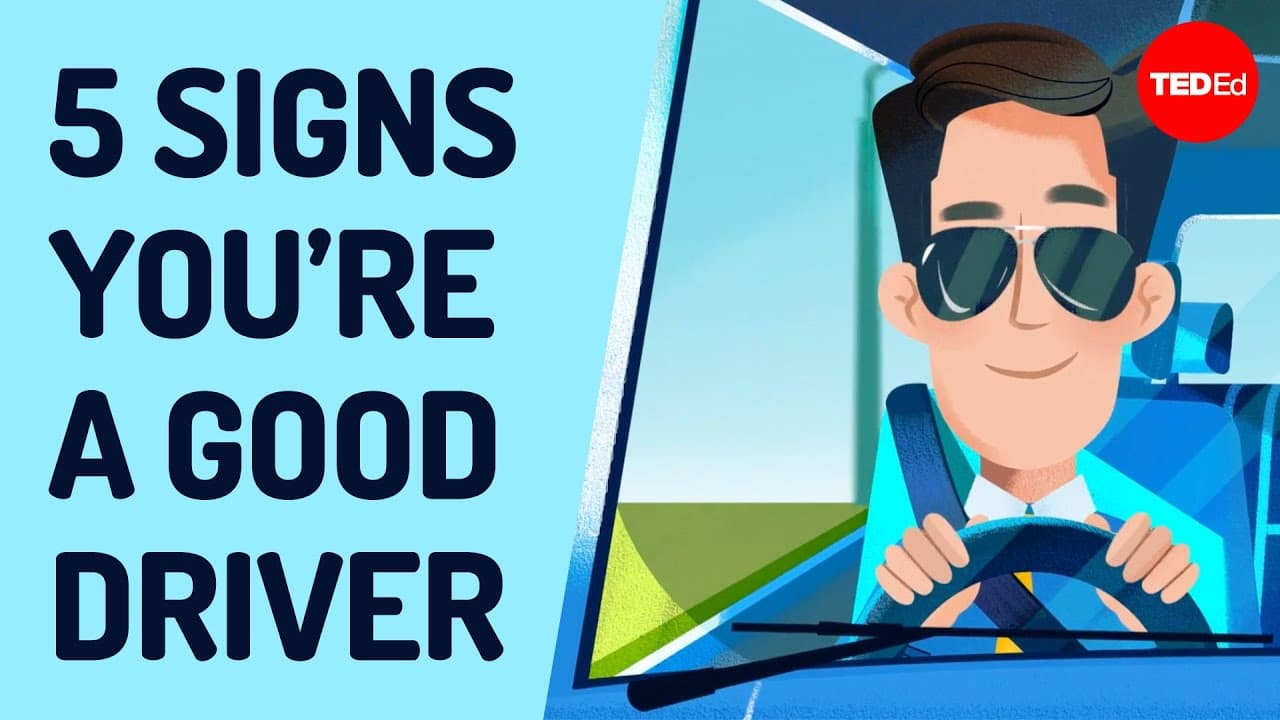
Key signs of a good driver include maintaining a safe following distance, practicing defensive driving, and effectively managing distractions. Good drivers also understand the importance of zipper merging for safety and traffic flow, are aware of emotional responses like road rage, and actively learn from their driving mistakes. Building driving confidence is particularly crucial for new drivers by tackling various road conditions.
Transcript
As one of the agency’s best employees, you’ve been selected as a finalist to potentially take on a new top-secret mission. You've already shown your aptitude for surveillance and disguise, but the agency is looking to test one last critical skill: how well you can drive. To prove yourself, you’ll need to complete a series of complicated challenges ... Read More
Key Insights
- 🦺 Defensive driving strategies focus on proactive behaviors that can prevent accidents, such as maintaining a safe following distance.
- 🤐 Zipper merging is a safer method during lane closures that promotes continuous traffic flow and reduces congestion.
- 🥺 The common misconception that multitasking is effective can lead to dangerous driving behavior, making focused driving critical for safety.
- 😡 Road rage can arise from feelings of anonymity and stress; awareness and relaxation techniques can mitigate aggressive driving responses.
- ❓ Experiencing and learning from mistakes are essential components of effective driving skill development.
- 👶 Practicing in diverse driving situations helps build confidence for new drivers who are still learning the complexities of the road.
- 🧠 Young drivers are uniquely positioned to acquire driving skills as their brains are at an optimal stage for learning and risk assessment.
Install to Summarize YouTube Videos and Get Transcripts
Explore YouTube Video Summarizer or Get YouTube Transcript Extractor
Questions & Answers
Q: What is defensive driving, and why is it important?
Defensive driving involves anticipating potential errors and accidents, allowing drivers to proactively manage their response to changing road conditions. This strategy is crucial for enhancing safety and prevents collisions by encouraging drivers to maintain safe distances, which is particularly effective in high-traffic scenarios.
Q: How does zipper merging improve traffic flow?
Zipper merging encourages drivers to continue at a consistent speed until reaching the end of a lane, minimizing rapid lane changes. Studies indicate that this method can significantly reduce traffic backup lengths by as much as 40%, making it not only safer but also more efficient for overall traffic movement.
Q: What effects does multitasking have on driving performance?
Multitasking can severely impair driving performance, as many people underestimate their ability to balance tasks. Research shows that drivers engaged in hands-free phone conversations often exhibit delayed reactions and make driving errors comparable to those of intoxicated drivers, illustrating the dangers of divided attention while driving.
Q: How can drivers manage road rage effectively?
Managing road rage involves recognizing emotional triggers and practicing relaxation techniques, such as deep breathing, to de-escalate potentially aggressive responses. Understanding that aggressive behavior is often fueled by personal stress and a feeling of anonymity in cars can help drivers prioritize calm reactions.
Q: What role do mistakes play in learning to drive?
Mistakes are a crucial part of the learning process for drivers. Engaging in driving simulations that identify errors has been shown to improve future performance, reinforcing the idea that building competence and confidence in driving skills takes practice and is a natural aspect of becoming an experienced driver.
Q: Why is the age of new drivers significant in their learning process?
New drivers, typically in their teens and early twenties, benefit from a brain that is particularly adept at learning from new experiences. This developmental phase allows them to take on risks and challenges, making it an ideal time to practice driving in varied conditions to enhance skill and confidence.
Summary & Key Takeaways
-
The narrative follows a secret agent selected for a mission that requires testing their driving skills, highlighting the importance of defensive driving to prevent accidents.
-
Key driving techniques are discussed, including maintaining safe distances and utilizing zipper merging during lane closures for improved traffic flow and safety.
-
The story delves into distractions while driving, the potential for road rage, and the value of learning from mistakes in developing better driving skills.
Read in Other Languages (beta)
Share This Summary 📚
Summarize YouTube Videos and Get Video Transcripts with 1-Click
Try YouTube Summary with ChatGPT & Claude or YouTube Transcript Generator
Explore More Summaries from TED-Ed 📚





Summarize YouTube Videos and Get Video Transcripts with 1-Click
Try YouTube Summary with ChatGPT & Claude or YouTube Transcript Generator