How Can You Use Powers of 2 and Fibonacci Numbers in Math Tricks?
TL;DR
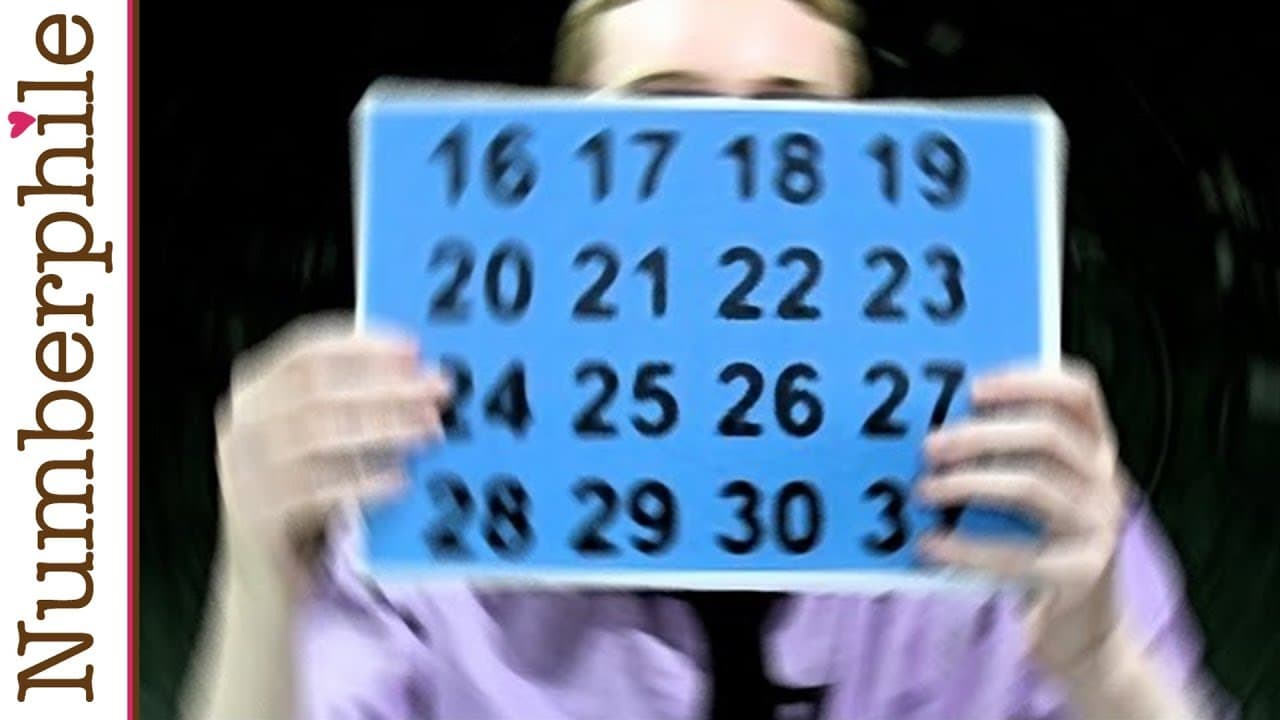
You can use powers of 2, Fibonacci numbers, and prime numbers to create a number-guessing magic trick. By selecting cards that represent these mathematical sequences, you can deduce a hidden number chosen by someone. This trick illustrates how various mathematical concepts can be used interactively and creatively.
Transcript
JAMES GRIME: We're going to try out a little mathematical trick with you today, Brady. It's nothing special. I mean, it's nothing new. But we'll try it out. I'm going to ask you to pick a number between 1 and 30. Don't say it out loud, but pick a number between 1 and 30. Have you done that? OK. BRADY HARAN: So we'll put it on the screen, right? JAM... Read More
Key Insights
- ✊ Different mathematical sequences like powers of 2, Fibonacci, and prime numbers can be used to create a magic trick.
- #️⃣ The trick involves adding specific numbers in the sequence to reveal a hidden number chosen by the participant.
- 💨 The flexibility of the trick showcases the beauty and versatility of mathematical concepts in a fun and interactive way.
- ❓ The trick demonstrates how mathematical principles can be applied creatively in entertainment contexts.
- 🤔 Understanding sequences like Fibonacci and prime numbers can enhance problem-solving skills and logical thinking.
- 🈸 The trick's variations with different sequences highlight the interconnectedness of mathematics in diverse applications.
- 🪄 The history and names of the mathematical principles used in the trick add an interesting backstory to the magic demonstration.
Install to Summarize YouTube Videos and Get Transcripts
Explore YouTube Video Summarizer or Get YouTube Transcript Extractor
Questions & Answers
Q: How does James Grime guess a hidden number using powers of 2?
James adds the numbers in the top left corner of the cards Brady says yes to, which are powers of 2, to reveal the hidden number.
Q: How does the trick change when Fibonacci numbers are used?
By using Fibonacci numbers, the top left numbers on the cards represent Fibonacci numbers that, when added, reveal the hidden number.
Q: What additional twist is introduced by using prime numbers?
The trick can also be done with prime numbers, where the top left numbers represent prime numbers that, when added, give the hidden number.
Q: How are the cards for powers of 2, Fibonacci, and prime numbers created?
James assigns the chosen numbers to specific cards based on the respective mathematical sequences, allowing the trick to work with different sequences.
Summary & Key Takeaways
-
James Grime demonstrates a magic trick of guessing a chosen number between 1 and 30 by using cards with powers of 2.
-
The same trick is performed using Fibonacci numbers, where the specific Fibonacci numbers chosen indicate the hidden number.
-
A further twist is added by showing how the trick can be done with prime numbers, showcasing the versatility of the mathematical concept.
Read in Other Languages (beta)
Share This Summary 📚
Summarize YouTube Videos and Get Video Transcripts with 1-Click
Try YouTube Summary with ChatGPT & Claude or YouTube Transcript Generator
Explore More Summaries from Numberphile 📚

Summarize YouTube Videos and Get Video Transcripts with 1-Click
Try YouTube Summary with ChatGPT & Claude or YouTube Transcript Generator