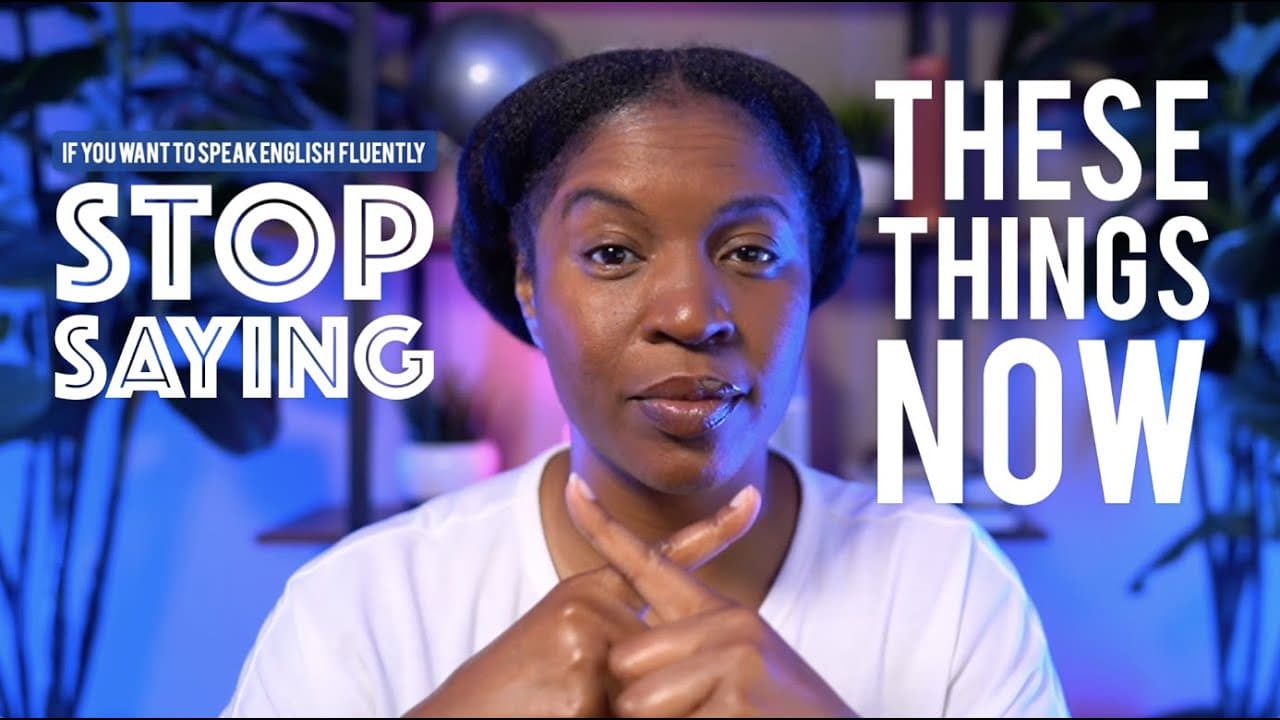
Stop Saying These 7 Things If You Want To Speak English Fluently
TL;DR
Stop saying you're not smart enough, don't know enough vocabulary, have bad pronunciation, that English is too hard, don't have enough time, can't speak English without living in America, and that your English is not good.
Transcript
hey in today's English lesson I am going to tell you seven things you must stop saying right now if your goal is to speak English fluently like a native English speaker you must stop saying these seven things right now do you want to know what these Seven Things Are well then I'm teacher Tiffany let's Jump Right In the first thing you must stop say... Read More
Key Insights
- ❓ Believing in one's intelligence and capabilities is crucial for English fluency.
- ❓ The focus should be on using and applying existing vocabulary rather than feeling inadequate.
- ❓ Confidence and embracing accents or different pronunciations are important for effective communication.
- ❓ Following a systematic approach and finding enjoyment in the learning process can make English feel less challenging.
- ⌛ Prioritizing and making time for English is essential for progress.
- 🙊 Fluency is attainable without living in an English-speaking country.
- ❓ Apologizing for one's English proficiency hinders confidence and effective communication.
Install to Summarize YouTube Videos and Get Transcripts
Explore YouTube Video Summarizer or Get YouTube Transcript Extractor
Questions & Answers
Q: Why do many English learners believe they are not smart enough to speak English fluently?
Many English learners lack confidence due to the belief that English is difficult and requires high intelligence. However, the ability to understand and communicate in English proves their intelligence.
Q: How can English learners overcome the feeling of not knowing enough vocabulary?
English learners often possess more vocabulary knowledge than they think. Instead of focusing on what they don't know, they should practice using the vocabulary they have learned to become more fluent.
Q: Is having bad pronunciation a significant obstacle in speaking English fluently?
While pronunciation plays a role in fluency, having an accent or different pronunciation is natural and shouldn't be seen as a hindrance. With practice, pronunciation can be improved, and effective communication can still take place.
Q: Why do some English learners believe that they cannot speak English without living in America?
Many believe that immersing themselves in an English-speaking country is essential for fluency. However, there are numerous successful English learners who have never been to an English-speaking country, proving that location is not a determining factor in fluency.
Key Insights:
- Believing in one's intelligence and capabilities is crucial for English fluency.
- The focus should be on using and applying existing vocabulary rather than feeling inadequate.
- Confidence and embracing accents or different pronunciations are important for effective communication.
- Following a systematic approach and finding enjoyment in the learning process can make English feel less challenging.
- Prioritizing and making time for English is essential for progress.
- Fluency is attainable without living in an English-speaking country.
- Apologizing for one's English proficiency hinders confidence and effective communication.
- Building confidence and changing one's mindset are essential for fluency.
Summary & Key Takeaways
-
Many English learners believe they are not smart enough to speak English fluently, but in reality, they are capable of understanding and speaking the language.
-
Instead of thinking you don't know enough vocabulary, start using the words you have learned and practice them to improve your fluency.
-
Stop claiming that your pronunciation is bad because having an accent or different pronunciation is natural and can be improved through practice.
-
English is not too hard to learn if you follow a systematic approach and find ways to enjoy the learning process.
-
Make time for English by prioritizing it and realizing its importance in achieving your goal of speaking fluently.
-
Living in an English-speaking country is not a requirement to speak English fluently, as there are many successful English learners who have never been to such countries.
-
Avoid starting conversations by apologizing for your English not being good, as it hinders your confidence and discourages effective communication.
Read in Other Languages (beta)
Share This Summary 📚
Summarize YouTube Videos and Get Video Transcripts with 1-Click
Try YouTube Summary with ChatGPT & Claude or YouTube Transcript Generator
Explore More Summaries from Speak English With Tiffani 📚



Summarize YouTube Videos and Get Video Transcripts with 1-Click
Try YouTube Summary with ChatGPT & Claude or YouTube Transcript Generator