How to Speak English Fluently Like a Native

TL;DR
To sound more like a native English speaker, use a specific fluency pattern when making requests: mention the name, provide a reason or situation, and then make the request. This approach helps in structuring sentences naturally and fluently. Practice with quizzes to reinforce vocabulary and expressions like 'tech savvy' and 'tower over'.
Transcript
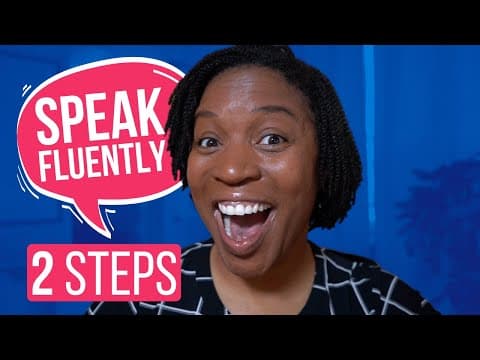
Hey, welcome to episode two of the real life English series. In today's episode, I am going to teach you real English vocabulary, real English expressions. And I'm also going to teach you a fluency pattern that you can use today and sound more like a native English speaker. When you request something. I also have some quizzes just for you. So I hop... Read More
Key Insights
- The key to making natural requests in English is following a specific pattern: name, reason, and then request.
- Using terms of endearment like 'honey' is common in English to address loved ones.
- Being 'tech savvy' means being knowledgeable or skilled with modern technology.
- 'Tower over' is a phrase used to describe someone or something much taller than others.
- 'Pretty please' is a friendly way to persuade someone to fulfill a request.
- 'Knock out' means to complete or finish a task.
- 'Look over' means to review or check something for errors.
- Fluency in English involves understanding and using real-life expressions and vocabulary naturally.
Install to Summarize YouTube Videos and Get Transcripts
Explore YouTube Video Summarizer or Get YouTube Transcript Extractor
Questions & Answers
Q: How to make a request in English fluently?
To make a request fluently in English, follow the pattern: start with the person's name, provide a reason or describe the current situation, and then make your request. This structured approach helps in sounding more natural and polite, similar to native speakers.
Q: What does 'tech savvy' mean?
'Tech savvy' refers to someone who is well-informed about or good at using modern technology. It implies a level of skill or competence with computers, smartphones, and other technological devices, often used to describe individuals who can easily navigate and use tech products.
Q: Why use 'pretty please' in requests?
'Pretty please' is used to make a request sound more friendly and persuasive. It adds a polite and endearing tone, often used by women and children, to emphasize the importance or desire for the request to be fulfilled. It's a common expression in informal settings.
Q: What does 'tower over' mean?
'Tower over' is an expression used to describe someone or something that is much taller than others around them. It visually conveys the idea of height and dominance in physical stature, often used in contexts where height difference is noticeable.
Q: What does 'knock out' mean in English?
In English, 'knock out' means to complete or finish a task. It's a colloquial expression indicating that something is done efficiently or quickly. For example, 'I need to knock out my homework before going out,' implies completing the homework task.
Q: How to use 'look over' in a sentence?
'Look over' means to review or check something for errors or accuracy. It is often used when asking someone to examine a document or piece of work. For example, 'Can you look over my resume?' means you are asking someone to review your resume for any mistakes or improvements.
Q: What is a term of endearment in English?
A term of endearment in English is a word or phrase used to address someone affectionately. Common examples include 'honey,' 'dear,' and 'sweetheart.' These terms are often used among family members, friends, and romantic partners to express warmth and affection.
Q: Why is the request pattern important in English?
The request pattern is important in English because it structures communication in a way that is clear, polite, and natural. By stating the name, reason, and then the request, speakers can ensure their intentions are understood, making interactions smoother and more effective.
Summary & Key Takeaways
-
To make requests fluently in English, use the pattern: name, reason, and request. This helps in sounding more natural. Terms like 'tech savvy' and 'tower over' enrich vocabulary.
-
Expressions such as 'pretty please' and 'knock out' are part of real-life English, making conversations sound genuine. Quizzes help reinforce learning.
-
Understanding and practicing fluency patterns and vocabulary enable learners to speak English with confidence, mimicking native speakers' style.
Read in Other Languages (beta)
Share This Summary 📚
Summarize YouTube Videos and Get Video Transcripts with 1-Click
Try YouTube Summary with ChatGPT & Claude or YouTube Transcript Generator
Explore More Summaries from Speak English With Tiffani 📚





Summarize YouTube Videos and Get Video Transcripts with 1-Click
Try YouTube Summary with ChatGPT & Claude or YouTube Transcript Generator