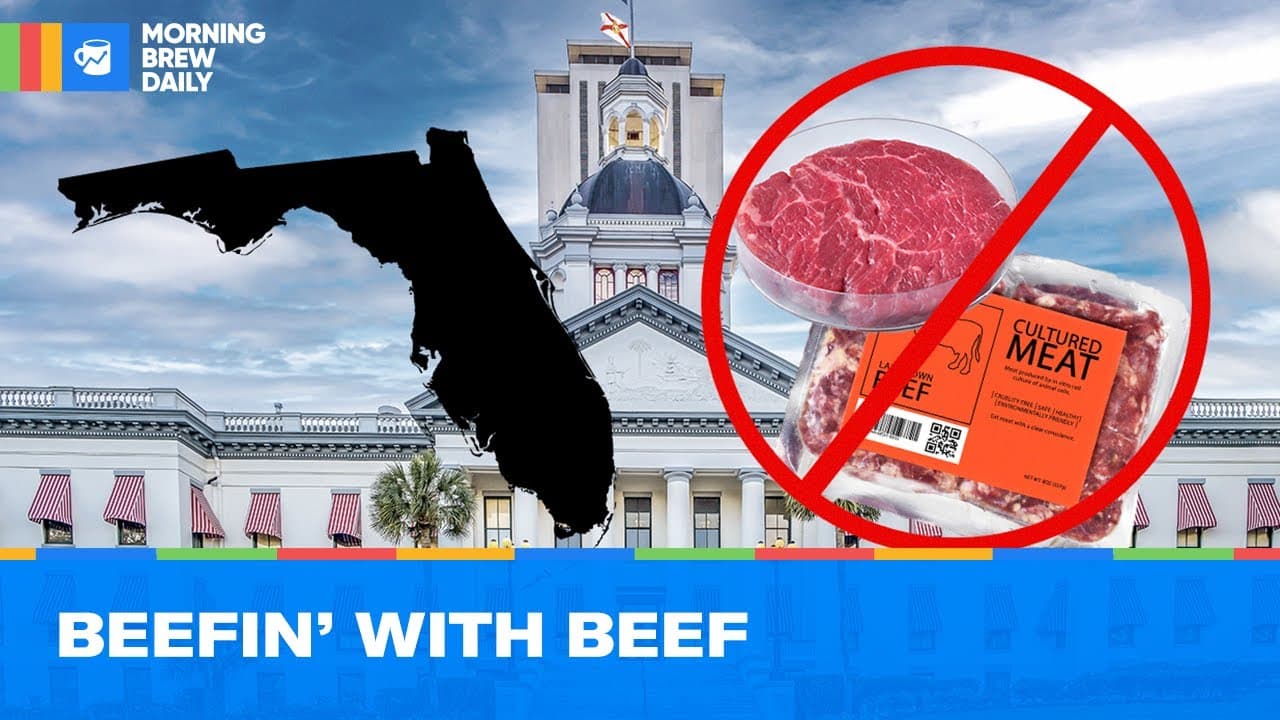
Florida Bans Lab-Grown Meats
TL;DR
Florida bans lab-grown meat to protect its cattle industry.
Transcript
Good Miorning Brew Daily Show. I'm Neal Freyman and I'm Kyle Hagge. Today, a Florida became the first state to ban lab grown meat. Is this industry cooked? And the story of a startup that is taking poop and putting it underground to solve climate change. Today is May 3rd. Let's ride. Omaha, Nebraska will be at the center of the business universe to... Read More
Key Insights
- Florida has become the first state to ban lab-grown meat, citing protection of its significant cattle industry as the main reason.
- Warren Buffett's Berkshire Hathaway annual meeting, known as the Woodstock for capitalists, will pay tribute to the late Charlie Munger.
- Apple's earnings report calmed investors despite a decline in iPhone sales, with a historic $110 billion stock buyback boosting shares.
- The lab-grown meat industry faces challenges due to high production costs and environmental impact concerns.
- Florida's ban on lab-grown meat is seen as a protectionist measure, contradicting free market principles by limiting consumer choice.
- Novo Nordisk's weight loss drug, Ozempic, has significantly boosted Denmark's economy, with the company now worth more than the entire Danish economy.
- Carvana has made a remarkable turnaround by cutting costs and reporting its best quarter ever, while Peloton struggles with declining demand.
- A startup aims to fight climate change by sequestering organic waste underground, though high costs remain a barrier to widespread adoption.
Install to Summarize YouTube Videos and Get Transcripts
Explore YouTube Video Summarizer or Get YouTube Transcript Extractor
Questions & Answers
Q: Why did Florida ban lab-grown meat?
Florida banned lab-grown meat to protect its cattle industry, which is a significant part of the state's economy. The decision is seen as a way to support traditional agriculture and prevent competition from emerging technologies that could disrupt the market.
Q: What challenges does Apple's business face despite its earnings report?
Apple faces challenges such as declining iPhone sales, regulatory pressures, and the need for innovation to find new growth areas. The company has been criticized for its lack of new products and is under scrutiny from both U.S. and European regulators regarding its market practices.
Q: How has Novo Nordisk's weight loss drug impacted Denmark's economy?
Novo Nordisk's weight loss drug, Ozempic, has significantly boosted Denmark's economy, with the company becoming the largest in Europe by market value. The success of the drug has increased the company's tax contributions and positively affected Denmark's GDP, demonstrating the economic potential of pharmaceutical innovations.
Q: What is the current state of the lab-grown meat industry?
The lab-grown meat industry is still in its nascent stages, facing high production costs and environmental impact concerns. Despite its potential to reduce emissions from livestock farming, the industry struggles with scalability and affordability, making it a niche market for now.
Q: What strategies did Carvana use to turn its business around?
Carvana made a remarkable turnaround by restructuring its operations, cutting over $1 billion in annual expenses, and focusing on sustainable business practices. These efforts resulted in its best quarter ever, helping the company recover from a steep decline in stock value and potential bankruptcy.
Q: Why is Peloton struggling to maintain its market position?
Peloton is struggling due to declining demand for its expensive exercise equipment and challenges in adapting its business model. Despite efforts to diversify its offerings and partnerships, the company has faced leadership changes and significant financial losses, impacting its market position.
Q: What is the potential impact of the startup's carbon removal technology?
The startup's carbon removal technology aims to sequester organic waste underground to reduce greenhouse gas emissions. While the technology shows promise, high costs and logistical challenges remain barriers to widespread adoption. Continued innovation and cost reduction are crucial for its viability.
Q: Why haven't there been record-breaking performances in the Kentucky Derby recently?
There haven't been record-breaking performances in the Kentucky Derby due to the physiological limits of horses and selective breeding practices. Unlike humans, horses lack motivation to break records, and the breeding pool has reached its maximum capacity, limiting the potential for faster race times.
Summary & Key Takeaways
-
Florida has banned lab-grown meat to protect its cattle industry, which is a major economic contributor to the state. The decision has sparked debates about free market principles and consumer choice.
-
Apple's latest earnings report exceeded expectations, thanks to a massive stock buyback plan, despite ongoing challenges such as declining iPhone sales and regulatory pressures.
-
Novo Nordisk's success with its weight loss drug Ozempic has transformed Denmark's economy, highlighting the potential economic impact of pharmaceutical innovations.
Read in Other Languages (beta)
Share This Summary 📚
Summarize YouTube Videos and Get Video Transcripts with 1-Click
Try YouTube Summary with ChatGPT & Claude or YouTube Transcript Generator
Explore More Summaries from Morning Brew Daily 📚




Summarize YouTube Videos and Get Video Transcripts with 1-Click
Try YouTube Summary with ChatGPT & Claude or YouTube Transcript Generator