How I implement a credit systems using stripe
TL;DR
This video explains how to establish a credit-based system using Stripe for a new AI application.
Transcript
as you may have seen on my channel I have this icon generally AI application which allows users to kind of buy credits and the reason I'm using a credit based system is because I'm integrating with third-party AI Services which charge you based on tokens used or credits used and I wanted to walk you through in this video how do you set up a credit ... Read More
Key Insights
- 👤 Implementing a credit system can enhance user engagement and facilitate a clear transaction model for digital services.
- 💨 Integrating with Stripe provides a robust way to manage payments and handle potential errors with webhook events.
- 👤 Proper management of user metadata during transactions is crucial for accurate account updates after purchases.
- 🧚 Building in validation checks prevents misuse or abuse of the credit system, ensuring a fair and stable platform for all users.
- 🚶 The video provides a practical walk-through for developers interested in creating similar applications using AI and payment systems.
- 👤 User feedback is essential for improving and debugging the application, promoting community engagement and support.
- 👻 Utilizing test modes for payments allows developers to refine their processes without financial risk.
Install to Summarize YouTube Videos and Get Transcripts
Explore YouTube Video Summarizer or Get YouTube Transcript Extractor
Questions & Answers
Q: What is the purpose of the credit-based system in the application?
The credit-based system allows users to purchase credits, which they can then use to access features such as generating YouTube video timestamps. This setup effectively manages user access to resources while enabling revenue generation through credits.
Q: How does the integration with Stripe work in this project?
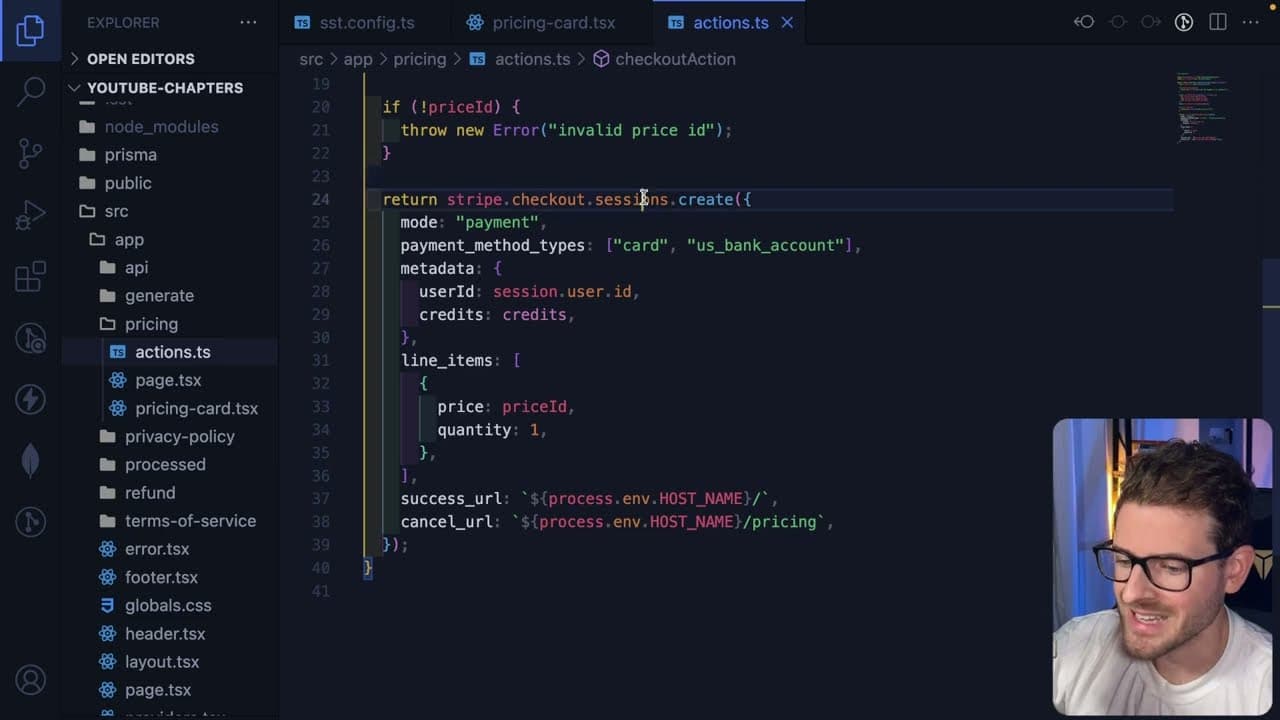
Stripe integration involves setting up a checkout session in which users can buy credits, utilizing items associated with specific price IDs. After a successful transaction, Stripe sends a webhook event to the application, which processes this event to update the user's credit balance.
Q: What code is essential for handling the Stripe webhook events?
Handling Stripe webhook events requires validating the incoming request, checking the event type, and updating user data accordingly. The code ensures that the metadata sent during checkout is retrieved to accurately credit the user post-purchase.
Q: How does the application ensure users have enough credits for generating timestamps?
The application includes logic to check a user's credit balance before allowing them to use the generation feature. If the user has insufficient credits, it will throw an error, preventing unauthorized usage while maintaining a stable service environment.
Summary & Key Takeaways
-
The video outlines the establishment of a credit system for a new application, YT chaptersgenerator.com, where users can purchase credits to generate YouTube video timestamps.
-
It demonstrates the integration with Stripe, including creating checkout sessions, handling webhook events, and updating user information upon credit purchases.
-
A brief overview of code structure is provided, focusing on user credit verification, metadata handling, and preventing abuse of the credit system.
Read in Other Languages (beta)
Share This Summary 📚
Summarize YouTube Videos and Get Video Transcripts with 1-Click
Try YouTube Summary with ChatGPT & Claude or YouTube Transcript Generator
Explore More Summaries from Web Dev Cody 📚

Summarize YouTube Videos and Get Video Transcripts with 1-Click
Try YouTube Summary with ChatGPT & Claude or YouTube Transcript Generator