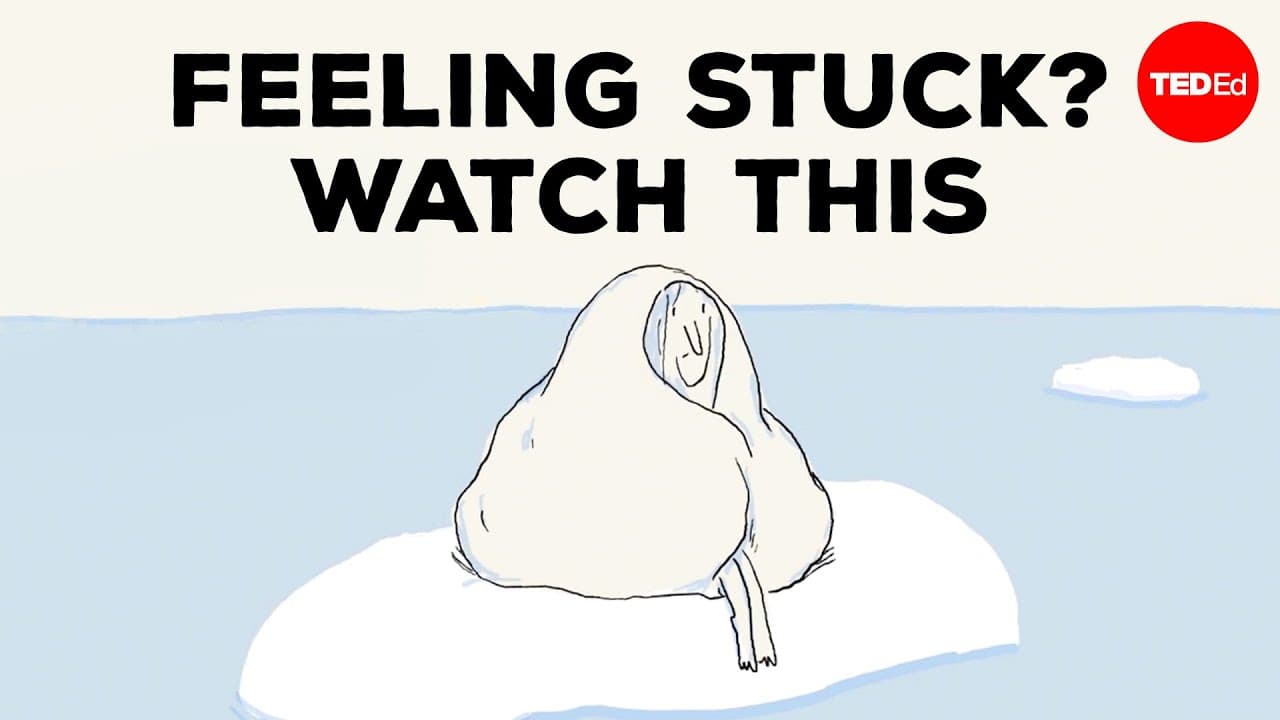
Why you feel stuck — and how to get motivated - Shannon Odell
TL;DR
Feeling stuck in the middle of projects is common, but small goals can help maintain motivation.
Transcript
You're in the middle of a project when suddenly moving forward seems impossible. Maybe you don't know what the next step is. Or perhaps you’ve faced setbacks, and you’re starting to think, “what’s even the point?” Many of us have experienced feeling stuck. It can happen when tackling something as simple as a term paper, or as monumental as social i... Read More
Key Insights
- 😛 The "stuck in the middle" effect highlights a common psychological phenomenon where individuals feel unmotivated as they move toward long-term goals.
- 💋 Celebrating small victories through sub-goals can significantly enhance motivation and combat feelings of being stuck.
- 🪛 The perception of personal impact is crucial; believing that one's efforts matter can drive continued engagement, especially concerning societal issues.
- 🥺 Collective action is vital in addressing significant challenges, demonstrating that individual contributions lead to broader change.
- 👯 Historical movements illustrate that moral outrage can mobilize people and unite communities for shared causes effectively.
- 🥅 Finding and engaging with a community provides emotional support, increases accountability, and encourages persistent action towards goals.
- 💯 Starting with any small action, rather than waiting for perfect conditions, can help individuals overcome inertia and build momentum.
Install to Summarize YouTube Videos and Get Transcripts
Explore YouTube Video Summarizer or Get YouTube Transcript Extractor
Questions & Answers
Q: What causes people to feel stuck in the middle of a project?
The feeling of being stuck often arises from a shift in perspective as one progresses towards a goal. Initially, individuals may feel motivated by visible progress, but as they approach their target, their focus tends to shift to how far they still have to go, resulting in frustration and a loss of motivation.
Q: How can breaking down goals help combat feelings of being stuck?
Dividing a larger goal into smaller, achievable sub-goals creates incremental benchmarks that are less daunting. This strategy provides more frequent opportunities to celebrate progress, making the journey feel less overwhelming and maintaining motivation throughout the process.
Q: Why do some people fail to take action on causes they care about?
Despite being alarmed about critical issues like climate change, many individuals do not take action due to feelings of powerlessness. A lack of confidence in the impact of their involvement can lead to disengagement from the very causes that concern them.
Q: How can community involvement enhance personal motivation?
Engaging with a community fosters support and provides encouragement, which can reignite personal motivation. Witnessing the collective efforts of others can inspire action and create a positive feedback loop, reinforcing belief in one's ability to contribute towards change.
Q: What role does moral outrage play in motivating action?
Moral outrage serves as a powerful motivator by focusing individuals on the stakes involved in various issues. When harnessed correctly, this anger can unite diverse communities, galvanizing collective action towards resolving systemic problems, as seen in historical movements for social justice.
Q: Can individual actions truly lead to meaningful change?
Yes, individual actions are essential in creating collective momentum necessary for social progress. History has shown that personal involvement—whether through voting, protesting, or volunteering—can significantly contribute to addressing complex societal problems and instigating change.
Q: How can someone find the motivation to take small actions when feeling overwhelmed?
When feeling overwhelmed, the best approach is to start with any small action—like writing a sentence or taking a short walk. Taking that first step, regardless of perfection, can create momentum and lead to further progress in conquering larger goals.
Q: What is the significance of collaboration in achieving goals?
Collaboration not only helps with problem-solving but also fosters a sense of community and shared purpose. The support and inspiration gained from collective work can rally individuals, particularly during challenging moments, reinforcing resilience and motivation towards shared objectives.
Summary & Key Takeaways
-
Many individuals experience feeling stuck in the middle of projects due to a shift in focus towards distant goals, leading to frustration.
-
Breaking larger goals into smaller, manageable sub-goals helps create achievable benchmarks, promoting motivation and allowing for celebration of small victories.
-
Community involvement and belief in personal impact are crucial for maintaining engagement with bigger societal issues, proving that collective action can bring about significant change.
Read in Other Languages (beta)
Share This Summary 📚
Summarize YouTube Videos and Get Video Transcripts with 1-Click
Try YouTube Summary with ChatGPT & Claude or YouTube Transcript Generator
Explore More Summaries from TED-Ed 📚



Summarize YouTube Videos and Get Video Transcripts with 1-Click
Try YouTube Summary with ChatGPT & Claude or YouTube Transcript Generator