Introduction to sustainability| Land and water use| AP Environmental science| Khan Academy
TL;DR
Sustainability is the ability of Earth's systems to maintain balance and adapt to changing environmental conditions, and understanding our impact on ecosystems is crucial for sustainable living.
Transcript
- [Instructor] Let's talk about sustainability. You've probably come across the word "sustainable" at some point in your life. If I decided to continue to talk for the rest of this video without taking a breath, you might tell me, "Mia, that's just not sustainable." In this scenario, which I obviously would never even dream of attempting, I'd be de... Read More
Key Insights
- ⚖️ Sustainability is about maintaining a delicate balance and adapting to environmental changes without depleting resources or disrupting ecosystems.
- 🎙️ Planting the same crop year after year without replenishing the depleted nutrients can lead to reduced crop yields, emphasizing the importance of sustainable farming practices.
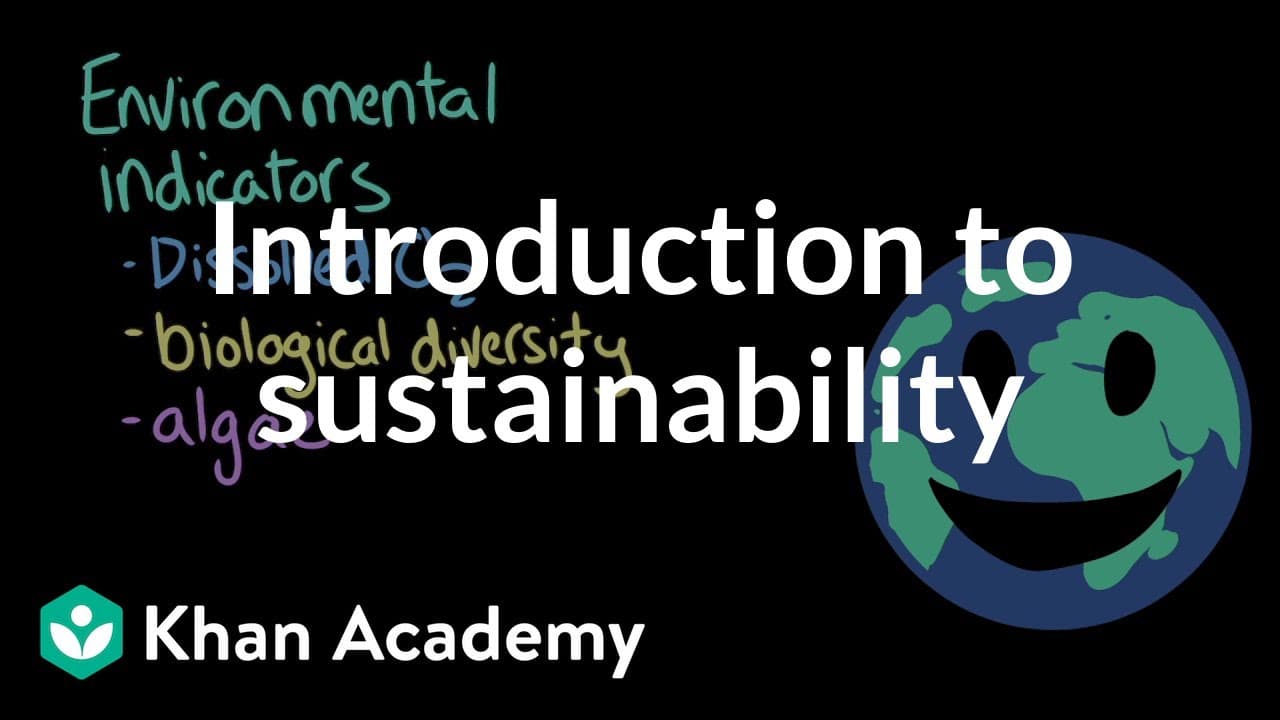
- 💁 Environmental indicators, such as changes in oxygen levels and species diversity, can provide valuable information on ecosystem health and guide sustainable decision-making.
- 🍉 Understanding the concept of maximum sustainable yield is essential for managing natural resources and ensuring their long-term availability.
Install to Summarize YouTube Videos and Get Transcripts
Explore YouTube Video Summarizer or Get YouTube Transcript Extractor
Questions & Answers
Q: What does sustainability mean in environmental science?
Sustainability refers to the ability of Earth's systems to survive and adapt to environmental changes while maintaining ecosystem health over time. It is about maintaining a delicate balance where processes do not deplete or produce more than necessary.
Q: How can planting the same crop year after year affect sustainability?
Planting the same crop without replenishing depleted resources, such as nitrogen in the soil, can disrupt the balance of ecosystems and lead to decreased crop yields. Alternating between different crops or using nitrogen-fixing plants can be a more sustainable approach.
Q: What are environmental indicators, and how can they guide sustainable choices?
Environmental indicators are clues that the Earth provides to indicate unsustainability in an ecosystem, such as changes in dissolved oxygen levels, species diversity, or excessive algae growth. By monitoring these indicators, humans can make more sustainable choices and adjust their behavior accordingly.
Q: What is the maximum sustainable yield, and why is it important in managing natural resources?
The maximum sustainable yield refers to the maximum number of fish or resources that can be harvested while still allowing the population to replenish itself sustainably. Understanding and regulating the maximum sustainable yield is crucial to ensure the long-term sustainability of natural resources.
Summary & Key Takeaways
-
Sustainability is the ability of something to be maintained over time, and in environmental science, it refers to the ability of Earth's systems to survive and adapt to environmental changes while maintaining ecosystem health.
-
Human activities can disrupt the balance of ecosystems, as seen in the example of planting cotton without replenishing the depleted nitrogen levels in the soil.
-
Environmental indicators, such as dissolved oxygen levels and species diversity, can guide sustainable choices, and understanding the maximum sustainable yield is crucial for managing natural resources.
Read in Other Languages (beta)
Share This Summary 📚
Summarize YouTube Videos and Get Video Transcripts with 1-Click
Try YouTube Summary with ChatGPT & Claude or YouTube Transcript Generator
Explore More Summaries from Khan Academy 📚






Summarize YouTube Videos and Get Video Transcripts with 1-Click
Try YouTube Summary with ChatGPT & Claude or YouTube Transcript Generator