Why Do Many Students Think They Are Bad at Math?
TL;DR
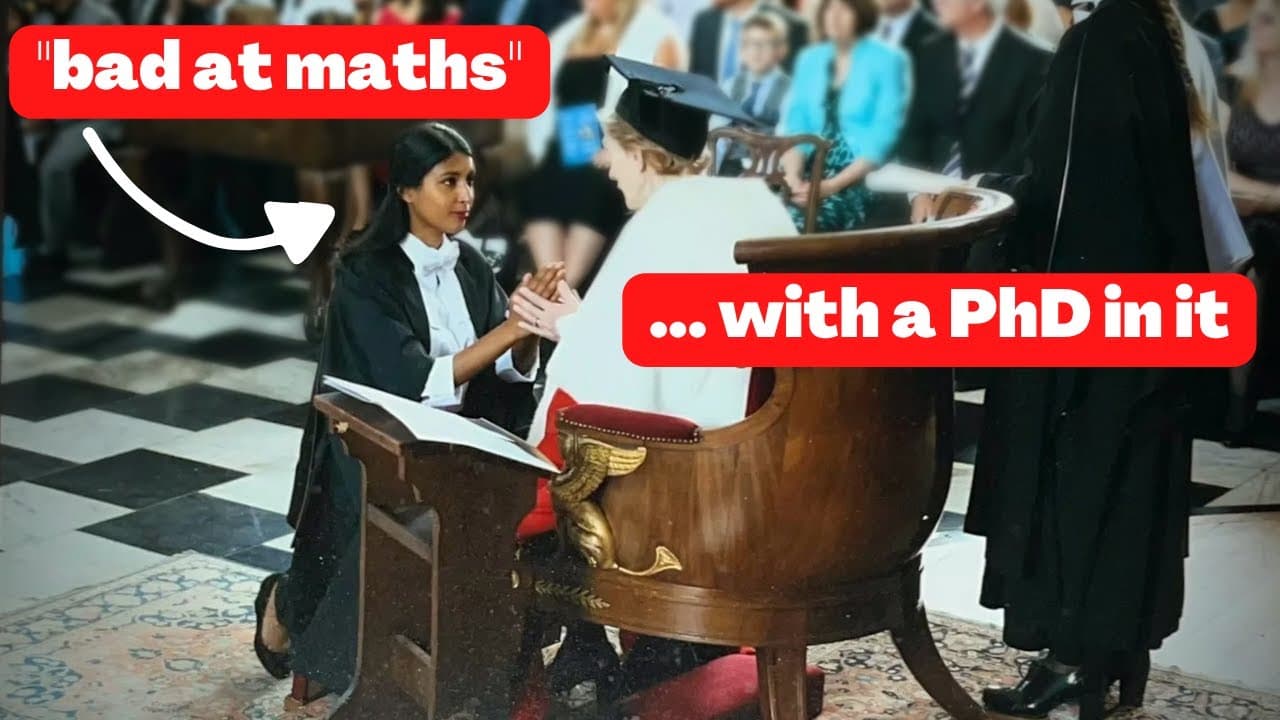
Many students believe they are bad at math due to early discouragement and a fixed mindset. However, math is a skill that can be developed with practice and perseverance, and reinforcing a growth mindset among students is essential for their success. Supportive teaching plays a crucial role in changing students' perceptions of their math abilities.
Transcript
i just came back from giving a talk to my old high school and i asked the students whether they thought that they were bad at maths and basically everyone put up their hand i mean i expected a fair few number of hands but not that many which really sucks because i used to think of myself as bad at maths when i was in high school and that really hel... Read More
Key Insights
- 👋 The belief that one is either inherently good or bad at math is detrimental and limits students' potential.
- 🤔 Emphasizing formulaic problem-solving in math education fails to promote critical thinking and creativity.
- ❓ The growth mindset, which recognizes that abilities can be developed with effort, is crucial for success in math.
- 🖐️ Supportive teachers play a significant role in students' perception of their math abilities and their overall success.
- 🧑🎓 Math is both creative and rigorous, and students should be exposed to both aspects to develop a well-rounded understanding.
- 💦 Math, like any other skill, requires practice and hard work to improve and reach higher levels of proficiency.
- 👋 The current testing system's categorization of students as either good or bad at math is flawed and limits their opportunities for growth.
Install to Summarize YouTube Videos and Get Transcripts
Explore YouTube Video Summarizer or Get YouTube Transcript Extractor
Questions & Answers
Q: How did the speaker's perception of their math abilities change over time?
The speaker initially believed they were bad at math in high school but eventually pursued a PhD in math, indicating a significant shift in their perception of their abilities. They recognized that math is a skill that can be learned and improved with effort and perseverance.
Q: Why does the speaker think the way math ability is currently perceived is unhealthy?
The speaker believes the current emphasis on formulaic problem-solving and algorithmic approaches in math education is limiting and fails to promote mathematical thinking and creativity. This narrow focus leads to a negative mindset and discouragement among students.
Q: How does the speaker suggest shifting the narrative around math ability?
The speaker urges teachers, students, and parents to emphasize that math is a skill that can be learned with practice and hard work. They should promote a growth mindset, encouraging students to embrace challenges and view mistakes as opportunities for learning and improvement.
Q: How did the speaker overcome self-doubt in their math abilities?
The speaker sought out supportive teachers who inspired and encouraged them, which played a crucial role in their journey. They also worked hard to improve their mathematical thinking and problem-solving skills, recognizing that math, like any other skill, requires practice and effort.
Summary & Key Takeaways
-
The speaker recounts their experience of initially believing they were bad at math and how it held them back, but they eventually pursued a PhD in math.
-
They discuss the unhealthy mindset around math ability and how it negatively impacts students and teachers.
-
The speaker encourages teachers, students, and parents to shift the narrative around math and emphasize the importance of practice and hard work.
Read in Other Languages (beta)
Share This Summary 📚
Summarize YouTube Videos and Get Video Transcripts with 1-Click
Try YouTube Summary with ChatGPT & Claude or YouTube Transcript Generator
Explore More Summaries from Looking Glass Universe 📚




Summarize YouTube Videos and Get Video Transcripts with 1-Click
Try YouTube Summary with ChatGPT & Claude or YouTube Transcript Generator