Visualizing average costs and marginal costs as slope | Microeconomics | Khan Academy
TL;DR
This video visually analyzes the relationship between lines of code per month, fixed cost, variable cost, and total cost, highlighting the impact of adding more developers on productivity and cost.
Transcript
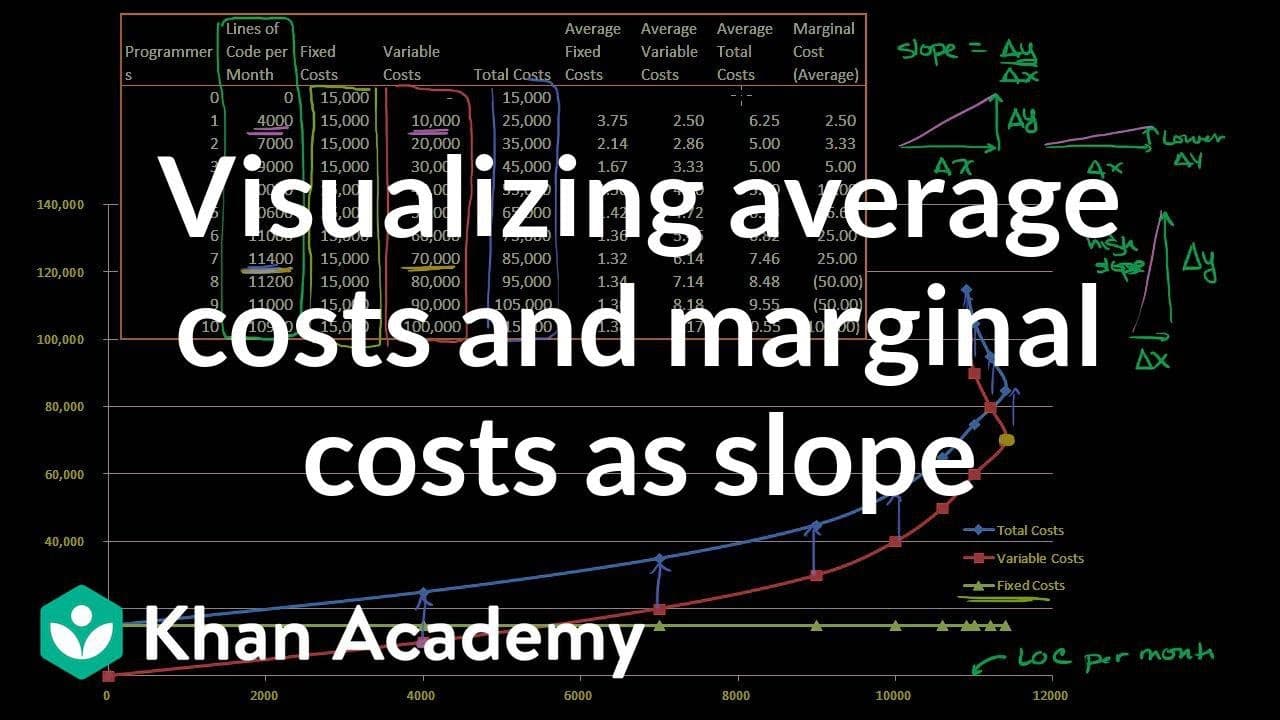
Voiceover: What I want to do in this video is look at the data from the last video and make sure we understand it in maybe a more visual way. What I've done is, in this graph over here, I used the lines of code per month, so this right over here. I used this, or this was what I used on my horizontal axis, so I kind of, if you view it in terms of in... Read More
Key Insights
- 🇨🇷 Fixed costs remain constant regardless of productivity, emphasizing the importance of operational expenses in software development.
- 😮 Variable costs increase as productivity rises, indicating the need for additional resources and support.
- 😥 Adding more developers can initially boost productivity, but beyond a certain point, the decreasing marginal productivity results in diminishing returns and increased costs.
Install to Summarize YouTube Videos and Get Transcripts
Explore YouTube Video Summarizer or Get YouTube Transcript Extractor
Questions & Answers
Q: How does adding more developers affect productivity and cost?
Adding more developers initially increases productivity, as seen by the increase in lines of code produced. However, beyond a certain point, adding more developers leads to decreased productivity and higher costs due to coordination and resource allocation issues.
Q: What is the significance of the different cost curves in the analysis?
The fixed cost curve represents costs that remain constant regardless of productivity. The variable cost curve represents costs that increase with productivity. The total cost curve is the sum of the fixed and variable costs, indicating the overall cost of production.
Q: How does the slope of the average fixed, variable, and total cost curves change?
The average fixed cost per line of code decreases as more code is produced, resulting in a lower slope. The average variable cost per line of code increases, leading to a higher slope. The average total cost per line of code first decreases and then increases, reflecting the shift in productivity and efficiency.
Q: What does the marginal cost measure in this analysis?
The marginal cost measures the change in total cost divided by the change in lines of code, giving the slope between two consecutive points on the cost curves. It represents the additional cost incurred for producing one additional line of code.
Summary & Key Takeaways
-
The video analyzes the relationship between lines of code per month and costs, focusing on fixed cost, variable cost, and total cost.
-
Fixed cost remains constant regardless of the number of lines of code produced, at $15,000 per month.
-
Variable cost increases as the number of lines of code per month increases, resulting in a total cost that follows a similar trend.
Read in Other Languages (beta)
Share This Summary 📚
Summarize YouTube Videos and Get Video Transcripts with 1-Click
Try YouTube Summary with ChatGPT & Claude or YouTube Transcript Generator
Explore More Summaries from Khan Academy 📚



Summarize YouTube Videos and Get Video Transcripts with 1-Click
Try YouTube Summary with ChatGPT & Claude or YouTube Transcript Generator