Computing Limit - Computerphile
TL;DR
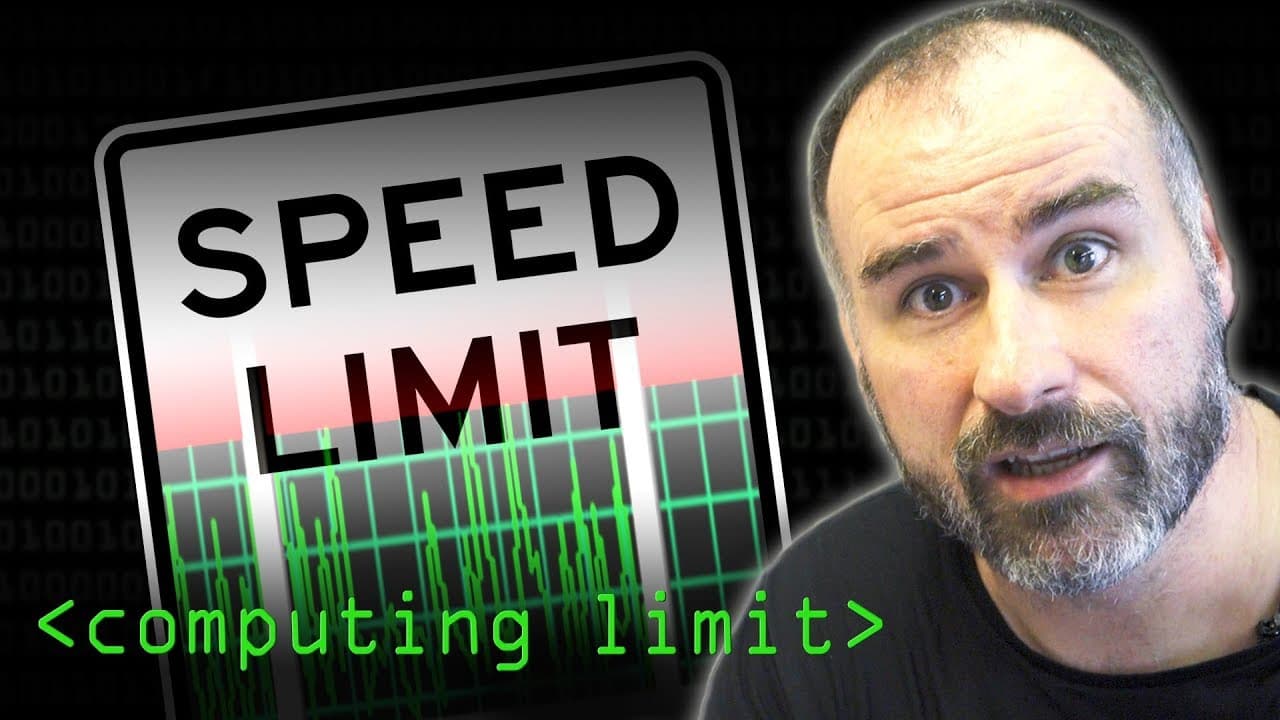
The physical limits of computation are determined by factors such as miniaturization, speed, and the relationship between information and energy.
Transcript
It's what I want to do is focus on the real fundamental physical limits of course getting down to the the miniaturization And the smallest possible structures is an important aspect But there's also a speed aspect if you even get down to that you get your density up. How fast can you process? The reason I'm quite keen to come back to computerphile ... Read More
Key Insights
- 🐎 Miniaturization and speed are essential aspects of exploring the physical limits of computation.
- 💁 Information is a fundamental quantity in the universe, surpassing energy and matter.
- 💁 The reversibility of systems affects the preservation or loss of information and has implications for computation and energy costs.
- 🦾 The uncertainty principle in quantum mechanics imposes a fundamental limit on processing speed in computers.
- 🧑🌾 Current computing technology is significantly far from the ultimate physical limits of computation.
- ⛔ Reaching the ultimate physical limits requires advancements in technology that go beyond current expectations.
- 💁 The connection between information, energy, and physical limits poses challenges for both environmental and fundamental physics reasons.
Install to Summarize YouTube Videos and Get Transcripts
Explore YouTube Video Summarizer or Get YouTube Transcript Extractor
Questions & Answers
Q: How does the reversibility of a system affect the information content of the output?
Reversible systems maintain the input information in the output and allow for precise knowledge of the initial state, while irreversible systems result in the loss of information.
Q: What is the relationship between the reversibility of a system and the energy cost of computation?
Irreversible processes in computation require energy to erase data, meaning there is an energy cost associated with the loss of information. Reversible processes, on the other hand, have no energy cost.
Q: How does the uncertainty principle in quantum mechanics relate to processing speed in computers?
The uncertainty principle imposes a fundamental limit on the narrowness of time intervals in computational operations. Narrower time intervals result in a broader energy range, setting a limit on processing speed.
Q: What are the implications of reaching the ultimate physical limits of computation?
Reaching the ultimate physical limits, which involve operations at 10 to the 50 per second, would require technology far beyond what is currently achievable. It is a challenge for advanced civilizations to reach information density comparable to black holes.
Summary & Key Takeaways
-
The speaker emphasizes the importance of understanding the fundamental physical limits of computation, including miniaturization and processing speed.
-
Information is a fundamental quantity in the universe and has a direct connection to energy.
-
Reversibility of a system affects the information content of the output, and irreversible systems result in the loss of information.
Read in Other Languages (beta)
Share This Summary 📚
Summarize YouTube Videos and Get Video Transcripts with 1-Click
Try YouTube Summary with ChatGPT & Claude or YouTube Transcript Generator
Explore More Summaries from Computerphile 📚



Summarize YouTube Videos and Get Video Transcripts with 1-Click
Try YouTube Summary with ChatGPT & Claude or YouTube Transcript Generator