How Does Moravec’s Paradox Affect Surgical Robotics?
TL;DR
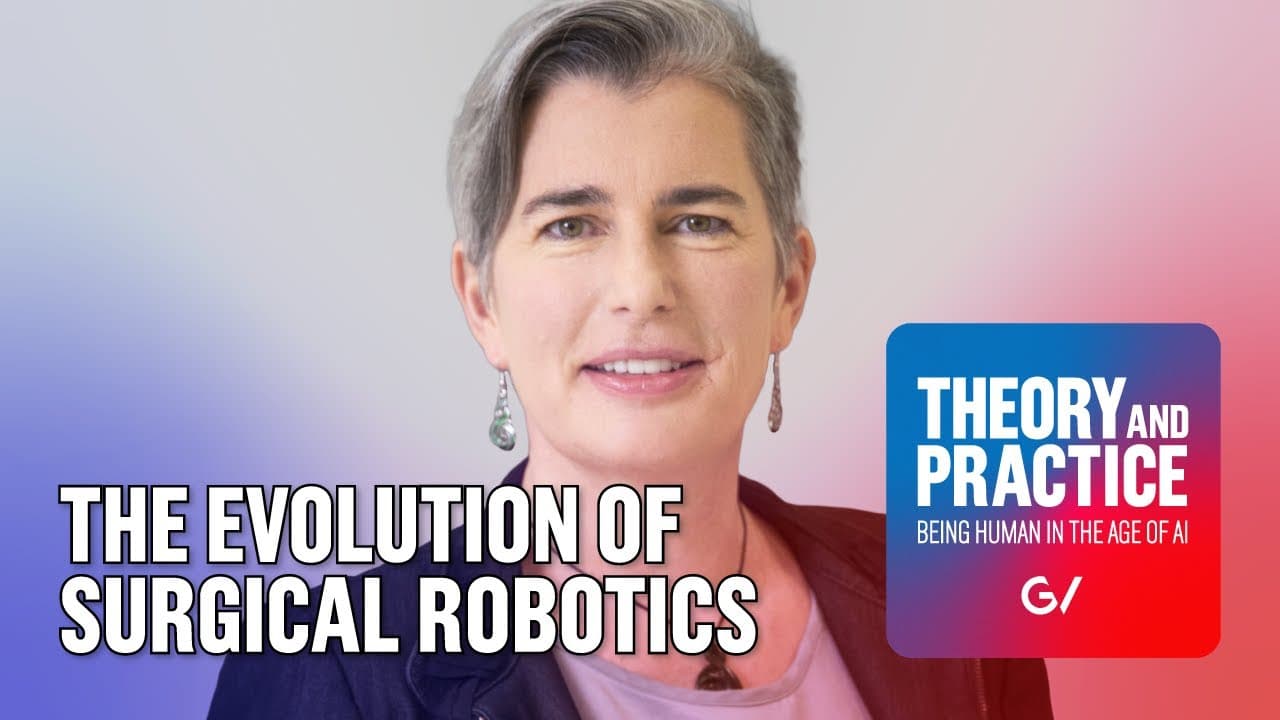
Moravec's Paradox illustrates a striking difference between AI's cognitive abilities and robots' physical coordination skills. While surgical robots like the Da Vinci system enhance precision and recovery times, they still depend on human oversight. The future of robotic surgery lies in augmenting human expertise rather than complete automation.
Transcript
hello welcome to gve theory and practice this series is exploring what it means to be human in the age of human-like AI I'm Anthony filipakis and I'm Alex wilchko my friend how you doing I'm doing great how are you good you know I was thinking let's try something different today instead of doing Hammer nails at the end let's do it at the beginning ... Read More
Key Insights
- 🤖 Moravec's Paradox highlights the disparity between AI's problem-solving abilities and robots' limitations in physical coordination and mobility.
- 🤖 Surgical robots, like the Da Vinci system, offer benefits such as smaller incisions and faster recovery times, but human expertise is still essential.
- 😒 The use of haptics and sensory signals in surgical robots could enhance surgical outcomes, but replicating the full range of human touch and sensory experiences is challenging.
- ❓ The primary focus in robotic surgery should be on augmenting human abilities, rather than replacing surgeons entirely.
- 😘 Expanding access to surgical robots in low-resource environments should be accompanied by efforts to train more surgeons locally.
Install to Summarize YouTube Videos and Get Transcripts
Explore YouTube Video Summarizer or Get YouTube Transcript Extractor
Questions & Answers
Q: What is Moravec's Paradox in relation to AI and robotics?
Moravec's Paradox refers to the fact that while AI has advanced in problem-solving and intelligence tests, robots still struggle with basic tasks requiring physical coordination and mobility. It highlights the disparity in advancements between AI and robotics.
Q: What limitations do current surgical robots have?
While surgical robots like the Da Vinci system offer smaller incisions, higher precision, and faster recovery times, they still require human intervention and guidance. They lack the ability to replicate the full range of human touch and sensory feedback.
Q: How do surgeons learn to operate with surgical robots?
Surgeons learn to operate surgical robots through training and practice. The intuitive interface of the robot allows them to control the instruments in a way that mirrors their own hand movements. This skill is honed through hands-on experience and familiarity with the console.
Q: How do patients feel about being operated on by surgical robots?
Patients have varying reactions to surgical robots. Some may feel more comfortable with the robot's precision and smaller incisions, while others may find it intimidating. The presence of the robot during surgery may depend on the stage of the procedure, as it is docked after the patient is anesthetized.
Summary & Key Takeaways
-
Robotics and AI have made significant progress, but there is a disparity in the abilities of AI to reason and solve problems, compared to robots lacking coordination and mobility skills.
-
The concept of Moravec's Paradox highlights the challenges of replicating human motor skills in robots.
-
Surgical robotics, such as the Da Vinci system, offer smaller incisions, higher precision, and quicker recovery times, but they still require human guidance and training.
Read in Other Languages (beta)
Share This Summary 📚
Summarize YouTube Videos and Get Video Transcripts with 1-Click
Try YouTube Summary with ChatGPT & Claude or YouTube Transcript Generator
Explore More Summaries from GV (Google Ventures) 📚





Summarize YouTube Videos and Get Video Transcripts with 1-Click
Try YouTube Summary with ChatGPT & Claude or YouTube Transcript Generator