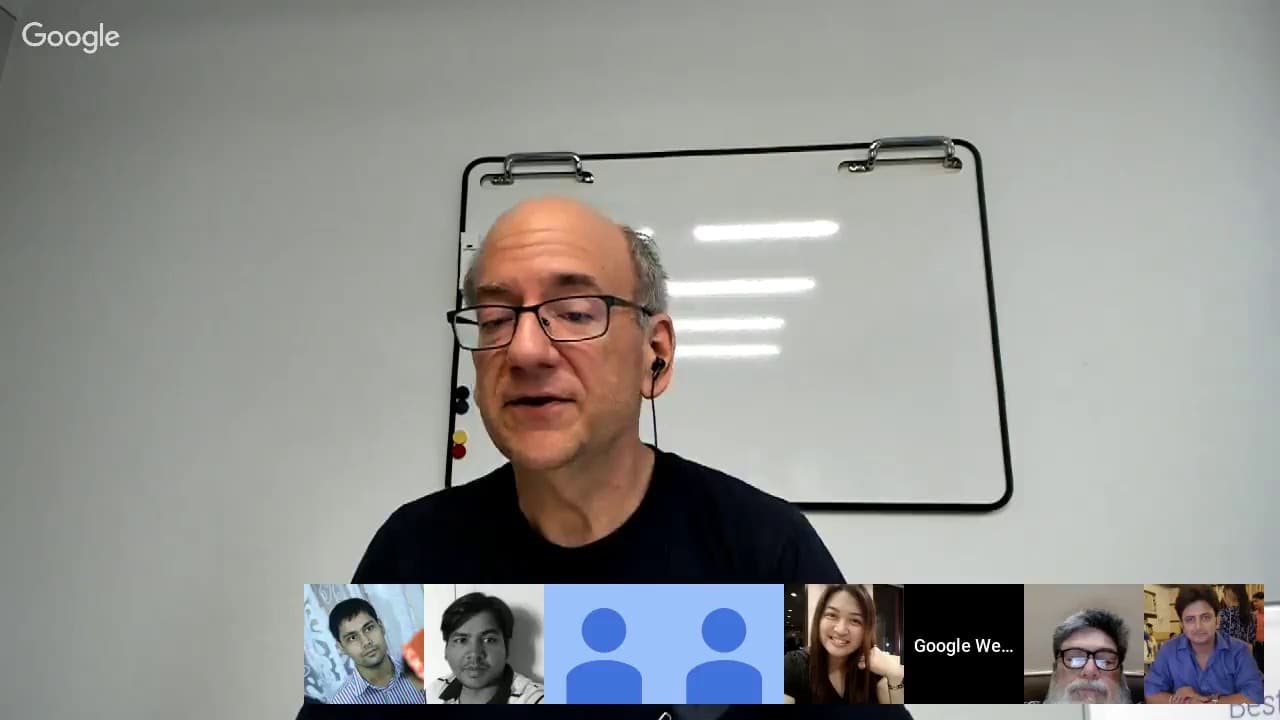
English Google Webmaster Central office-hours hangout
TL;DR
John Mueller answers webmaster questions on SEO, indexing, and site management.
Transcript
JOHN MUELLER: All right. Welcome, everyone, to today's Google Webmaster Central Office Hours Hangouts on air. My name is John Mueller. I am a webmaster trends analysts here, at Google, in Switzerland. And part of what we do are these Office Hours Hangouts, where webmasters can join in and ask us any questions that might be on their mind with regard... Read More
Key Insights
- Google uses similar ranking factors for both desktop and mobile, but there are differences in how elements are displayed due to context, like showing more local information on mobile.
- Having a landing page within three clicks from the homepage is not mandatory, but it is a good practice for usability and crawlability.
- Backlinks are not the sole determinant of ranking; high-quality content can rank well even with few backlinks.
- Different countries have different search results due to varying competition levels; ranking well in one country doesn't guarantee similar performance in another.
- Duplicate content across URLs is not penalized, but Google may choose one version to show in search results to avoid redundancy.
- JavaScript frameworks like ReactJS require rendering for proper indexing; ensure compatibility with SEO tools and consider pre-rendering for non-Google platforms.
- The Change of Address tool in Search Console is for domain moves, not site mergers, which require reprocessing for ranking stability.
- Responsive design is recommended for mobile-first indexing, eliminating the need for separate mobile URLs and simplifying management.
Install to Summarize YouTube Videos and Get Transcripts
Explore YouTube Video Summarizer or Get YouTube Transcript Extractor
Questions & Answers
Q: Are there different algorithms for desktop and mobile search rankings?
Google uses similar ranking factors for desktop and mobile, but the presentation of search results may differ. For instance, mobile results might prioritize local information due to the likelihood of mobile users being on the go. The differences are more about adapting to user context rather than using entirely separate algorithms.
Q: Is it mandatory to keep landing pages within three clicks from the homepage?
No, it is not a requirement to have landing pages within three clicks from the homepage. However, it is a recommended practice as it improves user experience by making content easier to find and also aids in better crawlability by search engines, ensuring content is indexed efficiently.
Q: How does Google handle duplicate content across different URLs?
Google identifies duplicate content across URLs but does not penalize sites for it. Instead, Google chooses one version to display in search results to avoid redundancy. This ensures that users are directed to the most relevant or authoritative version of the content, maintaining a clean and efficient search result.
Q: What should be considered when using JavaScript frameworks like ReactJS for SEO?
When using JavaScript frameworks such as ReactJS, it's essential to ensure that pages can be rendered for indexing. This may involve using tools like Fetch and Render in Search Console to verify how Google views the page. Additionally, consider pre-rendering pages for other search engines or platforms that may not support dynamic rendering.
Q: How should geotargeting be managed for a .com site ranking in multiple countries?
If a .com site is ranking in multiple countries and you wish to focus on one, such as the UK, using geotargeting in Search Console can help. However, moving back to a .co.uk domain isn't necessary if the .com is already established. Instead, focus on optimizing geotargeting settings and content for the desired region.
Q: What is the impact of adding extensive text to e-commerce category pages?
Adding extensive text to e-commerce category pages can sometimes be counterproductive if it appears as keyword stuffing. Google's algorithms may perceive it as an attempt to manipulate rankings, leading to a cautious approach in indexing. It's crucial to ensure that any additional content is relevant and genuinely useful to users.
Q: Is there a way for webmasters to directly indicate important pages to Google?
Currently, there isn't a direct method for webmasters to indicate important pages to Google. However, a well-structured site with clear internal linking can help distribute link equity and signal page importance. Focus on creating a logical site architecture and using sitemaps to guide Google in understanding the site's structure.
Q: How does Google handle content duplication in unavoidable cases?
In cases where content duplication is unavoidable, such as service comparison pages, Google understands the context and indexes pages separately. While duplicate content isn't penalized, Google may choose one page to display in search results. It's essential to avoid creating doorway pages, which could lead to manual actions if detected.
Summary & Key Takeaways
-
John Mueller discusses the differences in ranking factors for desktop and mobile, emphasizing that while many factors are similar, mobile search results may prioritize local information due to user context.
-
The importance of internal linking and site structure is highlighted, with Mueller advising against relying solely on backlinks for ranking, as quality content can still perform well without extensive link profiles.
-
Mueller addresses the challenges of using JavaScript frameworks like ReactJS for SEO, suggesting pre-rendering as a solution for ensuring content is indexed correctly by search engines.
Read in Other Languages (beta)
Share This Summary 📚
Summarize YouTube Videos and Get Video Transcripts with 1-Click
Try YouTube Summary with ChatGPT & Claude or YouTube Transcript Generator
Explore More Summaries from Google Search Central 📚




Summarize YouTube Videos and Get Video Transcripts with 1-Click
Try YouTube Summary with ChatGPT & Claude or YouTube Transcript Generator