Leaving Group Stability - SN1 and SN2 Reactions
TL;DR
Leaving group stability is important in determining the effectiveness of a substrate in an SN2 reaction, with weak bases making good leaving groups.
Transcript
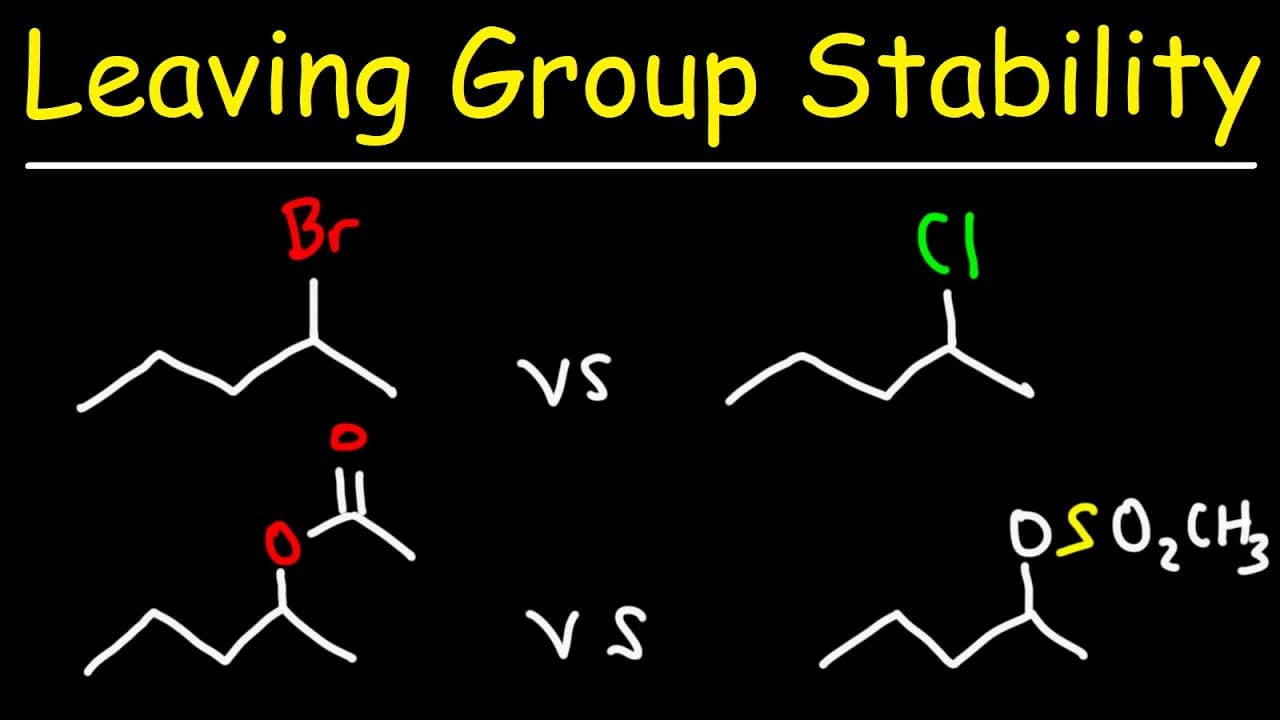
in this video we're going to focus on leaving group stability now it's important to understand this concept because this is a very common test question that you'll see for your next exam if you're studying for an exam in this topic now let's say if you have two bromo pentane and let's compare that with two chloral pencing a typical test question mi... Read More
Key Insights
- 👥 Leaving group stability is determined by the ability to stabilize negative charge and size.
- 👥 Weaker bases make better leaving groups, while stronger bases make poor leaving groups.
- 👥 Fluoride is considered a poor leaving group, while chlorides, bromides, and iodides are good leaving groups.
- 👥 Protonation can transform a poor leaving group into a better leaving group.
- 👥 Understanding the stability of negative charges is crucial in determining leaving group stability.
- 🫀 Factors such as electronegativity, atomic size, and resonance can affect leaving group stability.
- 🥺 Resonance stabilization leads to a more stable leaving group.
Install to Summarize YouTube Videos and Get Transcripts
Explore YouTube Video Summarizer or Get YouTube Transcript Extractor
Questions & Answers
Q: What is leaving group stability and why is it important?
Leaving group stability refers to the ability of a group to leave a molecule during a chemical reaction. It is important because it determines the success of an SN2 reaction.
Q: How does leaving group stability affect the effectiveness of a substrate in an SN2 reaction?
A good leaving group stabilizes the negative charge, making it easier for the reaction to proceed. A poor leaving group, on the other hand, hinders the reaction by not effectively stabilizing the negative charge.
Q: Why is iodide considered a better leaving group than fluoride?
Iodide is a better leaving group than fluoride because it is a larger negatively charged ion. The larger size allows it to spread out the negative charge over a larger region of space, making it more stable.
Q: Can a poor leaving group be transformed into a good leaving group?
Yes, a poor leaving group can be transformed into a good leaving group by adding a proton to it. The protonation increases the stability of the leaving group and improves its ability to leave the molecule.
Summary & Key Takeaways
-
Leaving group stability is crucial in determining the success of an SN2 reaction.
-
The size and ability to stabilize negative charge determine the stability of the leaving group.
-
Fluoride is considered a poor leaving group, while chlorides, bromides, and iodides are good leaving groups.
Read in Other Languages (beta)
Share This Summary 📚
Summarize YouTube Videos and Get Video Transcripts with 1-Click
Try YouTube Summary with ChatGPT & Claude or YouTube Transcript Generator
Explore More Summaries from The Organic Chemistry Tutor 📚




Summarize YouTube Videos and Get Video Transcripts with 1-Click
Try YouTube Summary with ChatGPT & Claude or YouTube Transcript Generator