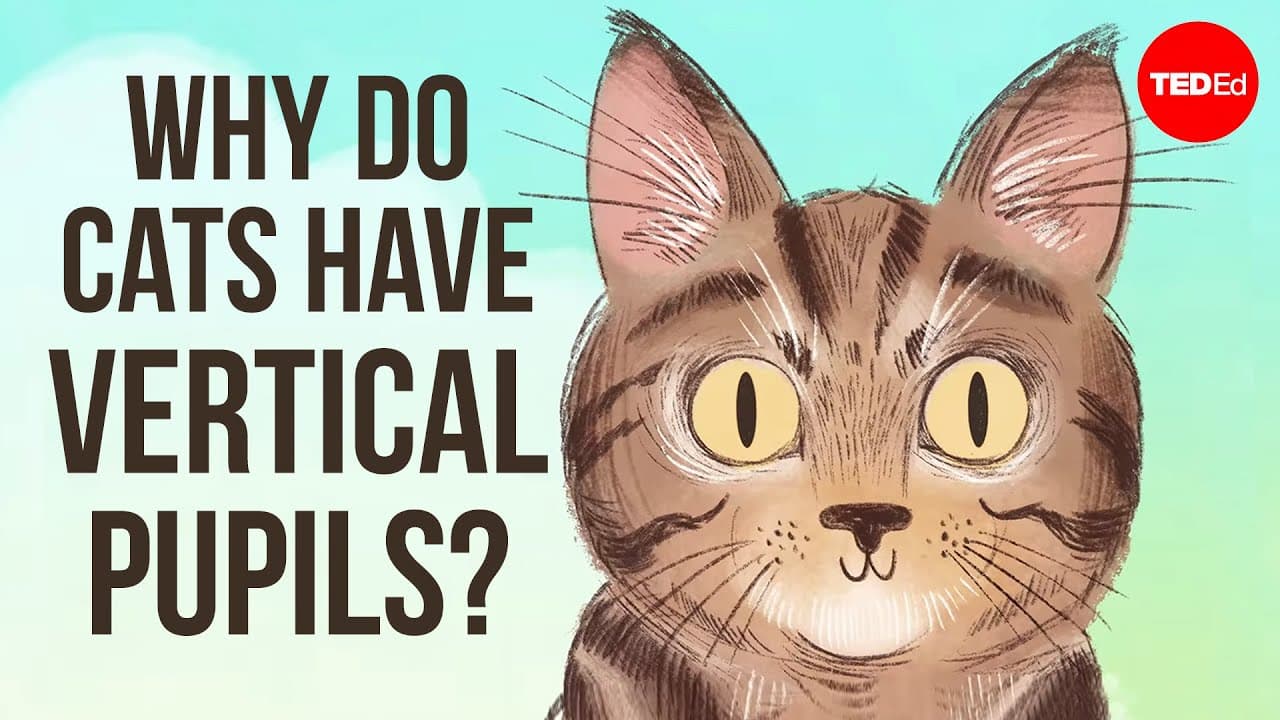
Why do cats have vertical pupils? - Emma Bryce
TL;DR
Animal pupil shapes vary to optimize vision based on ecological roles.
Transcript
Peering into the eyes of different animals, you’ll see some extraordinarily shaped pupils. But why? It turns out that pupil shape is a powerful indicator of what role an animal plays in its ecosystem. Pupils mark the hollow opening in the iris, the eye’s band of pigmented muscle. They’re the portholes through which light enters the eye, where it... Read More
Key Insights
- 🪡 Pupil shape reflects an animal's ecological niche and visual needs.
- 🦻 Different pupil shapes aid animals in specific tasks like hunting, foraging, or detecting predators.
- 📺 Optimized vision through pupil shape enhances an animal's chances of survival in its environment.
- 💠 Pupil shape diversity across species showcases the evolution of visual adaptations.
- 🫵 Circular pupils in humans prioritize a broader view for observation and social recognition.
- 🦻 Vertical slit pupils aid in depth perception and precise distance judgment for ambush predators.
- 🫵 Horizontal pupils provide a wide field of view, helping animals like goats detect predators and obstacles.
Install to Summarize YouTube Videos and Get Transcripts
Explore YouTube Video Summarizer or Get YouTube Transcript Extractor
Questions & Answers
Q: How do animal pupil shapes vary and why?
Animal pupil shapes vary to optimize vision for hunting, browsing, and overall survival in their respective ecosystems. Vertical pupils, like in cats, aid in precise distance judgment, while horizontal pupils, like in goats, provide a wide field of view.
Q: Why do some animals have round pupils while others have elongated ones?
Round pupils in humans and other animals allow for a broader view of a scene, aiding in overall observation skills. Elongated pupils, on the other hand, sharpen specific dimensions of vision, which is more useful for certain hunting or foraging behaviors.
Q: What advantage do slit-shaped pupils, like in geckos, provide?
Slit-shaped pupils, such as those seen in geckos, minimize light entering the eyes in bright conditions while retaining sharp images through pinholes. This unique eye structure helps geckos judge distances effectively without having to move.
Q: How do animals with different pupil shapes adapt to changing light conditions?
Animals with various pupil shapes, such as cats with slit pupils or geckos with pinhole pupils, can adjust their pupil sizes and shapes to optimize light entry under different lighting conditions, ensuring clear vision at all times.
Summary & Key Takeaways
-
Pupil shape indicates an animal's ecological role and optimizes vision.
-
Different pupil shapes impact how animals perceive distances and detect predators.
-
Variety in pupil shapes exists across animal species to enhance visual capabilities.
Read in Other Languages (beta)
Share This Summary 📚
Summarize YouTube Videos and Get Video Transcripts with 1-Click
Try YouTube Summary with ChatGPT & Claude or YouTube Transcript Generator
Explore More Summaries from TED-Ed 📚




Summarize YouTube Videos and Get Video Transcripts with 1-Click
Try YouTube Summary with ChatGPT & Claude or YouTube Transcript Generator