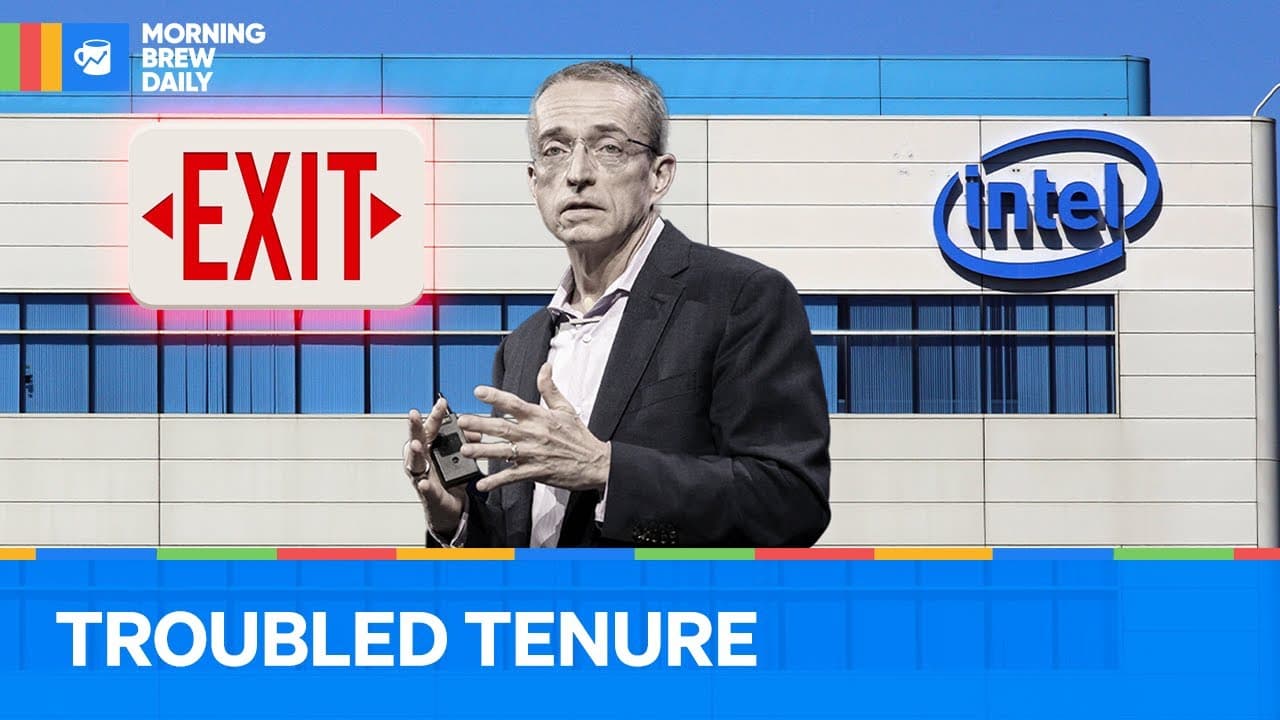
Why Did Intel CEO Pat Gelsinger Step Down?
TL;DR
Pat Gelsinger, Intel's CEO, stepped down after failing to reverse the company's decline and narrow the gap with competitors like Nvidia. Despite his efforts to revitalize Intel's chip manufacturing, including investments in new factories and aligning with government initiatives, the company's market position weakened, leading to his departure.
Transcript
Good Morning Brew Daily Show. I'm Neal Freyman. And I'm Toby Howell. Today, sales of the Bible are skyrocketing this year. Why is everyone curling up with two Corinthians? Then TikTok shop had a Black Friday to remember. Is it actually a threat to dethrone Amazon? It's Tuesday, December 3rd. Let's ride. Hope you all are back in the swing of things ... Read More
Key Insights
- Pat Gelsinger was brought in as Intel's CEO to restore its competitive edge but stepped down after three years.
- Intel's stock rose 4% after Gelsinger's resignation, indicating investor relief at his departure.
- Intel's decline began before Gelsinger, with missed opportunities like rejecting a processor deal for the iPhone.
- Intel's attempt to compete with Nvidia in the AI market failed, with Nvidia now 33 times larger by market cap.
- Gelsinger's strategy involved expensive investments in U.S. chip manufacturing, aligning with the Biden administration's agenda.
- Intel received $8 billion from the Chips and Science Act to support its manufacturing initiatives.
- The company's market value has halved this year, losing its status as a leading U.S. chipmaker.
- Intel's failed strategies and past missteps contributed to its struggles, leading to Gelsinger's forced exit.
Install to Summarize YouTube Videos and Get Transcripts
Explore YouTube Video Summarizer or Get YouTube Transcript Extractor
Questions & Answers
Q: Why did Pat Gelsinger step down as Intel CEO?
Pat Gelsinger stepped down as Intel CEO after failing to implement a successful turnaround strategy for the company. Under his leadership, Intel struggled to regain its competitive edge against rivals like Nvidia and suffered a significant loss in market value. The board was dissatisfied with his progress, leading to his resignation or removal.
Q: What were the major challenges faced by Intel during Gelsinger's tenure?
During Gelsinger's tenure, Intel faced challenges such as increased competition from Nvidia, missed opportunities like not producing iPhone processors, and strategic errors from previous leadership. The company's market value declined, and it struggled to keep pace with advancements in AI and chip manufacturing, contributing to Gelsinger's departure.
Q: How did investors react to Gelsinger's resignation?
Investors reacted positively to Gelsinger's resignation, as evidenced by a 4% rise in Intel's stock value following the announcement. This response indicates that investors had lost confidence in Gelsinger's ability to lead the company back to its former glory and were hopeful for a more effective leadership change.
Q: What strategic moves did Gelsinger make during his time at Intel?
Gelsinger focused on revitalizing Intel's manufacturing capabilities, investing in new chip fabrication plants in the U.S. and Europe. He aligned these efforts with the Biden administration's agenda to boost American chip manufacturing. However, these long-term strategies have yet to show significant positive outcomes for Intel's market position.
Q: What were Intel's missed opportunities before Gelsinger became CEO?
Before Gelsinger's leadership, Intel missed significant opportunities, such as declining to produce processors for the iPhone and failing to acquire Nvidia in 2005. These decisions have been detrimental to Intel's market position, as Nvidia has since become a dominant player in the AI and chip industries.
Q: How did Gelsinger's strategies align with government initiatives?
Gelsinger's strategies included significant investments in U.S. chip manufacturing, aligning with the Biden administration's efforts to revitalize domestic chip production. Intel received $8 billion from the Chips and Science Act to support these initiatives, which aim to enhance American competitiveness in the global chip market.
Q: What impact did Intel's struggles have on its market reputation?
Intel's struggles have significantly impacted its market reputation, with the company losing half of its market value this year. Once considered America's leading chipmaker, Intel has fallen behind competitors like Nvidia, damaging its status as a global leader in the semiconductor industry.
Q: What are the long-term prospects for Intel after Gelsinger's departure?
Intel's long-term prospects remain uncertain following Gelsinger's departure. While his investments in U.S. manufacturing could eventually strengthen Intel's position, the company must address past strategic errors and regain competitive advantage in the rapidly evolving tech landscape. A new leadership approach may be necessary to achieve these goals.
Summary & Key Takeaways
-
Pat Gelsinger's tenure as Intel CEO ended after three years due to his inability to reverse the company's decline and compete effectively with Nvidia. His resignation came after Intel's board expressed dissatisfaction with his turnaround plan. Despite efforts to revitalize Intel's manufacturing capabilities, the company continued to lose market value and reputation.
-
Intel's challenges began before Gelsinger, with significant missed opportunities like the decision not to produce iPhone processors and failing to acquire Nvidia. Gelsinger's ambitious investments in U.S. chip manufacturing aligned with government initiatives but have yet to yield positive results.
-
Investor confidence in Gelsinger waned as Intel's market position weakened, leading to a 4% rise in stock value following his resignation. Intel's struggles highlight the impact of past strategic errors and the difficulty of regaining competitive advantage in the rapidly evolving tech industry.
Read in Other Languages (beta)
Share This Summary 📚
Summarize YouTube Videos and Get Video Transcripts with 1-Click
Try YouTube Summary with ChatGPT & Claude or YouTube Transcript Generator
Explore More Summaries from Morning Brew Daily 📚


Summarize YouTube Videos and Get Video Transcripts with 1-Click
Try YouTube Summary with ChatGPT & Claude or YouTube Transcript Generator