Economic rights of citizenship | Citizenship | High school civics | Khan Academy
TL;DR
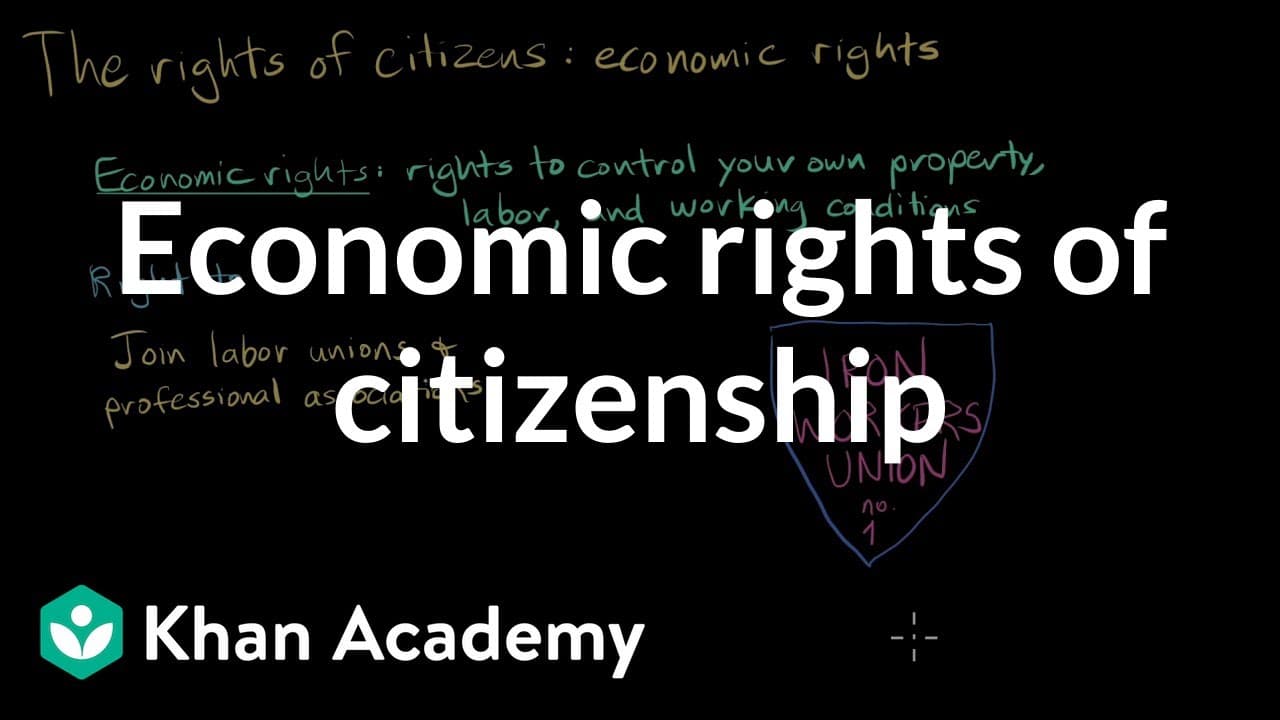
Economic rights encompass the ability to control and own property, labor, and working conditions, and include rights to acquire, use, transfer, and dispose of property, receive just compensation for the taking of private property, protect copyrights and patents, earn a wage, choose employment, work in safe conditions, and associate with others.
Transcript
- [Narrator] The last set of rights we'll discuss in this lesson are the economic rights of citizens. These are the rights that citizens have to control their own property, labor and working conditions. This includes all of the rights associated with your ability to make money and your ability to own stuff. The most basic of these rights is to acqu... Read More
Key Insights
- 🗯️ Economic rights involve the ability to control and own property, labor, and business dealings.
- 😒 Property rights encompass the acquisition, use, transfer, and disposal of property, as well as receiving fair compensation for its taking.
- 💦 Copyrights and patents protect individuals' ideas, work, and inventions.
- 💦 Economic rights safeguard the freedom to own labor, earn a wage, choose employment, and work in safe conditions.
- 👻 Associations and unions allow individuals to combine their interests, advocate for themselves, and protect their rights.
- 🗯️ Economic rights contribute to the system of capitalism, where individuals control economic organizations.
- 👻 Violations of economic rights can occur through not allowing unionization, inadequate compensation for the taking of private property, or forcing employment changes.
Install to Summarize YouTube Videos and Get Transcripts
Explore YouTube Video Summarizer or Get YouTube Transcript Extractor
Questions & Answers
Q: What are economic rights?
Economic rights refer to the rights individuals have to control their property, labor, and working conditions, including the ability to own, use, transfer, and dispose of property, receive just compensation, protect copyrights and patents, earn a wage, choose employment, work in safe conditions, and associate with others.
Q: How are property rights protected by the government?
Property rights are protected by ensuring individuals can acquire, use, transfer, and dispose of property. The government also guarantees just compensation for the taking of private property for public use, as stated in the fifth amendment.
Q: What economic rights safeguard the freedom to own labor and earn money?
Economic rights include the right to earn a wage, choose employment, and work in safe conditions. These rights ensure individuals can control their labor and have the ability to earn money from it.
Q: How do economic rights relate to associations and business dealings?
Economic rights allow individuals to associate with others, join labor unions and professional associations, and advocate for their interests. Additionally, they enable individuals to establish and operate businesses and enter into lawful contracts with others.
Summary & Key Takeaways
-
Economic rights cover the ability to control property, labor, and working conditions.
-
These rights include the right to own and dispose of property, receive just compensation for the taking of private property for public use, and protect copyrights and patents.
-
They also involve the freedom to own labor, choose employment, work in safe conditions, and associate with others.
Read in Other Languages (beta)
Share This Summary 📚
Summarize YouTube Videos and Get Video Transcripts with 1-Click
Try YouTube Summary with ChatGPT & Claude or YouTube Transcript Generator
Explore More Summaries from Khan Academy 📚



Summarize YouTube Videos and Get Video Transcripts with 1-Click
Try YouTube Summary with ChatGPT & Claude or YouTube Transcript Generator