How Can Architects Design Habitats for Mars and the Moon?
TL;DR
Architects are designing habitats for Mars and the Moon using local materials, specifically moon regolith, combined with 3D printing technology to create sustainable structures. The design focuses on facing extreme environmental challenges and ensures autonomy in construction through multiple rovers, allowing for redundancy and adaptability. This innovative approach highlights the importance of architecture in solving complex problems in interplanetary habitation.
Transcript
I must have been about 12 years old when my dad took me to an exhibition on space, not far from here, in Brussels. And the year was about -- I think it was 1988, so it was the end of the Cold War. There was a bit of an upmanship going on between the Americans and the Russians bringing bits to that exhibition. NASA brought a big blow-up space shuttl... Read More
Key Insights
- 🚀 Space exhibition in 1988 showcasing the competition between American and Russian space technologies, inspiring the speaker's passion for spaceships and architectural design.
- 🌍 Designing projects worldwide with a focus on different environments and constraints, highlighting the importance of design in challenging situations.
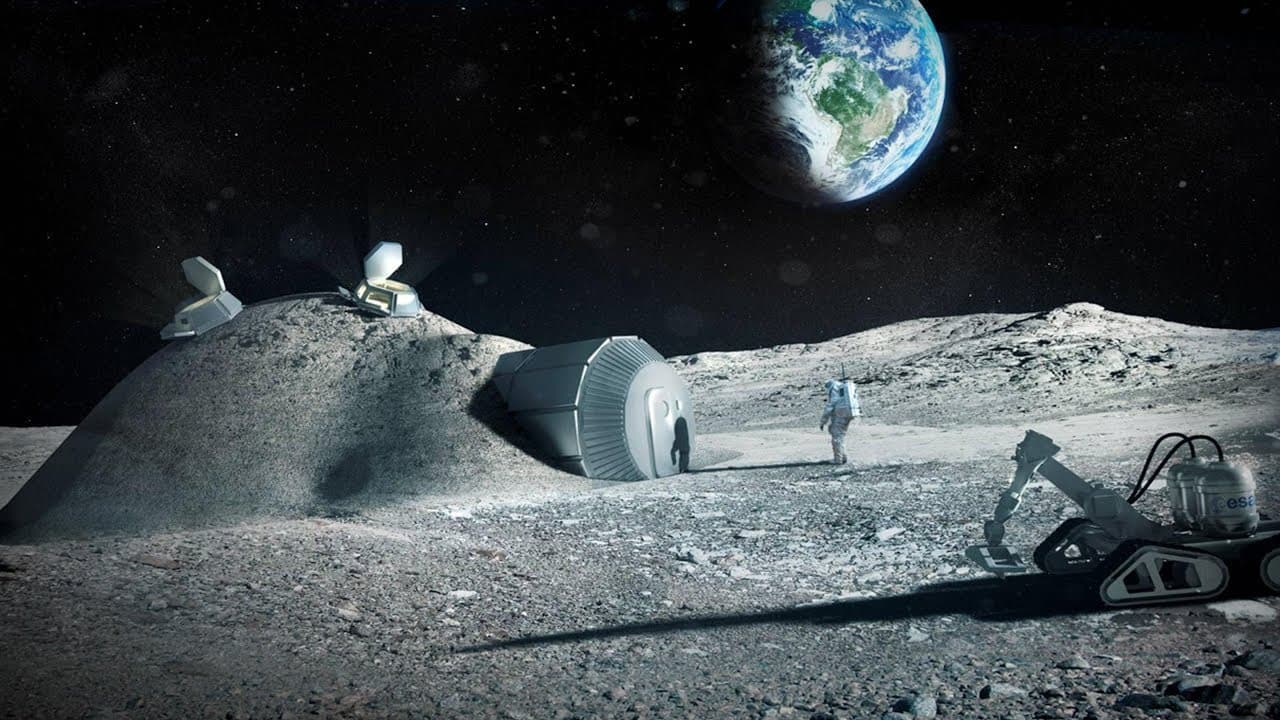
- 🌔 Designing a Moon habitat and a Mars habitation, emphasizing the need for compact and lightweight architectural systems to overcome cost and space limitations.
- 🛰️ Challenges of building on the Moon include protecting against extreme temperatures, radiation, and meteorites, leading the speaker to propose a protective dome and a cave-like structure for mass and protection.
- 🌑 Local materials, specifically moon dust or regolith, can be used for building structures on the Moon, utilizing 3D printing technology that can solidify regolith layer by layer.
- 🚀 Mars projects require autonomy due to the greater distance and lack of direct radio contact. Building hundreds of rovers provides redundancy and allows the project to continue even if some do not arrive.
- 🔄 Road trip experiment with a swarm of small robots, demonstrating their ability to autonomously move sand without teleoperation or predetermined paths.
- 🌍 Redundancy and independent life support systems in the design of habitats, ensuring survivability and adaptability in unforeseen circumstances. Design and architecture play a crucial role in solving complex problems in interplanetary habitation projects.
Install to Summarize YouTube Videos and Get Transcripts
Explore YouTube Video Summarizer or Get YouTube Transcript Extractor
Questions & Answers
Q: What inspired the speaker to become an architect?
The speaker was inspired to become an architect after visiting an exhibition on space as a child and seeing the Mir space station. This experience led him to start drawing technical drawings of spaceships and ultimately pursue a career in architecture.
Q: What are some of the projects the speaker has been involved with?
The speaker has been involved in various architectural projects over the last decade and a half. These projects have been located all over the world and have included designing a Moon habitat for the European Space Agency and a habitation on Mars for NASA.
Q: What are some of the challenges of building on the Moon?
Building on the Moon poses several challenges. First, the cost of transporting materials is very expensive, so structures need to be kept lightweight. Additionally, the Moon lacks a magnetic field, which exposes astronauts to radiation, and does not have an atmosphere to burn up meteorites. Therefore, astronauts need protection from extreme temperatures, radiation, and meteorite impacts.
Q: How do architects plan to use local materials on the Moon?
Architects plan to utilize local materials on the Moon, specifically moondust or regolith. They will use a 3D printer, similar to a small robot rover, to scoop up and lay down thin layers of regolith to create structures over time. This approach reduces the need to transport heavy materials from Earth and makes the structures lighter.
Q: How will robots be utilized in Mars missions?
In Mars missions, robots will play a crucial role due to the distance and lack of direct radio contact with Earth. Instead of building just one or two rovers, architects plan to build hundreds of autonomous robots. These robots will be specialized in tasks such as digging regolith, transporting materials, and creating dome structures using microwave technology. The redundancy of robots ensures that even if some do not arrive, the mission can still progress.
Summary & Key Takeaways
-
The speaker recalls a childhood experience at a space exhibition where he was inspired to become an architect and not a space engineer
-
The speaker discusses various architectural projects he has been involved with, including designing a moon habitat and a Mars habitation
-
The speaker explains how they plan to use local materials and 3D printing to construct structures on the moon and Mars
Read in Other Languages (beta)
Share This Summary 📚
Summarize YouTube Videos and Get Video Transcripts with 1-Click
Try YouTube Summary with ChatGPT & Claude or YouTube Transcript Generator
Explore More Summaries from TED 📚





Summarize YouTube Videos and Get Video Transcripts with 1-Click
Try YouTube Summary with ChatGPT & Claude or YouTube Transcript Generator