A Conversation With Stanley Fischer
TL;DR
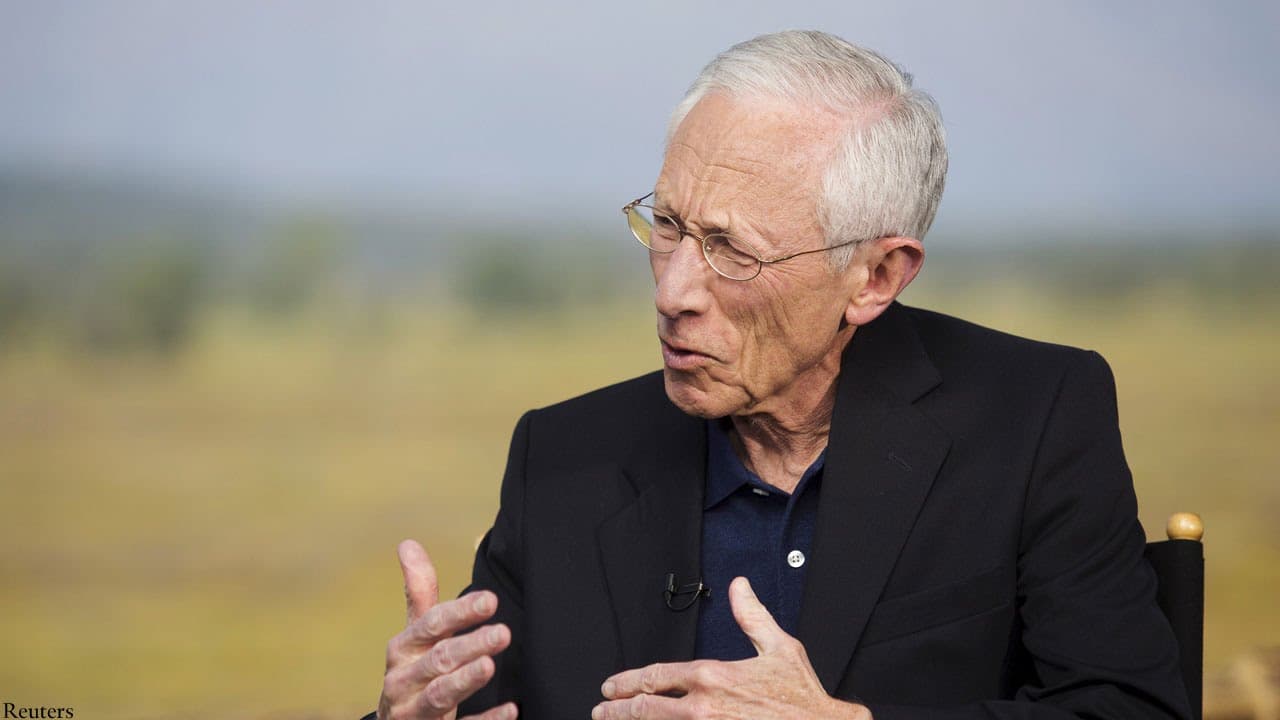
Stanley Fischer discusses economic developments and monetary policy at the CFR meeting.
Transcript
KEENE: Good afternoon. Because of time and an important statement by the vice chairman, I�m going to be very quick, abrupt, no discussion of his immense accomplishments. I�m going to assume so many of you know that. I need to welcome you to today�s Council on Foreign Relations meeting. It is part of the C. Peter McColough Series on International Ec... Read More
Key Insights
- Stanley Fischer emphasized the Federal Reserve's decision to raise the federal funds rate in December due to labor market improvements and expectations of inflation reaching the 2% target.
- Fischer discussed the use of new monetary policy tools, such as the interest on reserve balances and the overnight reverse repo facility, to control short-term interest rates.
- The Federal Reserve remains data-dependent, adjusting policy based on incoming economic and financial information to meet employment and inflation goals.
- Fischer highlighted the potential benefits of a modest overshoot in the unemployment rate to help inflation reach the 2% target more rapidly.
- He explained the challenges of integrating balance sheet policy with interest rate policy, emphasizing the importance of maintaining a larger balance sheet for accommodative financial conditions.
- Fischer acknowledged the global economic uncertainties, particularly the volatility in global asset markets and the structural adjustments in China.
- He addressed the issue of negative interest rates, noting that several countries have implemented them successfully despite initial skepticism.
- Fischer discussed the long-term concerns of rising interest costs and the need for fiscal policy measures to manage the national debt sustainably.
Install to Summarize YouTube Videos and Get Transcripts
Explore YouTube Video Summarizer or Get YouTube Transcript Extractor
Questions & Answers
Q: What was the primary reason for the Federal Reserve's rate hike in December?
The primary reason for the Federal Reserve's rate hike in December was the substantial improvement in the labor market and the Committee's confidence that inflation would return to their 2% goal over the medium term. Employment growth averaged 220,000 per month, and the unemployment rate declined, which supported their decision.
Q: How does the Federal Reserve plan to control short-term interest rates with a large balance sheet?
The Federal Reserve plans to control short-term interest rates with a large balance sheet by employing new tools, such as increasing the interest rate on reserve balances held at the Federal Reserve and utilizing an overnight reverse repurchase facility. These tools help provide a soft floor for the federal funds rate, consistent with their target range.
Q: What are the global economic concerns affecting U.S. monetary policy?
Global economic concerns affecting U.S. monetary policy include increased volatility in global asset markets, ongoing structural adjustments in China, and declines in oil and commodity prices. These factors contribute to uncertainty about global growth and inflation, potentially impacting the U.S. economy and necessitating close monitoring by the Federal Reserve.
Q: Why is a modest overshoot in the unemployment rate considered beneficial?
A modest overshoot in the unemployment rate is considered beneficial because it can help move inflation back to the 2% target more rapidly. With inflation currently below target, such an overshoot indicates remaining slack in the labor market, which could support inflationary pressures without risking a significant rise in inflation or requiring abrupt policy tightening.
Q: What is the Federal Reserve's stance on negative interest rates?
The Federal Reserve acknowledges that negative interest rates have been successfully implemented by several countries, despite initial skepticism about their feasibility. Negative rates are possible because holding large amounts of currency incurs costs, such as storage and insurance, which effectively lower the zero lower bound. The Fed is observing these international experiences closely.
Q: How does the Federal Reserve view the relationship between monetary policy and fiscal policy?
The Federal Reserve views monetary policy as a tool for managing economic aggregates, while fiscal policy, which involves government spending and taxation decisions, plays a crucial role in addressing structural economic issues. The Fed believes that fiscal policy should complement monetary policy, especially in areas like infrastructure investment, to enhance productivity and economic growth.
Q: What are the long-term concerns regarding rising interest costs?
Long-term concerns regarding rising interest costs include the potential for increasing budgetary pressure as interest payments on the national debt grow. The Congressional Budget Office projects that interest costs will rise significantly in the coming years, highlighting the need for sustainable fiscal policies to manage the national debt and prevent it from crowding out other government spending.
Q: How does the Federal Reserve address income inequality through monetary policy?
The Federal Reserve addresses income inequality indirectly through its monetary policy goals of maximum employment and stable inflation. While monetary policy tools are not designed to directly tackle income distribution issues, achieving full employment can help improve economic conditions for lower-income individuals. However, addressing broader inequality requires fiscal and structural policies beyond the Fed's mandate.
Summary & Key Takeaways
-
Stanley Fischer addressed the Council on Foreign Relations, discussing the Federal Reserve's recent monetary policy decisions, including the rate hike in December, which was driven by improvements in the labor market and inflation expectations. He emphasized the data-dependent nature of policy decisions and the use of new tools to manage interest rates.
-
Fischer highlighted the importance of balancing monetary policy with economic conditions, addressing concerns about the global economic outlook, and the potential impacts of financial market volatility. He also discussed the challenges of integrating balance sheet policies with interest rate policies while maintaining economic stability.
-
The discussion covered the implications of negative interest rates, the need for fiscal policy to complement monetary policy, and the challenges of managing economic growth and inflation in a rapidly changing global environment. Fischer emphasized the importance of long-term planning to address rising interest costs and fiscal sustainability.
Read in Other Languages (beta)
Share This Summary 📚
Summarize YouTube Videos and Get Video Transcripts with 1-Click
Try YouTube Summary with ChatGPT & Claude or YouTube Transcript Generator
Explore More Summaries from Council on Foreign Relations 📚


Summarize YouTube Videos and Get Video Transcripts with 1-Click
Try YouTube Summary with ChatGPT & Claude or YouTube Transcript Generator