What Is Collision Theory and the Arrhenius Equation?
TL;DR
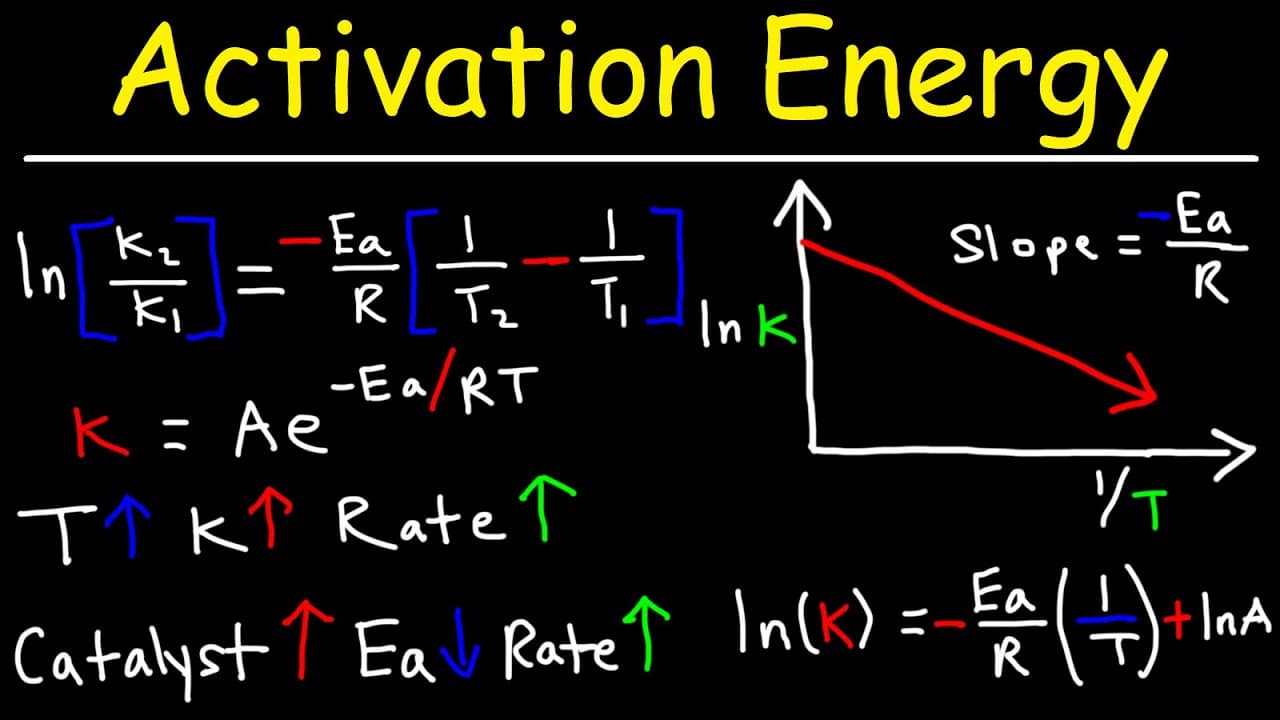
Collision theory states that for a chemical reaction to occur, molecules must collide with the correct orientation and sufficient energy. The Arrhenius equation quantifies how temperature and activation energy influence reaction rates. Increasing temperature or using a catalyst can lower activation energy and enhance the reaction rate.
Transcript
in this tutorial let's talk about the collision theory model so what's the basic idea behind the collision theory the basic idea is that for molecules to react they have to collide if they don't collide there's not going to be any chemical reaction if there's no physical contact between these molecules nothing's going to happen so molecules must co... Read More
Key Insights
- 💥 The collision theory states that molecules must collide for chemical reactions to occur.
- 💁 Molecules need to have the correct orientation to promote bond formation and reaction.
- 🥇 Activation energy is the minimum energy required for a reaction to take place.
- ☠️ Increasing temperature or adding a catalyst can lower activation energy and increase the reaction rate.
- ☠️ Concentration of reactants also influences the reaction rate by increasing the number of collisions.
- ☠️ The Arrhenius equation relates the rate constant to temperature and activation energy.
- ☠️ The rate constant represents the total number of collisions per second with the proper molecular orientation and sufficient energy.
Install to Summarize YouTube Videos and Get Transcripts
Explore YouTube Video Summarizer or Get YouTube Transcript Extractor
Questions & Answers
Q: What is the basic idea behind collision theory?
The basic idea is that for molecules to react, they must collide. Without collision, there will be no chemical reaction.
Q: Why is the correct molecular orientation important for a reaction to proceed?
The correct molecular orientation allows molecules to interact in a way that promotes bond formation and reaction. Incorrect orientation can hinder this process.
Q: How does activation energy affect the rate of a chemical reaction?
Activation energy is the energy required for a reaction to start. If the reactants do not have enough energy to overcome the activation energy, the reaction will not occur. Increasing temperature or adding a catalyst can lower activation energy and increase the reaction rate.
Q: How does concentration affect the rate of a chemical reaction?
Increasing the concentration of reactants leads to more collisions between molecules, resulting in a higher reaction rate.
Summary & Key Takeaways
-
Collision theory states that molecules must collide for chemical reactions to occur and that they must have the correct molecular orientation.
-
Molecules also need sufficient energy to break bonds and form new ones for a reaction to proceed.
-
Activation energy is the minimum energy required for a reaction to occur.
Read in Other Languages (beta)
Share This Summary 📚
Summarize YouTube Videos and Get Video Transcripts with 1-Click
Try YouTube Summary with ChatGPT & Claude or YouTube Transcript Generator
Explore More Summaries from The Organic Chemistry Tutor 📚


Summarize YouTube Videos and Get Video Transcripts with 1-Click
Try YouTube Summary with ChatGPT & Claude or YouTube Transcript Generator