ISIS and the U.S. Presidential Election
TL;DR
The U.S. faces tough decisions on ISIS and Middle East policy.
Transcript
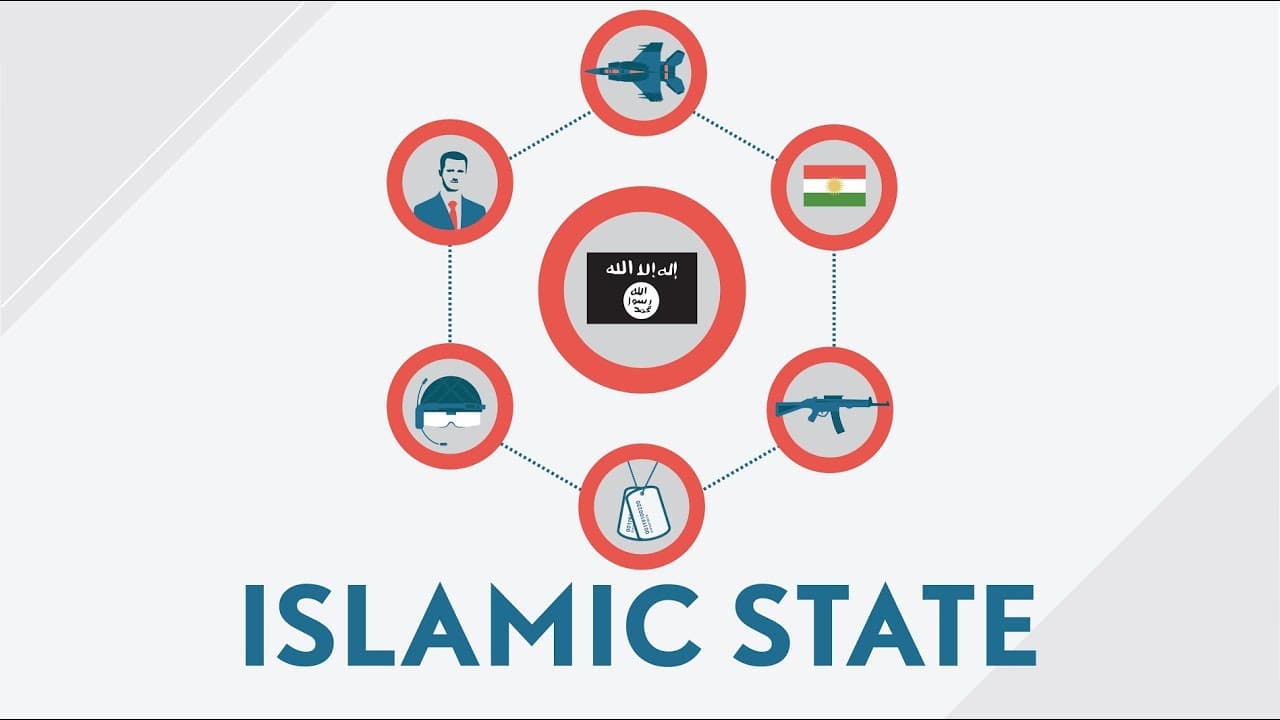
The self-proclaimed Islamic State dramatically rose from obscurity in 2014 when it split from al-Qaeda, seized territory in Iraq and Syria, and established what it describes as a caliphate governed by strict sharia law. The Islamic State views non-Muslims and any Muslim who does not accept its rule as enemies. It has recruited foreign fighters from... Read More
Key Insights
- The Islamic State emerged in 2014, seizing territory in Iraq and Syria, and established a caliphate governed by sharia law.
- ISIS considers non-Muslims and dissenting Muslims as enemies, recruiting fighters globally and inspiring jihadist groups.
- The Syrian civil war has displaced half the population, causing a refugee crisis in the region and Europe.
- The U.S. is taking steps to counter ISIS through airstrikes, training local partners, and deploying military advisors.
- A major debate is whether to deploy significant U.S. ground forces against ISIS, risking a prolonged conflict.
- Supporting Kurdish forces is effective against ISIS but complicates relations with Turkey, a NATO ally.
- The Syrian conflict is tied to ISIS, with Assad's regime backed by Russia and Iran, complicating U.S. policy.
- The next U.S. president will face complex regional challenges, including sectarian strife and Kurdish independence aspirations.
Install to Summarize YouTube Videos and Get Transcripts
Explore YouTube Video Summarizer or Get YouTube Transcript Extractor
Questions & Answers
Q: What led to the rise of the Islamic State?
The Islamic State rose to prominence in 2014 after splitting from al-Qaeda. It seized territory in Iraq and Syria and established a caliphate governed by strict sharia law. The group's ability to recruit foreign fighters globally and inspire allegiance from jihadist groups contributed to its rapid expansion and influence.
Q: How has the Syrian civil war impacted the region?
The Syrian civil war has displaced half of the country's population, creating a significant refugee crisis in the region and Europe. The conflict has also become a battleground for various factions, including the Islamic State, complicating efforts to achieve peace and stability in the Middle East.
Q: What steps has the U.S. taken to counter ISIS?
The U.S. has implemented several strategies to counter ISIS, including conducting airstrikes, arming and training local partners, and deploying military advisors and special operations forces. These efforts aim to restrict ISIS's resources and recruits, while also considering the broader geopolitical implications in the Middle East.
Q: What are the challenges of deploying U.S. ground forces against ISIS?
Deploying U.S. ground forces against ISIS presents the risk of a protracted and costly military engagement in the Middle East, with no clear exit strategy. There is ongoing debate about the effectiveness and potential consequences of such a move, given past experiences in the region.
Q: Why is supporting Kurdish forces controversial?
Supporting Kurdish forces is controversial because, while they are effective against ISIS, it strains relations with Turkey, a NATO ally that views them as terrorists. Additionally, increased support for Iraqi Kurds could fuel aspirations for an independent Kurdish state, opposed by Iraq, Turkey, Syria, and Iran.
Q: How does the Assad regime affect the fight against ISIS?
The Assad regime's continued power in Syria complicates the fight against ISIS, as it inspires support for the group. Assad is backed by Russia and Iran, creating divisions among influential countries on how to address his regime, making it challenging to find a negotiated solution acceptable to the U.S.
Q: What regional challenges will the next U.S. president face?
The next U.S. president will face interconnected regional challenges, including sectarian strife in Iraq, spillover effects into Turkey, Kurdish independence aspirations, and tensions between Iran and Saudi Arabia. These issues, alongside Russia's assertiveness, will significantly impact U.S. foreign policy decisions.
Q: What are the implications of U.S. decisions on ISIS for global policy?
U.S. decisions on ISIS will affect not only Middle East policy but also global stability. The approach to ISIS will influence relations with key allies and adversaries, impact regional power dynamics, and shape the U.S.'s role in addressing global terrorism and security challenges in the coming years.
Summary & Key Takeaways
-
The Islamic State rose to prominence in 2014, establishing a caliphate in Iraq and Syria, and recruiting globally. The group is a major player in the Syrian civil war, contributing to a massive refugee crisis. The U.S. is actively working to counter ISIS through various military and strategic means.
-
The U.S. faces a dilemma in deploying ground troops against ISIS, which could lead to a prolonged conflict. Supporting Kurdish forces presents challenges due to Turkey's opposition. The Syrian conflict further complicates matters, with Assad's regime supported by Russia and Iran.
-
The next U.S. president will need to navigate complex regional issues, including sectarian tensions, Kurdish independence, and the influence of Iran and Saudi Arabia. Decisions made will have significant implications for U.S. foreign policy and global stability.
Read in Other Languages (beta)
Share This Summary 📚
Summarize YouTube Videos and Get Video Transcripts with 1-Click
Try YouTube Summary with ChatGPT & Claude or YouTube Transcript Generator
Explore More Summaries from Council on Foreign Relations 📚


Summarize YouTube Videos and Get Video Transcripts with 1-Click
Try YouTube Summary with ChatGPT & Claude or YouTube Transcript Generator