Why Nike Is Struggling
TL;DR
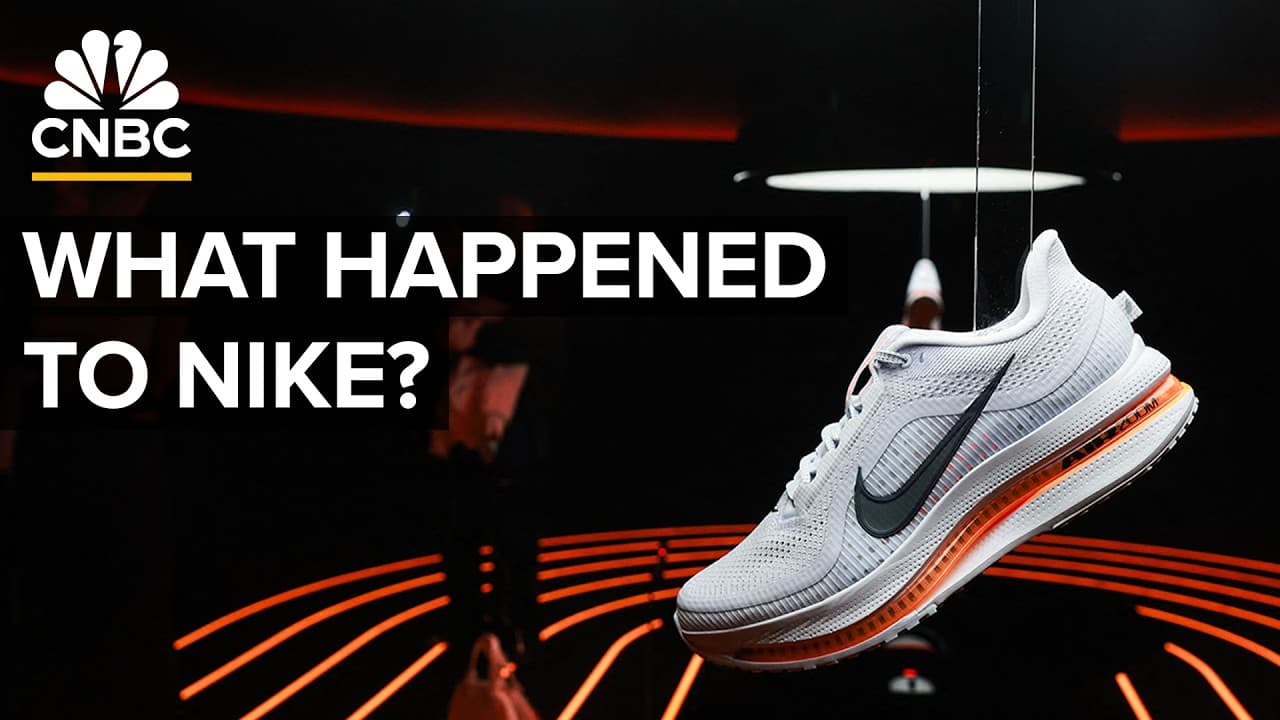
Nike faces challenges but aims for a turnaround under new CEO.
Transcript
Nike is the world's largest sportswear brand. This year, the company is on a mission to get its stride back. This week, the company posting its first earnings under new CEO Elliott Hill. Nike beating on the top and bottom lines, but its sales fell 8%. Analysts say it's the beginning of a long turnaround for the company, after what s... Read More
Key Insights
- Nike is experiencing significant financial challenges, including a 20% drop in shares and a $28 billion market cap loss, partly attributed to strategic missteps over several years.
- The company's shift to a direct-to-consumer model, focusing on digital sales, did not yield the expected long-term benefits, especially as consumers returned to physical shopping post-COVID.
- Nike's innovation lull allowed competitors like Hoka and On Running to capture market share, highlighting the need for Nike to reinvigorate its product development and marketing strategies.
- The excess inventory problem has led to a perception of Nike products as less exclusive and desirable, impacting the brand's image and consumer interest.
- Nike's new CEO, Elliott Hill, a 32-year veteran of the company, is tasked with revitalizing the brand by focusing on sports marketing and clearing excess inventory.
- Analysts suggest that Nike's overemphasis on technology and digital disruption may have diverted attention from its core strengths in sports and retail storytelling.
- The company's recent strategic pivot includes re-engaging with wholesale partners like Footlocker, acknowledging the importance of traditional retail channels in its distribution strategy.
- Nike's future success will depend on its ability to innovate, effectively market its products, and leverage its substantial R&D and marketing budgets to regain market leadership.
Install to Summarize YouTube Videos and Get Transcripts
Explore YouTube Video Summarizer or Get YouTube Transcript Extractor
Questions & Answers
Q: What were the main reasons for Nike's recent financial struggles?
Nike's financial struggles stem from a combination of strategic errors, including an overemphasis on direct-to-consumer and digital sales, which did not yield the expected long-term benefits. This shift away from traditional retail partners led to a loss of market share to competitors like Hoka and On Running. Additionally, a lack of innovation and excess inventory issues have negatively impacted the brand's image and financial performance.
Q: How did Nike's focus on digital sales impact its market position?
Nike's focus on digital sales initially seemed promising, especially during the COVID-19 lockdown when online shopping surged. However, as consumers returned to physical stores, Nike's digital growth stalled. The company's decision to limit ties with retail partners led to a decrease in market presence and allowed competitors to capture market share, highlighting the limitations of a purely digital strategy.
Q: What role does innovation play in Nike's current challenges?
Innovation is a critical factor in Nike's current challenges. The company has faced criticism for a lull in product innovation, which has allowed competitors like Hoka and On Running to capture market share with new, appealing styles. Nike's ability to develop and market innovative products is essential for regaining its competitive edge and consumer interest.
Q: What steps is Nike's new CEO taking to address the company's issues?
Elliott Hill, Nike's new CEO, is focusing on several key areas to address the company's issues. These include clearing excess inventory, reinvesting in sports marketing, and revitalizing product innovation. Hill's leadership emphasizes returning to Nike's core strengths in sports and retail storytelling while balancing digital and traditional retail strategies to restore the brand's market position.
Q: How has Nike's relationship with retail partners evolved recently?
Nike's relationship with retail partners has evolved as the company recognized the limitations of its direct-to-consumer focus. Nike is re-engaging with wholesale partners like Footlocker, acknowledging the importance of traditional retail channels in its distribution strategy. This shift aims to enhance market presence and leverage the strengths of established retail partnerships to support growth.
Q: What lessons can be learned from Nike's recent strategic challenges?
Nike's recent strategic challenges highlight the importance of balancing innovation with core business strengths. The company's overemphasis on digital disruption and direct-to-consumer sales diverted attention from its traditional retail and storytelling strengths. Successful companies must evolve without losing sight of their foundational strengths and adapt strategies to changing consumer preferences and market dynamics.
Q: What impact did the COVID-19 pandemic have on Nike's business strategy?
The COVID-19 pandemic accelerated Nike's shift towards digital sales, as online shopping became essential during lockdowns. However, this focus on digital disrupted traditional retail partnerships and led to strategic challenges as consumers returned to physical shopping post-pandemic. The pandemic underscored the need for a balanced approach that integrates digital innovation with traditional retail strengths.
Q: What are the expectations for Nike's future performance under Elliott Hill's leadership?
Expectations for Nike's future performance under Elliott Hill's leadership are cautiously optimistic. Hill's extensive experience within the company and focus on sports marketing and innovation are seen as positive steps towards revitalizing the brand. However, the turnaround will require time and strategic execution to regain market leadership and consumer trust, with a focus on product development and effective storytelling.
Summary & Key Takeaways
-
Nike, the world's largest sportswear brand, is undergoing a significant transition as it attempts to recover from a challenging period marked by financial losses and strategic missteps. The company's focus on digital sales and direct-to-consumer models did not yield the expected results, leading to a loss of market share to emerging competitors.
-
Under new CEO Elliott Hill, Nike aims to address these challenges by returning to its roots in sports marketing and innovation. Hill's leadership is expected to refocus the company's efforts on product development and storytelling, leveraging Nike's strong brand identity and resources to regain consumer interest.
-
The company's strategic pivot includes re-engaging with wholesale partners and addressing inventory issues to restore its image of exclusivity and desirability. Nike's success will depend on its ability to balance digital innovation with traditional retail strengths, ensuring sustainable growth and market leadership.
Read in Other Languages (beta)
Share This Summary 📚
Summarize YouTube Videos and Get Video Transcripts with 1-Click
Try YouTube Summary with ChatGPT & Claude or YouTube Transcript Generator
Explore More Summaries from CNBC 📚






Summarize YouTube Videos and Get Video Transcripts with 1-Click
Try YouTube Summary with ChatGPT & Claude or YouTube Transcript Generator