Rearguard (Military Tactic) - Heroic Sacrifice at Dunkirk, 1940
TL;DR
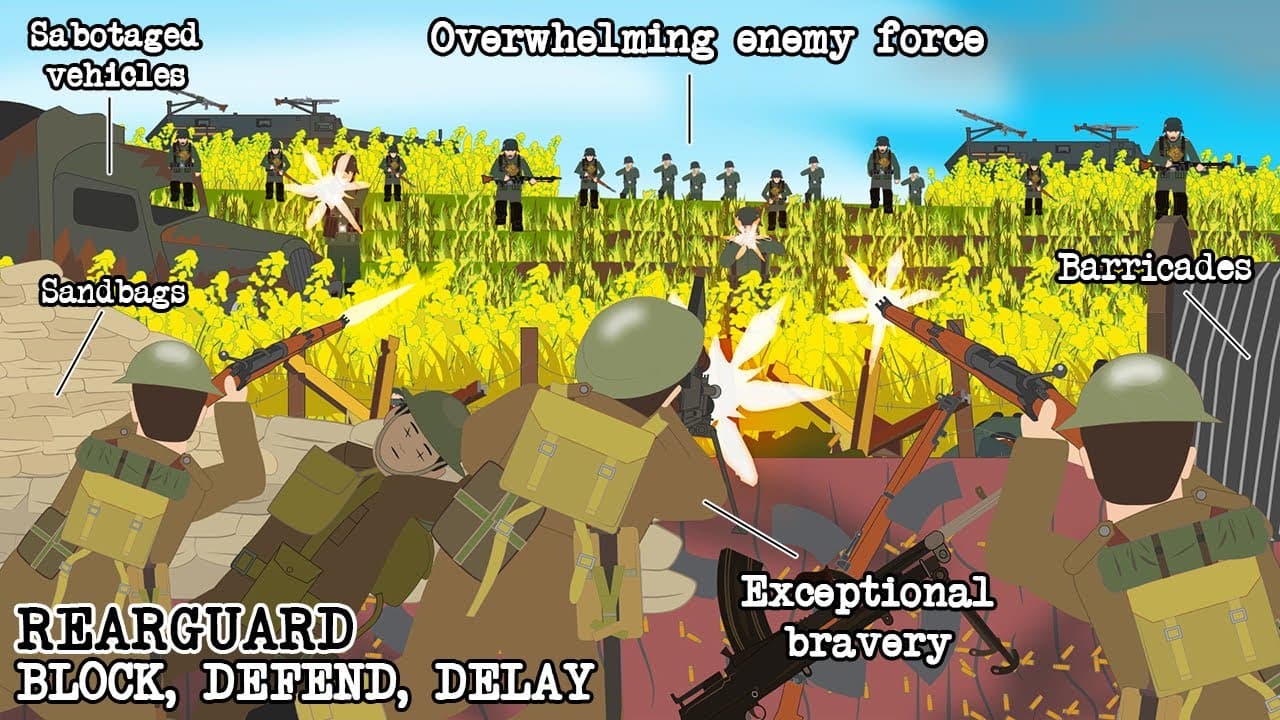
Rear guard units played a critical role in protecting the withdrawal of allied troops during the evacuation of Dunkirk in World War II.
Transcript
this video has been made possible by conflict of nations join the war with a real country of your choice in a free online pvp strategy game conflict of nations with the use of many different units that range from tanks and jets to nuclear submarines up to 128 other players in a real-time battle challenging them worldwide to create game matches that... Read More
Key Insights
- 💂 Rear guard units are a crucial part of military operations, providing protection and delaying tactics.
- 💂 Defensive tactics, such as establishing perimeters and using obstacles, increase the effectiveness of rear guard units.
- 💂 Offensive tactics, including sudden counterattacks and disrupting enemy logistics, can also be employed by rear guard units.
- 🖐️ Rear guard units played a pivotal role in the successful evacuation of allied troops during the Dunkirk operation in World War II.
- 💂 Bravery, discipline, and determination were essential qualities for rear guard soldiers.
- 😀 Rear guard units faced significant challenges, often being overstretched and facing stronger enemy forces.
- 💯 The sacrifices of rear guard soldiers ensured the safe evacuation of hundreds of thousands of allied troops.
Install to Summarize YouTube Videos and Get Transcripts
Explore YouTube Video Summarizer or Get YouTube Transcript Extractor
Questions & Answers
Q: What was the role of rear guard units in military operations?
Rear guard units protected the main body of military forces from attacks as they withdrew from the battlefield, establishing defensive perimeters and delaying the enemy.
Q: How did rear guard units contribute to the success of the Dunkirk evacuation?
Rear guard units at Dunkirk held back German forces, allowing the safe evacuation of hundreds of thousands of allied troops to the British Isles.
Q: What tactics did rear guard units use in their defense?
Rear guard units deployed defensive tactics such as establishing perimeters, using barricades and minefields, and repelling enemy attacks.
Q: Were there any instances where rear guard units successfully held off the enemy for a significant time?
Yes, there were cases where rear guard units managed to hold off the enemy long enough to make a successful withdrawal for themselves and the main body of troops.
Summary & Key Takeaways
-
Rear guard units were formed to protect the main body of military forces from attacks as they advanced or retreated.
-
These units established defensive perimeters, blocked enemy advances, and destroyed materials that couldn't be evacuated.
-
Rear guards were crucial during the evacuation of Dunkirk, holding back German forces to enable the safe withdrawal of allied troops.
Read in Other Languages (beta)
Share This Summary 📚
Summarize YouTube Videos and Get Video Transcripts with 1-Click
Try YouTube Summary with ChatGPT & Claude or YouTube Transcript Generator
Explore More Summaries from Simple History 📚

Summarize YouTube Videos and Get Video Transcripts with 1-Click
Try YouTube Summary with ChatGPT & Claude or YouTube Transcript Generator