A tactile 3D display, created with sound
TL;DR
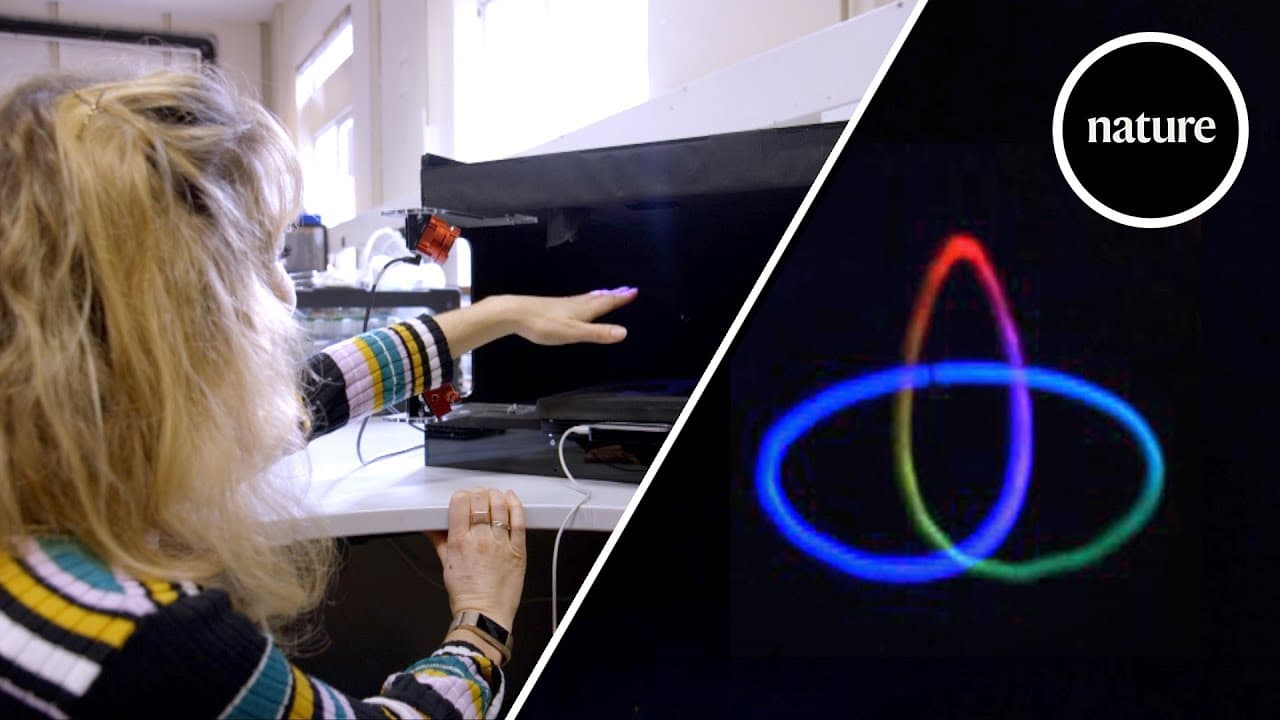
Researchers developed a 3D volumetric display using sound waves to create images and tactile sensations.
Transcript
To the human eye there appears to be a glowing three-dimensional butterfly moving around inside this black box. In fact all it is, is a tiny polystyrene bead. Wow, that's really small. Yes, it's like a one millimeter, two millimeter bead. It's suspended and we can move it so fast to create a 3D shape. This is a volumetric display. It's an image tha... Read More
Key Insights
- 🖕 Acoustic levitation technology enables the creation of true 3D images by suspending lightweight objects in mid-air.
- 🫷 The development showcases a fusion of visual, auditory, and tactile experiences, pushing the boundaries of conventional displays.
- 🥺 Current capabilities allow for the display of small, simple shapes, but advancements may lead to more complex representations.
- 🛟 The researchers emphasize the potential of integrating volumetric displays into everyday life, making 3D content readily accessible.
- 😤 The team's approach signifies a promising direction for blending interactive 3D graphics with practical applications.
- 👤 Potential applications include augmented reality, gaming, and educational tools where users can interact with 3D visualizations naturally.
- 🤑 The integration of audio feedback allows for a richer experience, enhancing the illusion of 3D shapes in physical space.
Install to Summarize YouTube Videos and Get Transcripts
Explore YouTube Video Summarizer or Get YouTube Transcript Extractor
Questions & Answers
Q: How does the acoustic levitation process work to suspend the polystyrene bead?
Acoustic levitation operates through sound waves emitted by arrays of speakers. High-pressure areas created by these waves trap the lightweight polystyrene bead in mid-air. This innovative method allows the bead's position to be rapidly updated, enabling it to generate a coherent 3D shape when lit.
Q: What inspired the University of Sussex team to pursue this volumetric display technology?
The team was inspired by earlier research from Brigham Young University, where researchers used lasers to manipulate tiny cellulose particles for volumetric display. Motivated to explore the potential of sound waves, the Sussex team decided to experiment with creating a similar effect, showcasing the collaborative nature of scientific innovation.
Q: What challenges did the researchers face in creating a seamless 3D image?
The significant challenge stemmed from the need to move the polystyrene beads quickly enough to create the illusion of a stable, non-moving image. To achieve this, the beads must be scanned rapidly—a process that necessitates precise timing and control to ensure the images meet the persistence of vision threshold.
Q: How does the display provide tactile sensations to users?
The display utilizes ultrasound waves to generate ripples in the air, creating tactile feedback that users can feel when they position their hands near the levitating bead. This technology allows for a tactile interaction that enhances the perception of the 3D images, making the experience more immersive.
Summary & Key Takeaways
-
A team from the University of Sussex created a unique 3D volumetric display using acoustic levitation to suspend tiny polystyrene beads and form images in mid-air.
-
By manipulating sound waves, the display not only visualizes objects but also produces audio feedback and tactile sensations, enhancing user experience.
-
Although currently able to create simple shapes, further advancements aim to achieve more complex imagery and integrate displays into daily life seamlessly.
Read in Other Languages (beta)
Share This Summary 📚
Summarize YouTube Videos and Get Video Transcripts with 1-Click
Try YouTube Summary with ChatGPT & Claude or YouTube Transcript Generator
Explore More Summaries from nature video 📚





Summarize YouTube Videos and Get Video Transcripts with 1-Click
Try YouTube Summary with ChatGPT & Claude or YouTube Transcript Generator