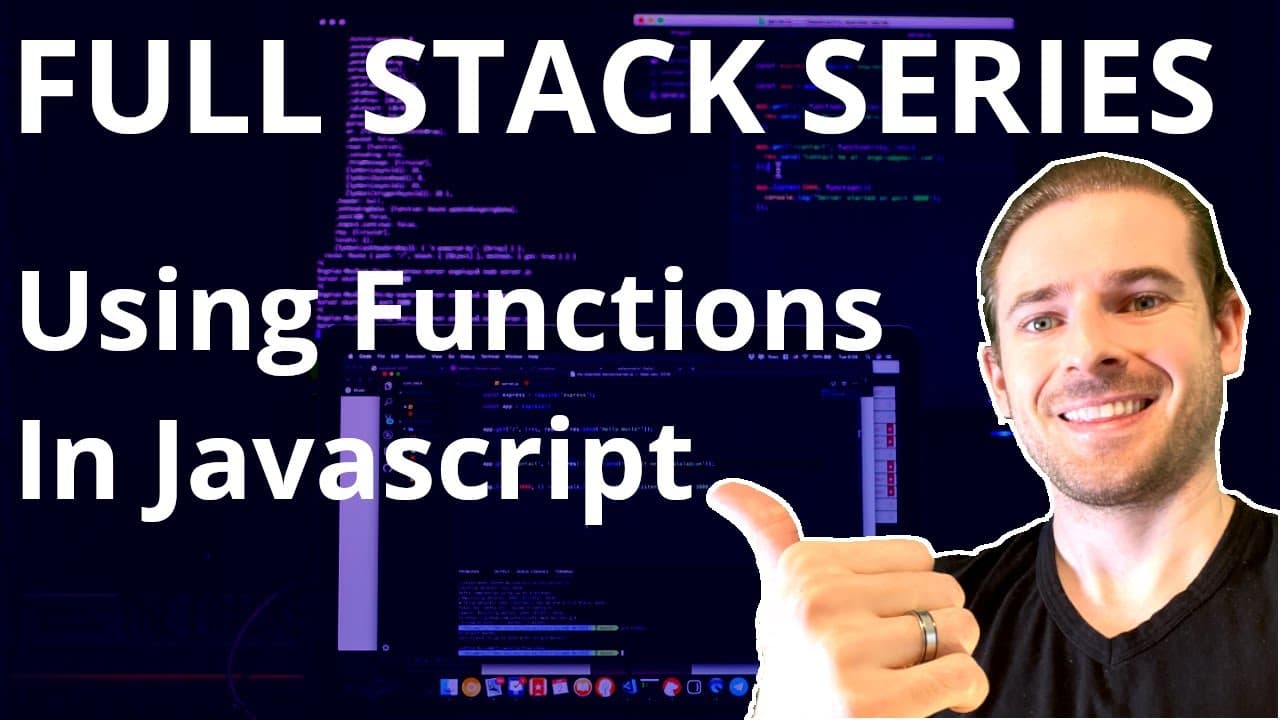
Using Functions in Javascript | Beginner's Guide to Full Stack Development
TL;DR
Learn how to define and use functions to streamline JavaScript code.
Transcript
all right so moving on to a different part of the series what i want to kind of talk about is using functions in javascript now this is going to be one of the most complex topics in my opinion if you're a beginner is learning how to use functions to make your code more clean and more efficient so i'm going to walk you through how you can define fun... Read More
Key Insights
- 👨💻 Functions enable code encapsulation, making logic reusable and helping maintain cleaner code.
- 💘 The two primary function definitions in JavaScript are regular function declarations and arrow functions, which have different syntactical and behavioral characteristics.
- 🍁 Understanding built-in array functions like
map,forEach, andjoincan streamline data manipulation processes significantly. - 🆘 Clear distinctions between parameters and arguments help prevent common programming errors in function usage.
- 👻 Using
returncan facilitate data flow and logic encapsulation within JavaScript programs, allowing for dynamic and flexible function output. - 🥺 Leveraging debugger tools to step through function calls can lead to better understanding and troubleshooting of code behavior.
- 🤝 Functions are foundational to developing structured and complex applications in JavaScript, especially when dealing with asynchronous operations or dynamic data rendering.
Install to Summarize YouTube Videos and Get Transcripts
Explore YouTube Video Summarizer or Get YouTube Transcript Extractor
Questions & Answers
Q: What are the advantages of using functions in JavaScript?
Functions help to organize code by allowing the abstraction of logic into reusable blocks, making it easier to maintain and reduce redundancy. By clarifying flow and purpose, functions also contribute to more readable and efficient code, particularly in larger applications.
Q: Can you explain the difference between parameters and arguments in functions?
Parameters are the variables listed in a function's definition that specify what kind of values the function can accept. Arguments, on the other hand, are the actual values passed into the function when it is called. Understanding this distinction is crucial for avoiding confusion when writing and using functions.
Q: What are helper functions in JavaScript, and can you provide examples?
Helper functions are utility functions defined to carry out specific tasks within a program. For example, the map and forEach methods on arrays are built-in helper functions that allow you to perform operations on each element in an array, promoting cleaner and more concise code.
Q: How do you define an arrow function in JavaScript, and how does it differ from traditional function declarations?
An arrow function is defined using the syntax (parameters) => { statements } and differs from traditional functions by not using the function keyword, simplifying the syntax. Additionally, arrow functions capture the lexical value of this, which can affect how this is treated within the function context.
Q: How do built-in functions like map and forEach improve code efficiency?
Built-in functions like map and forEach enable developers to process elements in an array without the need for explicit loops, leading to cleaner and more declarative code. These methods also enhance readability where standard looping syntax might complicate the logic.
Q: What is the purpose of the return statement in functions?
The return statement in a function specifies the value that should be sent back to the caller once the function has completed its execution. This allows you to utilize the output of the function in other parts of your code, facilitating data manipulation and enhanced modularity.
Summary & Key Takeaways
-
Functions in JavaScript allow you to encapsulate logic and avoid repetitive code, improving efficiency and readability in your programs.
-
JavaScript provides two main ways to define functions: using the
functionkeyword and with arrow functions, each having unique syntax and use cases. -
Understanding the difference between parameters and arguments, as well as utilizing built-in array methods like
mapandforEach, can significantly enhance your coding practices.
Read in Other Languages (beta)
Share This Summary 📚
Summarize YouTube Videos and Get Video Transcripts with 1-Click
Try YouTube Summary with ChatGPT & Claude or YouTube Transcript Generator
Explore More Summaries from Web Dev Cody 📚

Summarize YouTube Videos and Get Video Transcripts with 1-Click
Try YouTube Summary with ChatGPT & Claude or YouTube Transcript Generator