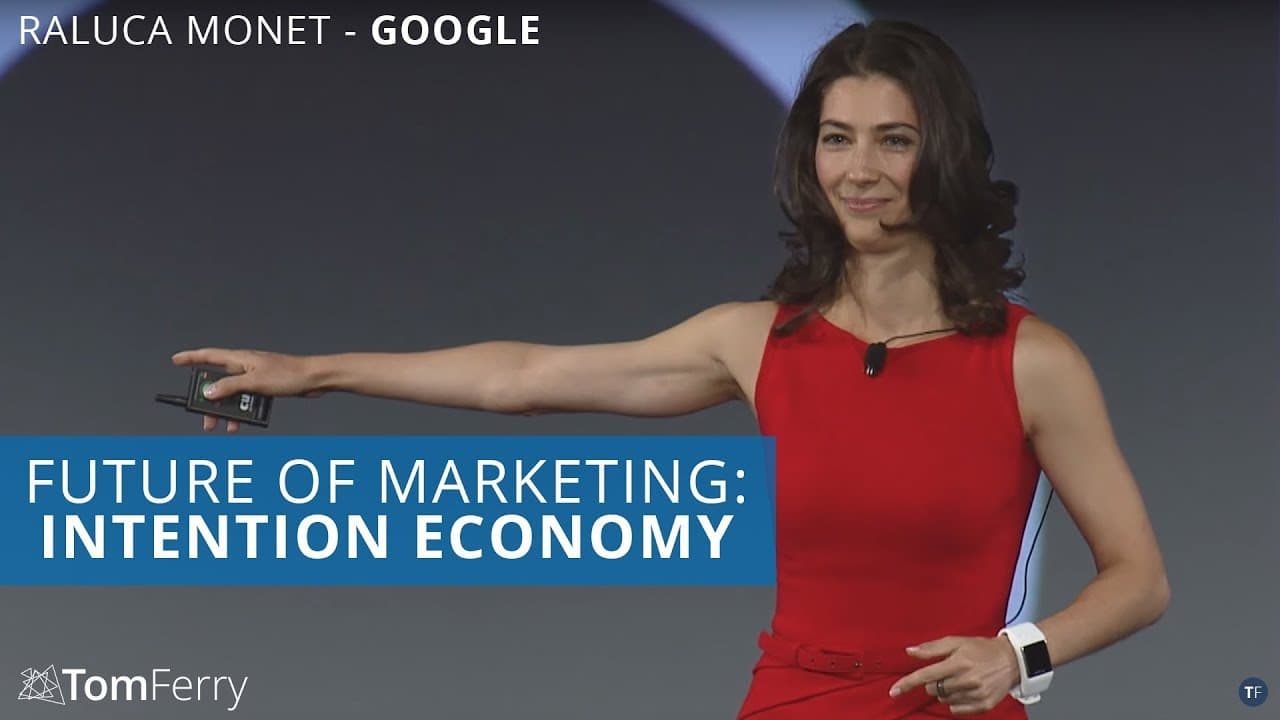
Intention Economy and the Future for Real Estate Marketing | Raluca Monet from Google
TL;DR
The shift from attention to intention economy changes marketing strategies.
Transcript
so what I'm going to do today is talk about this one idea because it's such a major shift and break it down in two parts first I'm going to talk about the underlying cause is why I think that we are moving away from the attention economy and moving into the intention economy and then I'm going to provide you with some strategies to succeed in this ... Read More
Key Insights
- The transition from the attention economy to the intention economy marks a significant shift in how marketers approach consumer engagement, focusing on earning willingness to engage rather than just capturing attention.
- Mobile devices have transformed consumer behavior, becoming an extension of ourselves, which requires marketers to adapt their strategies to be more personal and relevant to individual needs.
- Machine learning and artificial intelligence are pivotal in identifying consumer intent, allowing marketers to move beyond demographic targeting to more precise intent-based targeting.
- Consumers are seeking more specific and personalized content, with an increase in 'near me' searches, indicating a demand for localized and immediate information.
- Understanding the difference between consumer interest and intent is crucial; interest may not always translate to action, whereas intent indicates a readiness to engage or purchase.
- Providing value through answering 'why' and 'how' questions can transform a brand from being just another option to becoming the preferred choice in a consumer's decision-making process.
- The exponential growth in technology adoption requires marketers to anticipate long-term trends and adapt strategies accordingly, rather than just focusing on immediate changes.
- The importance of personalizing marketing efforts is emphasized, as broad assumptions about demographics can lead to missed opportunities and ineffective messaging.
Install to Summarize YouTube Videos and Get Transcripts
Explore YouTube Video Summarizer or Get YouTube Transcript Extractor
Questions & Answers
Q: What is the intention economy?
The intention economy is a marketing paradigm shift where businesses focus on earning consumer willingness to engage based on their intent rather than just capturing their attention. It emphasizes understanding and addressing consumer needs and desires, often using advanced technologies like machine learning to identify and act on consumer intent.
Q: How have mobile devices changed consumer behavior?
Mobile devices have become an integral part of consumers' lives, acting as extensions of themselves. This change has driven the need for marketers to adapt their strategies to be more personal and relevant. Consumers now expect immediate and personalized responses to their needs, which has shifted marketing efforts towards more intent-based and localized approaches.
Q: What role does machine learning play in the intention economy?
Machine learning is crucial in the intention economy as it helps distinguish consumer interest from intent. By analyzing millions of signals, machine learning allows marketers to target audiences more precisely based on their likely actions rather than just demographic information. This enables more effective and personalized marketing strategies.
Q: Why is it important to differentiate between interest and intent?
Differentiating between interest and intent is important because interest does not always lead to action, whereas intent indicates a readiness to engage or purchase. Understanding this difference allows marketers to tailor their strategies to target consumers who are more likely to convert, thus improving marketing effectiveness and efficiency.
Q: What are 'near me' searches and why are they significant?
'Near me' searches are queries where consumers look for services or products in their immediate vicinity. These searches have grown significantly, reflecting a consumer demand for localized and immediate information. For marketers, this trend underscores the importance of optimizing for local SEO and providing relevant, location-based content.
Q: How can marketers provide value to consumers in the intention economy?
Marketers can provide value by answering 'why' and 'how' questions that consumers have, offering solutions that meet their needs. By focusing on delivering relevant and personalized content that addresses consumer intent, marketers can build stronger connections and increase the likelihood of conversion, making their brand the preferred choice.
Q: What are the challenges of transitioning to the intention economy?
Transitioning to the intention economy presents challenges such as adapting to rapidly changing technologies and consumer behaviors. Marketers must shift from broad demographic targeting to more precise, intent-based strategies, requiring investment in data analytics and technology. Additionally, they must continuously provide value and relevance to maintain consumer engagement.
Q: How can marketers use technology to succeed in the intention economy?
Marketers can leverage technology such as machine learning and AI to analyze consumer data and identify intent. This allows for more personalized and targeted marketing efforts. Additionally, staying updated with technological advancements and consumer trends helps marketers anticipate future needs and adapt their strategies to remain competitive in the intention economy.
Summary & Key Takeaways
-
Raluca Monet discusses the shift from the attention economy to the intention economy, highlighting the need for marketers to earn consumer engagement by focusing on intent rather than just capturing attention. She emphasizes the role of mobile devices and machine learning in this transformation.
-
The presentation outlines strategies for succeeding in the intention economy, including making marketing efforts personal, specific, and need-based. Monet stresses the importance of understanding consumer intent and using technology to target audiences more effectively.
-
Monet provides insights into changing consumer behaviors, such as the rise of 'near me' searches and the demand for content that answers 'why' and 'how' questions. She highlights the need for marketers to provide value and address consumer needs to stand out in a competitive landscape.
Read in Other Languages (beta)
Share This Summary 📚
Summarize YouTube Videos and Get Video Transcripts with 1-Click
Try YouTube Summary with ChatGPT & Claude or YouTube Transcript Generator
Explore More Summaries from Tom Ferry 📚
Summarize YouTube Videos and Get Video Transcripts with 1-Click
Try YouTube Summary with ChatGPT & Claude or YouTube Transcript Generator