English Google Webmaster Central office-hours hangout
TL;DR
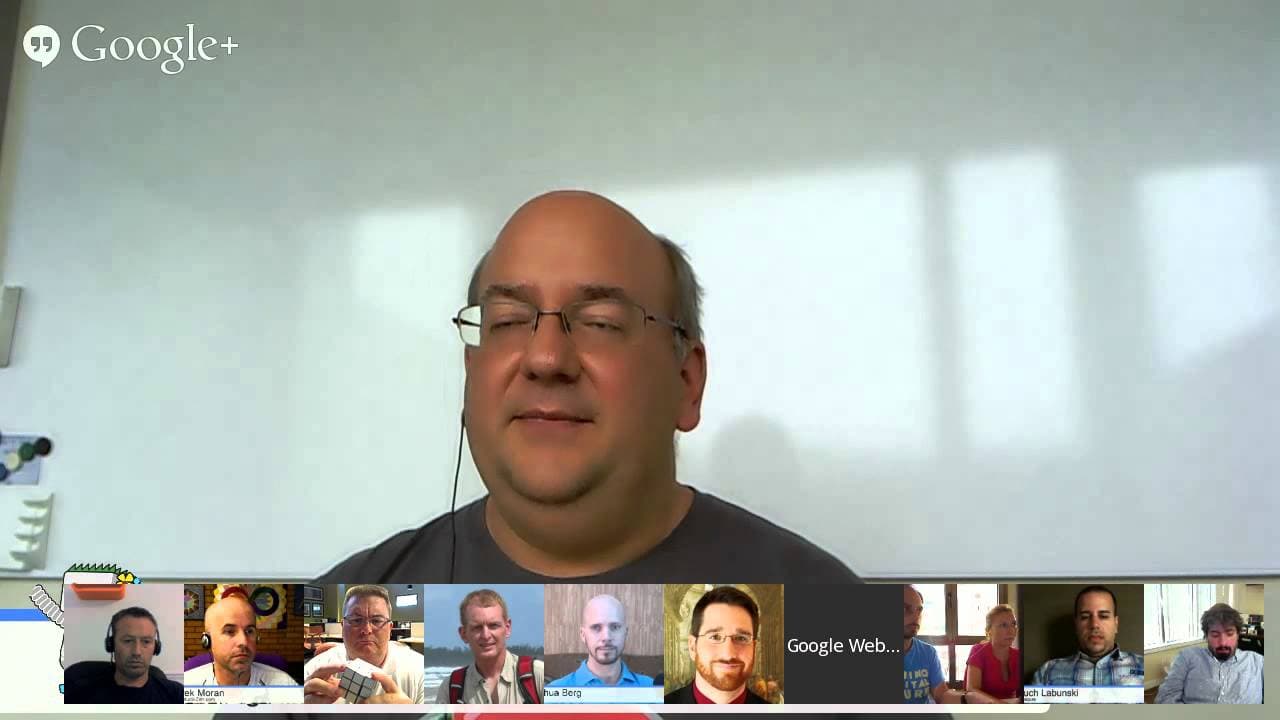
John Mueller addresses various webmaster queries in a Google Hangout.
Transcript
JOHN MUELLER: OK. Welcome, everyone, to today's Google Webmaster Central Office Hours Hangouts. My name is John Meuller. I am a Webmaster Trends Analyst at Google Switzerland, and I'm here to help you guys with any web search, webmaster related questions you might have about Google and everything that's associated with that. As always, does one of ... Read More
Key Insights
- Verification of multiple website versions is necessary to obtain comprehensive backlink data in Google Webmaster Tools.
- Canonicalization and proper redirects are crucial for accurate backlink and site data representation in Google tools.
- Duplicate content issues in geo-targeted queries can be addressed by providing unique, location-specific content.
- Google's algorithms treat duplicate content and doorway pages cautiously, affecting site indexing and ranking.
- HTTPS is a lightweight ranking signal, but Google recommends moving entire sites to HTTPS for better security.
- Google does not consider private/public WHOIS information as a ranking factor, even in spammy niches.
- Panda algorithm focuses on site quality and content, while Penguin targets unnatural backlinks.
- Site redesigns may cause ranking fluctuations due to changes in internal linking and page quality perception.
Install to Summarize YouTube Videos and Get Transcripts
Explore YouTube Video Summarizer or Get YouTube Transcript Extractor
Questions & Answers
Q: Do I need to verify all website versions to get backlink data?
Yes, to obtain comprehensive backlink data in Google Webmaster Tools, you need to verify all versions of your website, including different hostnames and protocols. This ensures that you have all the necessary information about backlinks, crawl errors, and other site data.
Q: How does Google handle duplicate content in geo-targeted queries?
Google tries to index pages separately if they are meant to be unique, even if only location details differ. For geo-targeted queries, Google attempts to show the most relevant page for the user's location, but duplicate content can still pose challenges, requiring unique, location-specific content.
Q: What is the impact of HTTPS on site ranking?
HTTPS is a lightweight ranking signal, meaning it has a minor impact on rankings. However, Google recommends moving entire sites to HTTPS for better security. The ranking benefit applies on a per-page basis, so securing only checkout pages will only affect those specific pages.
Q: Does Google consider WHOIS information as a ranking factor?
No, Google does not use private or public WHOIS information as a ranking factor. This applies even in niches that are often associated with spam, such as casinos, pharmaceuticals, and payday loans. The decision to hide WHOIS information is up to the site owner.
Q: What should I do if my site is affected by Panda?
Panda focuses on site quality and content. To recover, ensure your site offers high-quality, unique content and a good user experience. Panda does not consider backlinks, so disavowing links won't help. Instead, focus on improving on-site factors and content quality.
Q: How can a site redesign affect my rankings?
A site redesign can lead to ranking fluctuations due to changes in internal linking, site structure, and perceived content quality. Even if URLs and primary content remain the same, design changes can impact how Google evaluates the site, potentially affecting rankings positively or negatively.
Q: How does Google handle redirects and ranking signals?
Google treats 301 redirects as a strong signal to pass ranking signals to the new URL. Although a small amount of PageRank may be lost, the impact is generally negligible. It's important to update external links to the new URLs to maintain link equity.
Q: How can I address issues with Google indexing duplicate pages?
If you have duplicate pages, consider using canonicalization, redirects, or removing the duplicates. Blocking them in robots.txt may prevent crawling but won't remove them from the index. Ensure your site offers unique, high-quality content to avoid being flagged by quality algorithms.
Summary & Key Takeaways
-
In this Google Webmaster Central Hangout, John Mueller answers questions about backlinks, site verification, and the impact of duplicate content on site rankings. He emphasizes the importance of canonicalization and proper redirects to ensure accurate data in Google Webmaster Tools.
-
Mueller discusses the challenges of handling duplicate content in geo-targeted queries, suggesting that unique, location-specific content can help avoid issues. He also touches on the importance of HTTPS as a ranking signal and the role of WHOIS information in rankings.
-
The hangout covers the Panda and Penguin algorithms, highlighting their focus on site quality and unnatural backlinks, respectively. Mueller advises that site redesigns can lead to ranking fluctuations and suggests considering the impact of internal linking and content quality.
Read in Other Languages (beta)
Share This Summary 📚
Summarize YouTube Videos and Get Video Transcripts with 1-Click
Try YouTube Summary with ChatGPT & Claude or YouTube Transcript Generator
Explore More Summaries from Google Search Central 📚




Summarize YouTube Videos and Get Video Transcripts with 1-Click
Try YouTube Summary with ChatGPT & Claude or YouTube Transcript Generator