High LDL on Low Carb Is Expected: Lean Mass Hyper Responder Explained
TL;DR
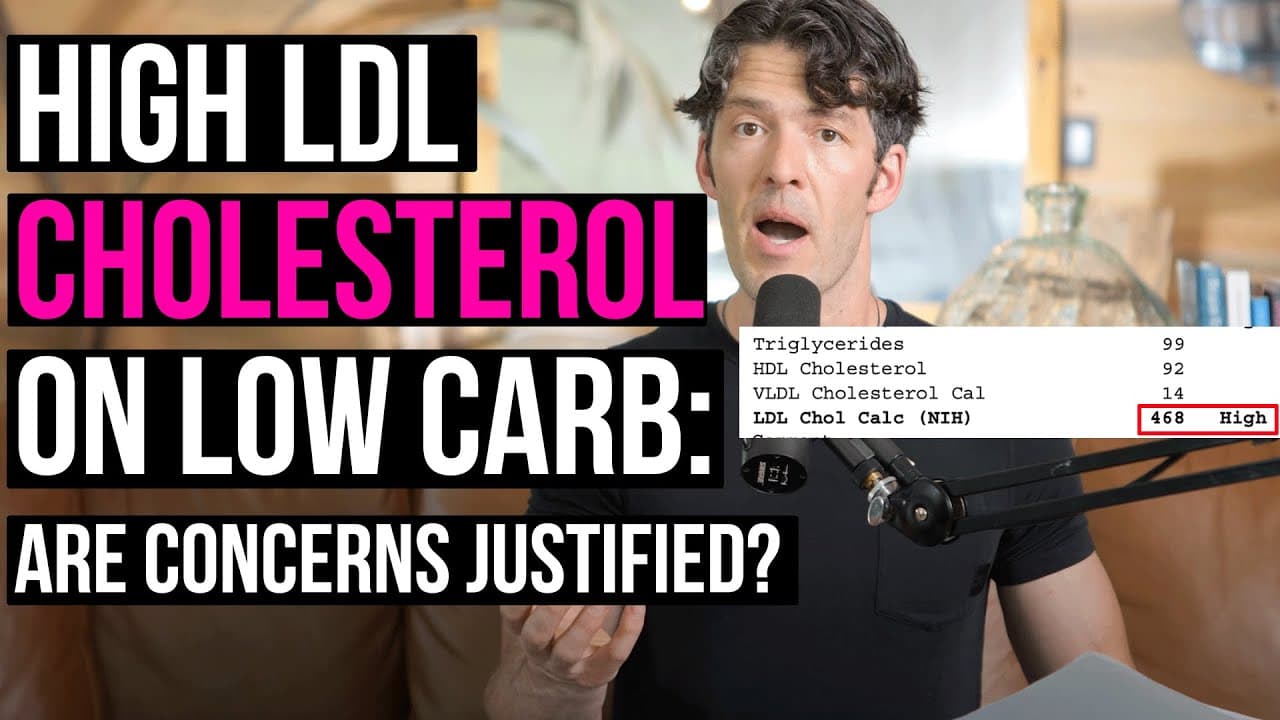
Concerns about LDL cholesterol elevations on a low-carb ketogenic diet may not be warranted, as the lean mass hypersponder phenotype has been shown to be cardio-protective.
Transcript
are the concerns about LDL cholesterol elevations valid or warranted on a low-carb ketogenic style diet we're going to talk more about the lean mass hyper-responder phenotype and talk about this case report that was published in frontiers of Endocrinology titled case report hypercholesterolemia lean mass hypersponder phenotype presents in the conte... Read More
Key Insights
- 😘 The lean mass hypersponder phenotype, characterized by high LDL cholesterol, high HDL cholesterol, and low triglycerides, is commonly seen in individuals on a low-carb or zero-carb diet who are also lean.
- ✋ High levels of LDL cholesterol in individuals with the lean mass hypersponder phenotype have not been shown to increase coronary artery calcification.
- 💨 Ketones, produced during a low-carb diet, may offer cardiovascular protective benefits, as higher fasting levels of ketones are associated with decreased prevalence of coronary artery calcification.
- 🥰 The outdated diet heart hypothesis, which posits that consuming saturated fat increases blood lipids and atherosclerosis, may not hold true for individuals with the lean mass hypersponder phenotype.
- ✋ Statin drugs are often prescribed to individuals with high LDL cholesterol levels, but they come with unintended harms and their efficacy in individuals with the lean mass hypersponder phenotype is questionable.
- 👨🔬 Further research is needed to fully understand the role of the lean mass hypersponder phenotype and ketones in cardiovascular disease prevention.
- 💝 Conversations with healthcare providers about the lean mass hypersponder phenotype and its implications for cardiovascular health should be based on the latest scientific evidence.
Install to Summarize YouTube Videos and Get Transcripts
Explore YouTube Video Summarizer or Get YouTube Transcript Extractor
Questions & Answers
Q: What is the lean mass hypersponder phenotype?
The lean mass hypersponder phenotype is characterized by high levels of LDL cholesterol, high levels of HDL cholesterol, and low levels of triglycerides, commonly seen in lean individuals on a low-carb or zero-carb diet.
Q: Are concerns about LDL cholesterol elevations on a low-carb diet valid?
The increase in LDL cholesterol on a low-carb diet has not been shown to increase coronary artery calcification, suggesting that it may not be as concerning as previously believed.
Q: What are the cut points for diagnosing the lean mass hypersponder phenotype?
The cut points for diagnosing the lean mass hypersponder phenotype are an LDL cholesterol over 200 mg/dL, HDL cholesterol over 80 mg/dL, and triglycerides under 70 mg/dL.
Q: Are ketones cardio-protective?
Recent research suggests that higher fasting levels of ketones in the urine are associated with decreased prevalence of coronary artery calcification in non-diabetic individuals, indicating that ketones may have cardiovascular protective benefits.
Key Insights:
- The lean mass hypersponder phenotype, characterized by high LDL cholesterol, high HDL cholesterol, and low triglycerides, is commonly seen in individuals on a low-carb or zero-carb diet who are also lean.
- High levels of LDL cholesterol in individuals with the lean mass hypersponder phenotype have not been shown to increase coronary artery calcification.
- Ketones, produced during a low-carb diet, may offer cardiovascular protective benefits, as higher fasting levels of ketones are associated with decreased prevalence of coronary artery calcification.
- The outdated diet heart hypothesis, which posits that consuming saturated fat increases blood lipids and atherosclerosis, may not hold true for individuals with the lean mass hypersponder phenotype.
- Statin drugs are often prescribed to individuals with high LDL cholesterol levels, but they come with unintended harms and their efficacy in individuals with the lean mass hypersponder phenotype is questionable.
- Further research is needed to fully understand the role of the lean mass hypersponder phenotype and ketones in cardiovascular disease prevention.
- Conversations with healthcare providers about the lean mass hypersponder phenotype and its implications for cardiovascular health should be based on the latest scientific evidence.
- It is important to consider multiple risk factors, inflammatory biomarkers, and HDL and LDL subfractionation when assessing cardiovascular risk in individuals with high LDL cholesterol levels.
Summary & Key Takeaways
-
The lean mass hypersponder phenotype is characterized by an increase in LDL cholesterol, increase in HDL cholesterol, and a decrease in triglycerides, commonly seen in individuals on a low-carb or zero-carb diet who are also lean.
-
High levels of LDL cholesterol in these individuals have not been shown to increase coronary artery calcification, suggesting that it may not be as concerning as previously believed.
-
Ketones, which are produced during a low-carb diet, may offer cardiovascular protective benefits and are inversely associated with coronary artery calcification in non-diabetic individuals.
Read in Other Languages (beta)
Share This Summary 📚
Summarize YouTube Videos and Get Video Transcripts with 1-Click
Try YouTube Summary with ChatGPT & Claude or YouTube Transcript Generator
Explore More Summaries from High Intensity Health 📚

Summarize YouTube Videos and Get Video Transcripts with 1-Click
Try YouTube Summary with ChatGPT & Claude or YouTube Transcript Generator