What Is the Difference Between a Language and a Dialect?
TL;DR
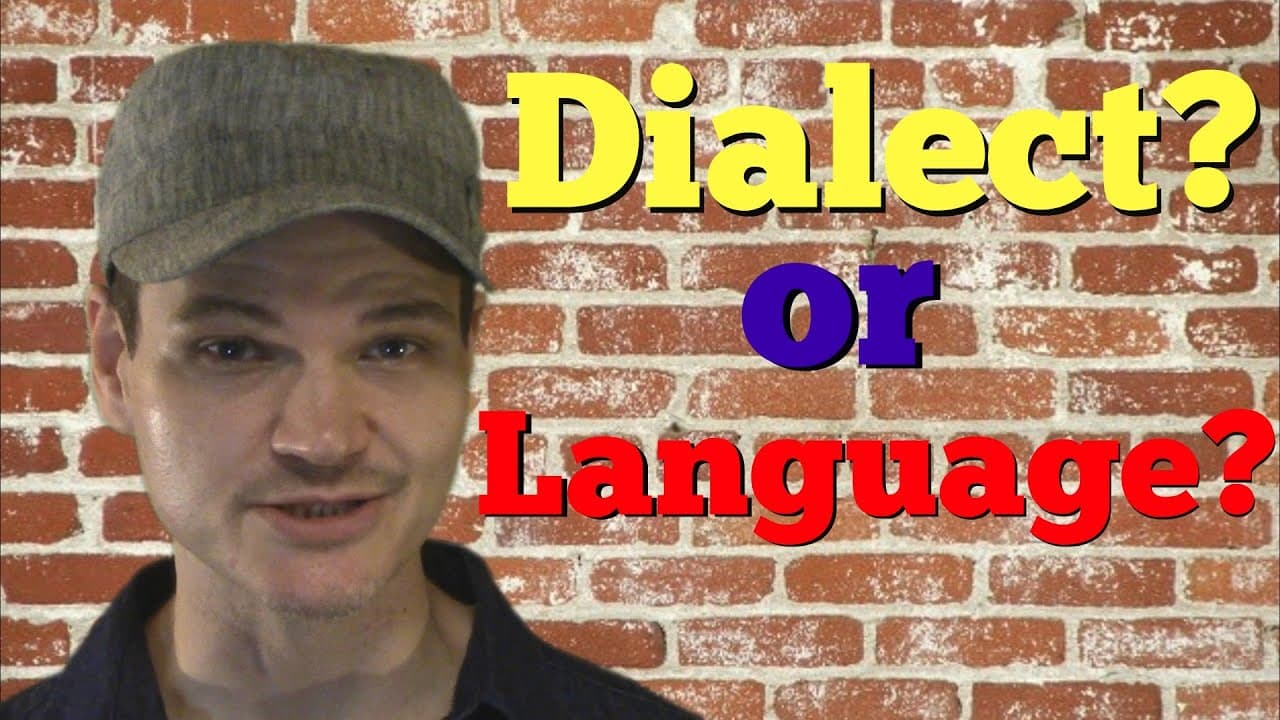
The difference between a language and a dialect is primarily based on mutual intelligibility; if speakers can understand each other, they are often considered to be speaking the same language. Additionally, a shared written standard plays a crucial role in this classification, though political and cultural influences can complicate definitions. Ultimately, mutual comprehensibility remains the most reliable criterion.
Transcript
Good day everyone. This is Paul and you are watching the Langfocus channel. And today we're going to talk about some interesting stuff. We're going to talk about the difference between a language and dialect. Now what is the difference? All over the world, there are people who speak closely related forms of communication. Sometimes they are calle... Read More
Key Insights
- The distinction between a language and a dialect often involves mutual intelligibility, where speakers can understand each other despite differences in grammar, phonology, or vocabulary.
- Regional and ethnic varieties can lead to different dialects within the same language, often influenced by historical separation or limited interaction among groups.
- Mutual intelligibility is a common criterion, but exceptions exist where speakers of the same language struggle to understand each other, such as different English dialects.
- A shared written standard often helps classify dialects within a language, as speakers adapt their speech to align with the standard for better communication.
- The written standard criterion has limitations, as not all speakers can effectively use the standard language, raising questions about their classification.
- Political factors complicate language classification, with similar languages often named differently based on ethnic or national identities.
- The speaker rejects the political definition, advocating for mutual intelligibility and shared written standards as primary criteria for distinguishing languages from dialects.
- The debate on language versus dialect remains complex, with no universally accepted criteria, highlighting the influence of cultural, historical, and political factors.
Install to Summarize YouTube Videos and Get Transcripts
Explore YouTube Video Summarizer or Get YouTube Transcript Extractor
Questions & Answers
Q: What is mutual intelligibility, and why is it important?
Mutual intelligibility refers to the ability of speakers of different dialects or languages to understand each other. It is a crucial criterion for distinguishing between a language and a dialect because it indicates whether different speech forms are variations of the same language. If speakers can communicate effectively, despite some differences, they are often considered to be speaking dialects of the same language.
Q: How can regional and ethnic factors influence dialect formation?
Regional and ethnic factors can significantly influence dialect formation. When groups are geographically or socially separated, they may develop unique speech patterns, leading to distinct dialects. Historical separation, limited interaction, or cultural differences can cause variations in grammar, phonology, or vocabulary. These dialects can be regional, based on location, or ethnic, arising from cultural or social distinctions within the same geographical area.
Q: Why might mutual intelligibility not always be a reliable criterion?
Mutual intelligibility might not always be reliable because even within the same language, speakers may struggle to understand each other due to significant dialectal differences. For example, English speakers from different regions, like Scotland or rural Australia, might find each other's dialects challenging to understand. This complexity shows that mutual intelligibility is not absolute and can vary based on context, exposure, and individual linguistic skills.
Q: What role does a shared written standard play in language classification?
A shared written standard plays a crucial role in language classification by providing a common framework for communication. Even if spoken dialects differ, a shared written language allows speakers to adapt their speech to align with the standard, facilitating understanding. This commonality helps classify different speech forms as dialects of the same language, as it bridges communication gaps and supports mutual intelligibility through a standardized written form.
Q: How do political factors complicate the distinction between languages and dialects?
Political factors complicate the distinction between languages and dialects by influencing how languages are named and classified. Different ethnic or national groups may label similar languages differently to assert cultural identity or political independence. This can lead to the same language being recognized as distinct languages in different regions, based on political or nationalistic motivations rather than linguistic criteria, complicating the classification process.
Q: What are the limitations of using a shared written standard as a criterion?
Using a shared written standard as a criterion has limitations because not all speakers may effectively use the standard language. Some individuals, due to lack of education or interest, may not be proficient in the standard written form, raising questions about their classification within the language. This criterion assumes a level of literacy and adherence to the standard that may not be present in all speakers, challenging its reliability.
Q: Why does the speaker reject political definitions of language classification?
The speaker rejects political definitions of language classification because they often rely on arbitrary distinctions based on ethnic or national identity rather than linguistic criteria. Political definitions can lead to similar languages being labeled differently for cultural or political reasons, which the speaker views as misleading. Instead, the speaker advocates for mutual intelligibility and shared written standards as more objective and reliable criteria for distinguishing between languages and dialects.
Q: What is the speaker's perspective on the language versus dialect debate?
The speaker's perspective on the language versus dialect debate emphasizes mutual intelligibility and shared written standards as primary criteria for classification. They argue that if speakers can understand each other and use the same written language, they are speaking dialects of the same language. The speaker dismisses political definitions, viewing them as subjective and influenced by cultural or nationalistic motives, which can obscure the true linguistic relationships between speech forms.
Summary & Key Takeaways
-
The video discusses how to distinguish between a language and a dialect, focusing on mutual intelligibility and shared written standards as key criteria. It highlights the complexities involved, including regional, ethnic, and political influences on language classification.
-
Mutual intelligibility means that speakers of different dialects can understand each other, which often defines them as speaking the same language. However, this criterion has exceptions, as seen in diverse English dialects.
-
Political and cultural factors can lead to similar languages being identified differently, complicating classification. Despite these challenges, the speaker emphasizes mutual intelligibility and shared written standards as more reliable criteria than political definitions.
Read in Other Languages (beta)
Share This Summary 📚
Summarize YouTube Videos and Get Video Transcripts with 1-Click
Try YouTube Summary with ChatGPT & Claude or YouTube Transcript Generator
Explore More Summaries from Langfocus 📚




Summarize YouTube Videos and Get Video Transcripts with 1-Click
Try YouTube Summary with ChatGPT & Claude or YouTube Transcript Generator