Why blackface is still part of Dutch holidays
TL;DR
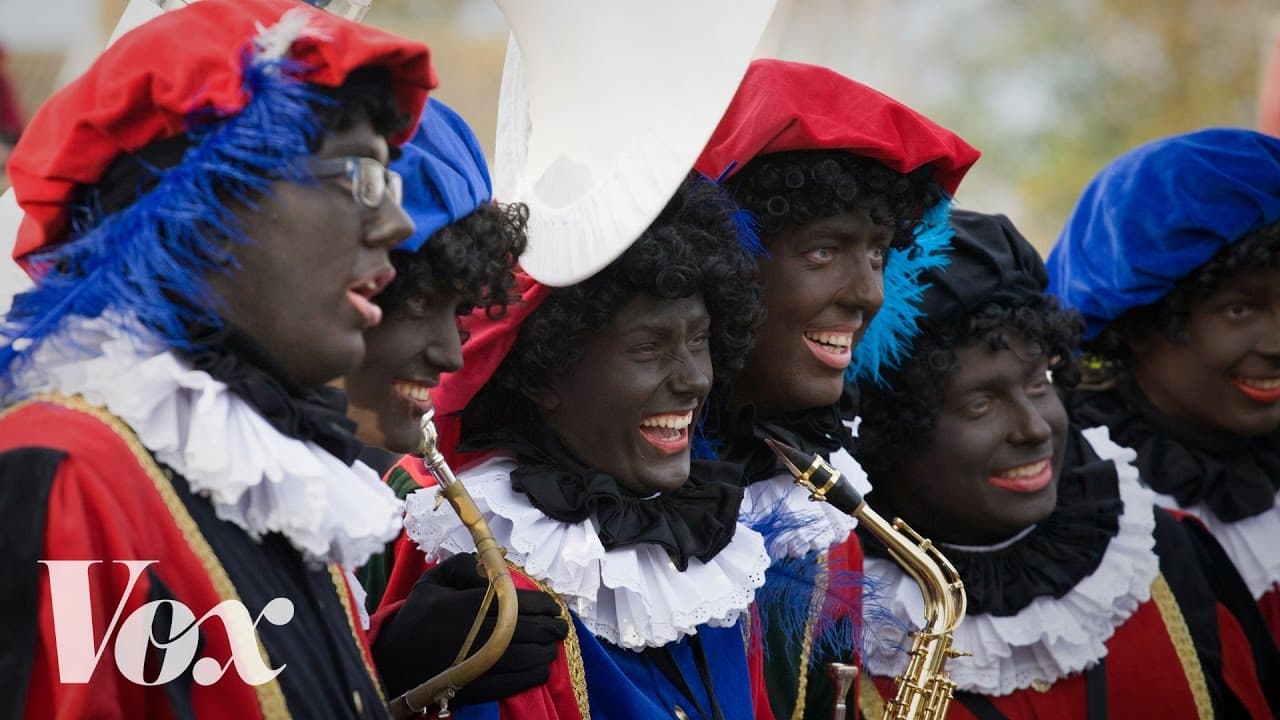
Black Pete is a controversial tradition rooted in racism.
Transcript
I just got a package from my grandma in Belgium. She’s sent me one at the beginning of December, for as long as I can remember, to celebrate St. Nicholas Day. That’s when their traditional version of Santa Claus, Sinterklaas, comes to visit kids and reward the good ones, and punish the bad ones. And there’s always lots of good stuff in here — there... Read More
Key Insights
- The tradition of Black Pete is rooted in the Dutch colonial past and is widely regarded as a racist caricature, despite being a cherished cultural tradition for many.
- Black Pete is depicted with blackface, red lips, and Renaissance-era clothing, drawing criticism for perpetuating racial stereotypes and discrimination.
- The character originated from an 1850 children's book by Jan Schenkman, where Black Pete was portrayed as a Moorish servant to St. Nicholas.
- Despite the controversy, Black Pete remains a popular figure in Dutch and Belgian holiday celebrations, with significant resistance to changing the tradition.
- Efforts to modify the tradition, such as introducing 'Chimney Pete,' have been met with both support and backlash, highlighting the deep cultural divide.
- Public opposition to Black Pete has grown since the 1970s, fueled by demographic changes and increased awareness of racial issues.
- International attention and protests have pressured Dutch authorities to reconsider the tradition, but legal rulings have often upheld its continuation.
- The debate over Black Pete underscores broader issues of institutional racism and the challenges of reconciling cultural traditions with modern values.
Install to Summarize YouTube Videos and Get Transcripts
Explore YouTube Video Summarizer or Get YouTube Transcript Extractor
Questions & Answers
Q: What is the origin of the Black Pete character?
Black Pete originated from an 1850 children's book by Dutch schoolteacher Jan Schenkman. In this book, Black Pete is depicted as a Moorish servant to St. Nicholas. The character's portrayal included exaggerated racial features, which have become central to holiday traditions in the Netherlands and Belgium, sparking controversy over its racist implications.
Q: Why is Black Pete considered a racist caricature?
Black Pete is considered a racist caricature because it involves the use of blackface, exaggerated red lips, and gold hoop earrings, which are rooted in colonial stereotypes. These portrayals reinforce negative racial stereotypes and have historically served to dehumanize black people. The tradition's defenders often overlook these implications, focusing instead on its cultural significance.
Q: What efforts have been made to change the Black Pete tradition?
Efforts to change the Black Pete tradition include introducing 'Chimney Pete,' a version of the character with soot-covered faces instead of blackface, and without the exaggerated racial features. Parade organizers and media outlets have gradually adopted these changes, although resistance remains strong among traditionalists who value the original portrayal as a cultural practice.
Q: How has public opposition to Black Pete evolved over time?
Public opposition to Black Pete has grown since the 1970s, driven by demographic changes and increased awareness of racial issues. The influx of people of African ancestry, particularly after Suriname's independence, has fueled debates about the tradition's racist implications. Protests, both local and international, have pressured Dutch authorities to reconsider the tradition, though legal rulings often uphold its continuation.
Q: What role does the Dutch government play in the Black Pete debate?
The Dutch government has been criticized for its role in the Black Pete debate, with some officials defending the tradition as a cultural practice. Legal rulings have often upheld the continuation of Black Pete in celebrations, despite growing public opposition and international scrutiny. The government's stance highlights the challenges of reconciling cultural traditions with modern values and addressing institutional racism.
Q: How have international organizations responded to the Black Pete tradition?
International organizations, such as the United Nations, have called on the Dutch government to address the racist aspects of the Black Pete tradition. In 2015, a UN committee urged the removal of elements that promote black stereotypes. These calls for change have added pressure to the ongoing debate, although resistance from traditionalists remains strong.
Q: What impact does the Black Pete tradition have on children?
The Black Pete tradition impacts children by reinforcing racial stereotypes and contributing to racialized bullying in schools. Black children often face derogatory comments and are labeled as 'Zwarte Piet,' affecting their self-esteem and sense of identity. Understanding these impacts on children could be key to changing public opinion and fostering a more inclusive celebration.
Q: What challenges do activists face in opposing the Black Pete tradition?
Activists opposing the Black Pete tradition face significant challenges, including resistance from traditionalists, legal setbacks, and even violence. Protests have sometimes been met with aggressive responses from authorities, and activists have faced personal and professional repercussions. Despite these challenges, opposition continues to grow, highlighting the broader struggle against institutional racism and the need for societal change.
Summary & Key Takeaways
-
Black Pete, a character in Dutch and Belgian holiday traditions, is a blackface caricature rooted in colonial history, sparking ongoing debate over its racist implications. Despite efforts to reform the tradition, resistance remains strong, highlighting cultural divides. The character's portrayal has historically reinforced negative stereotypes, complicating efforts to modernize celebrations.
-
Introduced in an 1850 children's book, Black Pete was originally depicted as a Moorish servant to St. Nicholas. Over time, the character became central to holiday festivities, often involving blackface, red lips, and gold earrings. Critics argue these portrayals perpetuate racial stereotypes, while supporters defend the tradition as a cherished cultural practice.
-
Efforts to change the tradition, such as introducing 'Chimney Pete,' aim to reduce racial insensitivity by replacing blackface with soot-covered faces. These changes face significant resistance from traditionalists, but growing opposition and international scrutiny continue to challenge the status quo, pushing for a more inclusive celebration.
Read in Other Languages (beta)
Share This Summary 📚
Summarize YouTube Videos and Get Video Transcripts with 1-Click
Try YouTube Summary with ChatGPT & Claude or YouTube Transcript Generator
Explore More Summaries from Vox 📚



Summarize YouTube Videos and Get Video Transcripts with 1-Click
Try YouTube Summary with ChatGPT & Claude or YouTube Transcript Generator