How I Teach Kids to Love Science | Cesar Harada | TED Talks
TL;DR
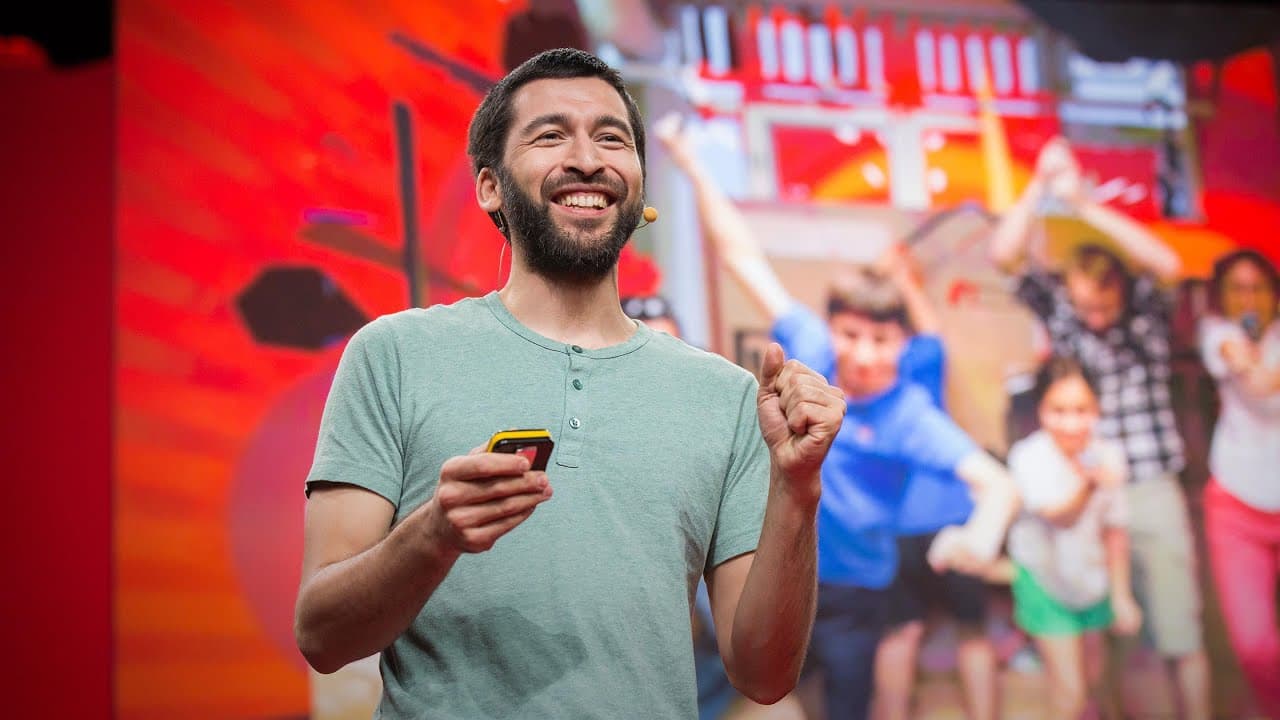
In this content, the speaker reflects on the responsibility of adults to clean up their mess and the importance of teaching the next generation to care for the environment and find solutions.
Transcript
When I was a kid, my parents would tell me, "You can make a mess, but you have to clean up after yourself." So freedom came with responsibility. But my imagination would take me to all these wonderful places, where everything was possible. So I grew up in a bubble of innocence -- or a bubble of ignorance, I should say, because adults would lie to u... Read More
Key Insights
- 🌊 More than 80% of the oceans have plastic in them, highlighting the urgent need for innovative solutions to clean up the environment and protect marine life.
- 💡 Encouraging imagination and creativity in students can lead to groundbreaking inventions and problem-solving, as seen in the development of a floating robot to collect data on ocean plastic.
- 🌍 Citizen science can extend beyond local issues, as shown through the use of spectrometry technology to address water contamination in Bangladesh.
- 🌏 The devastating impacts of the Fukushima nuclear disaster in Japan have led to ongoing efforts to measure and mitigate radioactivity levels, emphasizing the importance of openness and transparency in tackling global challenges.
- 🧒 Involving children in scientific exploration and decision-making processes fosters a sense of responsibility and empowerment, preparing the next generation to be environmental stewards and problem solvers.
- 🚀 Collaborations between adults and children can lead to innovative inventions and groundbreaking ideas, with the potential to improve various aspects of society, from renewable energy solutions to mobility aids.
- 💔 Leaving a legacy of lies and misinformation is more detrimental than the environmental issues themselves, emphasizing the need for truth and transparency in preparing future generations to tackle complex challenges.
- 🔬 Open source technologies and platforms like Instructables provide opportunities for collaboration and knowledge sharing, speeding up the development and improvement of solutions to environmental problems.
Install to Summarize YouTube Videos and Get Transcripts
Explore YouTube Video Summarizer or Get YouTube Transcript Extractor
Questions & Answers
Q: What inspired the speaker to address the issue of ocean pollution?
The speaker was motivated to address the issue of ocean pollution after witnessing his students stumbling upon piles of trash on the beach. He felt a sense of responsibility as a citizen and wanted to find a better way to clean up the plastic that was polluting the oceans.
Q: How did the speaker and his students approach the problem of collecting plastic from the oceans?
The speaker and his students decided to invent a floating robot that would collect data about the plastic in the water instead of physically collecting the plastic bits. They used rapid prototyping and transformed their classroom into a workshop to build the robot and successfully captured images of the plastic particles in the water.
Q: What other environmental problems did the speaker and his students tackle?
In addition to addressing ocean pollution, the speaker and his students also focused on addressing an oil spill in Bangladesh and the contamination from the Fukushima nuclear power plant in Japan. They developed a spectrometer to identify substances in the water and created a topographical map to measure the radioactivity in the affected areas.
Q: What message did the speaker want to convey through his work with his students?
The speaker emphasized the importance of preparing the next generation to care about the environment and take action. He believed that shielding children from the truth about environmental problems was detrimental and that their imagination and creativity were essential in finding solutions. He encouraged citizen scientists, makers, and dreamers to inspire the next generation to create a better future.
Summary & Key Takeaways
-
The speaker grew up in a bubble of innocence and discovered as an adult that adults make a mess and do not clean up after themselves, leading to a passion for environmental conservation.
-
The speaker and their students have invented a small floating robot that can collect data on plastic pollution in the ocean as a more efficient alternative to traditional methods.
-
The speaker and their students have also developed a rough prototype of a spectrometer to help identify contaminants in water, and have used this technology to help address pollution issues in Bangladesh and Fukushima, Japan.
Read in Other Languages (beta)
Share This Summary 📚
Summarize YouTube Videos and Get Video Transcripts with 1-Click
Try YouTube Summary with ChatGPT & Claude or YouTube Transcript Generator
Explore More Summaries from TED 📚

Summarize YouTube Videos and Get Video Transcripts with 1-Click
Try YouTube Summary with ChatGPT & Claude or YouTube Transcript Generator