Basic shorting | Stocks and bonds | Finance & Capital Markets | Khan Academy
TL;DR
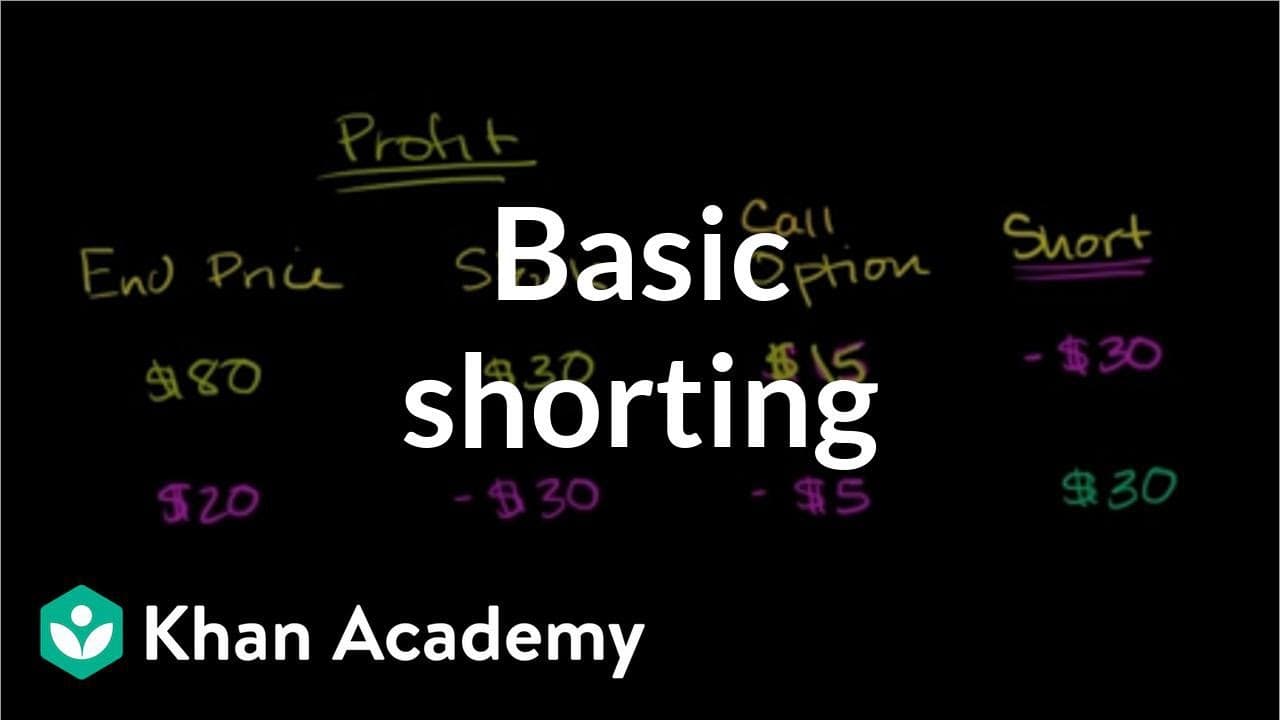
Shorting stocks involves borrowing and selling stocks at the current price with the expectation that the stock price will decrease, allowing the stock to be bought back at a lower price and resulting in a profit.
Transcript
Let's say you don't like company ABCD very much and you're convinced that the stock is going to go down. So in that situation, you can actually short the stock, which in a very high level is a bet that the stock is going to go down. And the way that you do that mechanically is that you borrow the stock from someone else who owns it, and then you im... Read More
Key Insights
- 👻 Shorting a stock allows investors to profit from a decline in stock prices.
- 😘 The mechanics of shorting involve borrowing and selling the stock upfront, with the intention of buying it back at a lower price later.
- 🤪 Shorting is a high-risk strategy as the losses can be significant if the stock price goes up instead of down.
- 🫵 Shorting stocks is often used by traders who have a negative view of a particular company or industry.
- 🪈 Shorting is the reverse order of traditional buying and selling, as the selling occurs before the buying.
- 🌸 Shorting can result in unlimited losses if the stock price increases exponentially.
- 🍰 Investors need to carefully consider the potential risks and rewards before engaging in short selling.
Install to Summarize YouTube Videos and Get Transcripts
Explore YouTube Video Summarizer or Get YouTube Transcript Extractor
Questions & Answers
Q: What does shorting a stock mean?
Shorting a stock refers to borrowing and selling a stock with the expectation that its price will decrease. The short seller profits when they buy back the stock at a lower price to return it to the owner.
Q: How does shorting a stock work?
Shorting a stock involves borrowing the stock from someone else and immediately selling it at the current price. If the stock price goes down, the short seller can buy it back at a lower price, return it to the owner, and make a profit.
Q: What happens if the stock price goes up after shorting?
If the stock price goes up after shorting, the short seller faces potential losses. They would have to buy back the stock at a higher price than they sold it for, resulting in a loss.
Q: Why is shorting stocks considered risky?
Shorting stocks is considered risky because the potential losses are unlimited. If the stock price keeps rising significantly, the short seller would have to buy back the stock at an inflated price, resulting in substantial losses.
Summary & Key Takeaways
-
Shorting a stock involves borrowing and immediately selling the stock in the hope that its price will decrease.
-
If the stock price goes down, the short seller can buy back the stock at a lower price and return it to the owner, resulting in a profit.
-
However, if the stock price goes up, the short seller can incur significant losses.
Read in Other Languages (beta)
Share This Summary 📚
Summarize YouTube Videos and Get Video Transcripts with 1-Click
Try YouTube Summary with ChatGPT & Claude or YouTube Transcript Generator
Explore More Summaries from Khan Academy 📚



Summarize YouTube Videos and Get Video Transcripts with 1-Click
Try YouTube Summary with ChatGPT & Claude or YouTube Transcript Generator