Why Can't Some Stars Support Life on Their Planets?
TL;DR
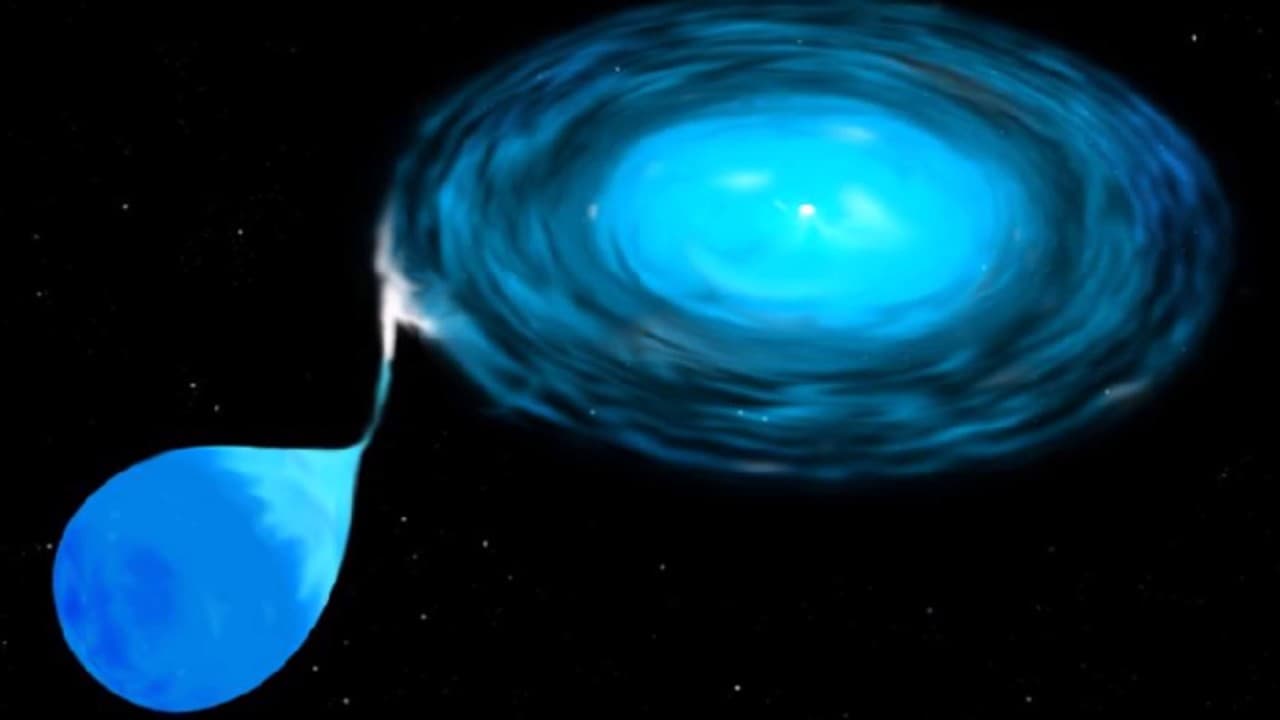
Some stars, like red giants and blue giants, can't support life due to their advanced lifecycle stages and short lifespans. White dwarfs, as remnants of stars, may also lack life, although they could form new habitable zones through planetary migration. In contrast, F, G, and K type stars are more promising for life, while red dwarfs present challenges for surface habitability.
Transcript
I tend to focus on SETI and exoplanet habitability as one of the mainstays of the channel, often exploring planets around small dwarf stars that have a chance of being able to sustain life on their planets. But there are also stars that are nothing close to suitable, and this is an exploration of those, and why they are more or less ruled out for l... Read More
Key Insights
- 😪 Red giants and blue giants are not suitable for complex life due to their stage in the stellar lifecycle and the time it takes for them to go supernova.
- 🤩 White dwarfs are remnants of stars and any previous life would likely be gone, but new habitable zones could form through planetary migration.
- 🛟 F type, G type, and K type stars can be good for life, and orange dwarf stars might be even better with higher chances for sustaining life.
- 😪 Red dwarfs have significant challenges for surface life, but ice shell scenarios might be possible.
Install to Summarize YouTube Videos and Get Transcripts
Explore YouTube Video Summarizer or Get YouTube Transcript Extractor
Questions & Answers
Q: What are the different categories of stars on the Hertzsprung-Russell diagram?
The categories include the main sequence, which consists of stars like our sun, giants stars towards the top, and white dwarfs at the bottom.
Q: Why are red giants and blue giants not suitable for complex life?
Red giants are at the end of their lives, and any habitable planets would have been destroyed. Blue giants burn through their fuel too quickly and go supernova within a few million years.
Q: Can life still arise around a white dwarf?
If a planet manages to survive the process that created the white dwarf and migrates inward to the new habitable zone, life may still be able to arise.
Q: What are the challenges for life around red dwarfs?
Proximity to red dwarfs creates problems such as high ultraviolet light, tidal locking, and violent flaring and outbursts.
Summary & Key Takeaways
-
Stars are categorized on the Hertzsprung-Russell diagram. The main sequence consists of stars like our sun that are potentially suitable for life, while giant stars and white dwarfs are not.
-
Red giants and blue giants are at the end of their lives and do not support complex life. White dwarfs are remnants of stars and any previous life would likely be gone.
-
However, there is a possibility for a habitable zone to form around a white dwarf through planetary migration. F type, G type, and K type stars can be good for life, with orange dwarf stars potentially even better. Red dwarfs have challenges for surface life but might support ice shell scenarios.
Read in Other Languages (beta)
Share This Summary 📚
Summarize YouTube Videos and Get Video Transcripts with 1-Click
Try YouTube Summary with ChatGPT & Claude or YouTube Transcript Generator
Explore More Summaries from John Michael Godier 📚


Summarize YouTube Videos and Get Video Transcripts with 1-Click
Try YouTube Summary with ChatGPT & Claude or YouTube Transcript Generator