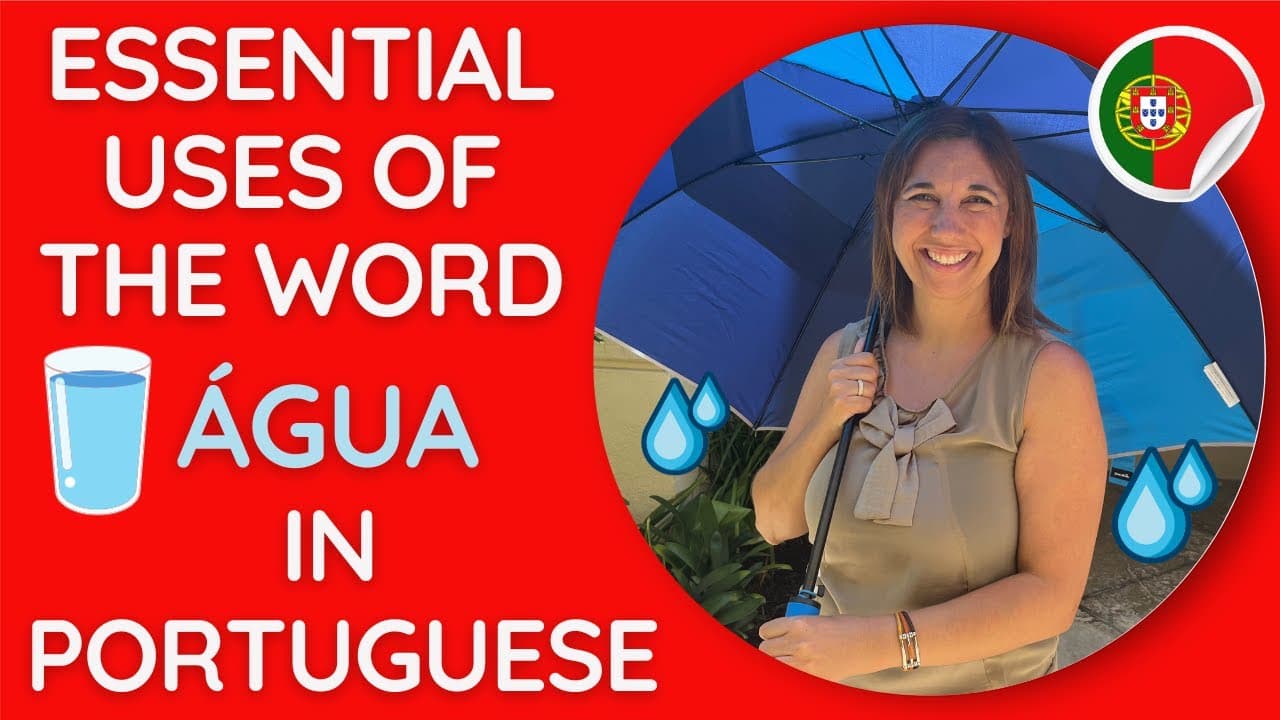
Vocabulary and Expressions with "água" in Portuguese 🇵🇹
TL;DR
Learn Portuguese idioms and expressions using 'água'.
Transcript
Today we will be talking about the word água (water in Portuguese). We will cover some essential types of water and some very interesting and useful Portuguese proverbs and expressions linked to this theme. If you are new to my channel, welcome. My name is Sandra and I’ve been teaching Portuguese for over 12 years now. I’m a Portuguese living i... Read More
Key Insights
- The video introduces various Portuguese expressions and proverbs involving the word 'água', helping learners understand cultural nuances.
- Sandra, a Portuguese teacher in Los Angeles, shares her passion for the Portuguese language and culture through informative content.
- Common types of water in Portuguese include 'água com gás' (sparkling water) and 'água sem gás' (flat water), among others.
- Expressions like 'meter água' mean to make a mistake, while 'águas passadas não movem moinhos' refers to letting go of past issues.
- The phrase 'ir por água abaixo' is equivalent to 'going down the drain' in English, indicating plans that have failed.
- 'Sacudir a água do capote' describes avoiding responsibility, similar to blaming others for one's mistakes.
- 'Levar água ao seu moinho' means to turn situations to one's advantage, akin to getting one's way.
- The proverb 'água mole em pedra dura tanto bate até que fura' emphasizes persistence leading to success, encouraging learners in their journey.
Install to Summarize YouTube Videos and Get Transcripts
Explore YouTube Video Summarizer or Get YouTube Transcript Extractor
Questions & Answers
Q: What does 'meter água' mean in Portuguese?
'Meter água' is a Portuguese expression that literally translates to 'put water', but metaphorically, it means to make a mistake or mess something up. It is used to describe situations where someone has said or done something inappropriate or incorrect, similar to the English phrase 'to screw up'.
Q: How is the expression 'águas passadas não movem moinhos' used?
The expression 'águas passadas não movem moinhos' is used in Portuguese to convey the idea that past events should not affect the present or future. It is akin to the English proverb 'water under the bridge', suggesting that bygone issues should no longer be a source of concern or attention.
Q: What is the significance of 'ir por água abaixo'?
'Ir por água abaixo' translates to 'going down the drain' in English. It is used to describe plans or efforts that have failed or been wasted. This expression captures the disappointment and frustration of seeing one's hopes or intentions come to nothing, much like water disappearing down a drain.
Q: Explain the expression 'sacudir a água do capote'.
The expression 'sacudir a água do capote' is used to describe someone avoiding responsibility by blaming others. 'Capote' refers to a traditional cape, and the phrase literally means to brush off water from the cape. It highlights the act of deflecting blame and not taking accountability for one's actions.
Q: What does 'levar água ao seu moinho' mean?
'Levar água ao seu moinho' is a Portuguese expression meaning to turn situations to one's advantage or to get one's way. It is similar to the English phrase 'to turn things to one's advantage'. This idiom is used to describe someone who skillfully maneuvers circumstances to benefit themselves.
Q: How is 'água mole em pedra dura tanto bate até que fura' motivational?
The proverb 'água mole em pedra dura tanto bate até que fura' translates to 'soft water hits hard stone until it makes a hole'. It emphasizes the power of persistence and determination, suggesting that consistent effort can overcome obstacles. This saying is motivational for language learners, encouraging them to persevere.
Q: What types of water are commonly discussed in Portuguese?
Common types of water discussed in Portuguese include 'água com gás' (sparkling water), 'água sem gás' (flat water), 'água natural' (room temperature water), 'água fresca' (chilled water), 'água da torneira' (tap water), 'água engarrafada' (bottled water), 'água de coco' (coconut water), and 'água tónica' (tonic water).
Q: Who is Sandra and what does she offer to Portuguese learners?
Sandra is a Portuguese teacher living in Los Angeles with over 12 years of teaching experience. She shares her passion for the Portuguese language and culture through her channel, offering insights into idiomatic expressions and proverbs. Sandra also provides online courses, resources, and motivational content to help learners improve their Portuguese skills.
Summary & Key Takeaways
-
The video explores various Portuguese expressions and proverbs related to 'água', providing cultural context and language learning insights. Sandra, a seasoned Portuguese teacher, guides viewers through the nuances of these expressions, enhancing their understanding of the language.
-
Key expressions include 'meter água', meaning to make a mistake, and 'águas passadas não movem moinhos', which advises letting go of past grievances. These idioms offer learners a deeper appreciation of Portuguese linguistic and cultural elements.
-
The content emphasizes the importance of persistence in language learning, using the proverb 'água mole em pedra dura tanto bate até que fura' to motivate learners. Sandra's engaging teaching style makes the exploration of 'água' expressions both educational and enjoyable.
Read in Other Languages (beta)
Share This Summary 📚
Summarize YouTube Videos and Get Video Transcripts with 1-Click
Try YouTube Summary with ChatGPT & Claude or YouTube Transcript Generator
Explore More Summaries from Learn European Portuguese Online 📚



Summarize YouTube Videos and Get Video Transcripts with 1-Click
Try YouTube Summary with ChatGPT & Claude or YouTube Transcript Generator