Currency Exchange Introduction
TL;DR
This video explains how currency exchange rates are determined based on supply and demand in the market.
Transcript
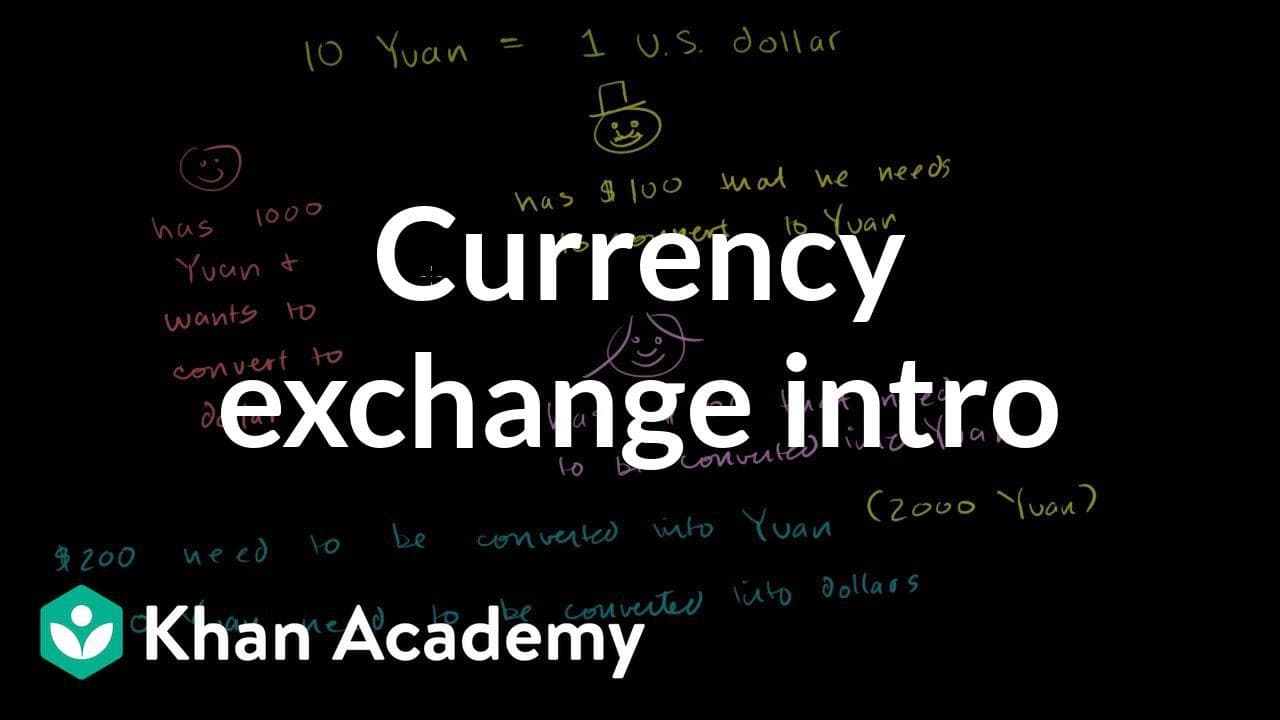
What I want to do in this video is to give you an intuitive sense of how a market for currencies would actually work. And it's very non-inuitive for a lot of people because we're going to be talking about currencies becoming more expensive or cheaper, or the price of a currency in terms of another one. And what I want to do is give you a very intui... Read More
Key Insights
- 💱 Currency exchange rates depend on supply and demand in the market.
- 💱 Changes in economic factors can impact exchange rates.
- 💱 Imbalances in demand for currencies can lead to changes in exchange rates.
- ☠️ The freely floating exchange rate system allows for market-driven determination of exchange rates.
- ☠️ Exchange rates can fluctuate based on various external factors.
- 💱 Demand for one currency and supply of another currency influence exchange rates.
- 💱 Participants in currency markets try to maximize the amount of currency they receive in a conversion.
Install to Summarize YouTube Videos and Get Transcripts
Explore YouTube Video Summarizer or Get YouTube Transcript Extractor
Questions & Answers
Q: How are currency exchange rates determined?
Currency exchange rates are determined based on supply and demand in the market. When there is more demand for a certain currency, its price will increase relative to another currency.
Q: Why do exchange rates change?
Exchange rates can change due to various factors such as changes in economic conditions, interest rates, inflation, and political stability. When these factors fluctuate, it affects the supply and demand for currencies, leading to changes in their exchange rates.
Q: What happens when there is an imbalance between demand for yuan and dollars?
In the scenario described in the video, when there is more demand for yuan than dollars, the price of the dollar decreases relative to the yuan. This means the exchange rate between the two currencies will change, resulting in a higher price for yuan in terms of dollars.
Q: How does the freely floating exchange rate system work?
In a freely floating exchange rate system, exchange rates are determined by market forces of supply and demand. As shown in the video, individuals in the market adjust their offers and bids based on their desired currency conversion, resulting in changes in exchange rates.
Summary & Key Takeaways
-
The video introduces the concept of currency exchange rates, focusing on the Chinese renminbi and the U.S. dollar.
-
It explains how exchange rates are quoted and how individuals convert one currency to another.
-
The video illustrates a scenario where there is an imbalance in demand for yuan and dollars, leading to changes in the exchange rate.
Read in Other Languages (beta)
Share This Summary 📚
Summarize YouTube Videos and Get Video Transcripts with 1-Click
Try YouTube Summary with ChatGPT & Claude or YouTube Transcript Generator
Explore More Summaries from Khan Academy 📚



Summarize YouTube Videos and Get Video Transcripts with 1-Click
Try YouTube Summary with ChatGPT & Claude or YouTube Transcript Generator