Why Falling Asleep is FATAL in War
TL;DR
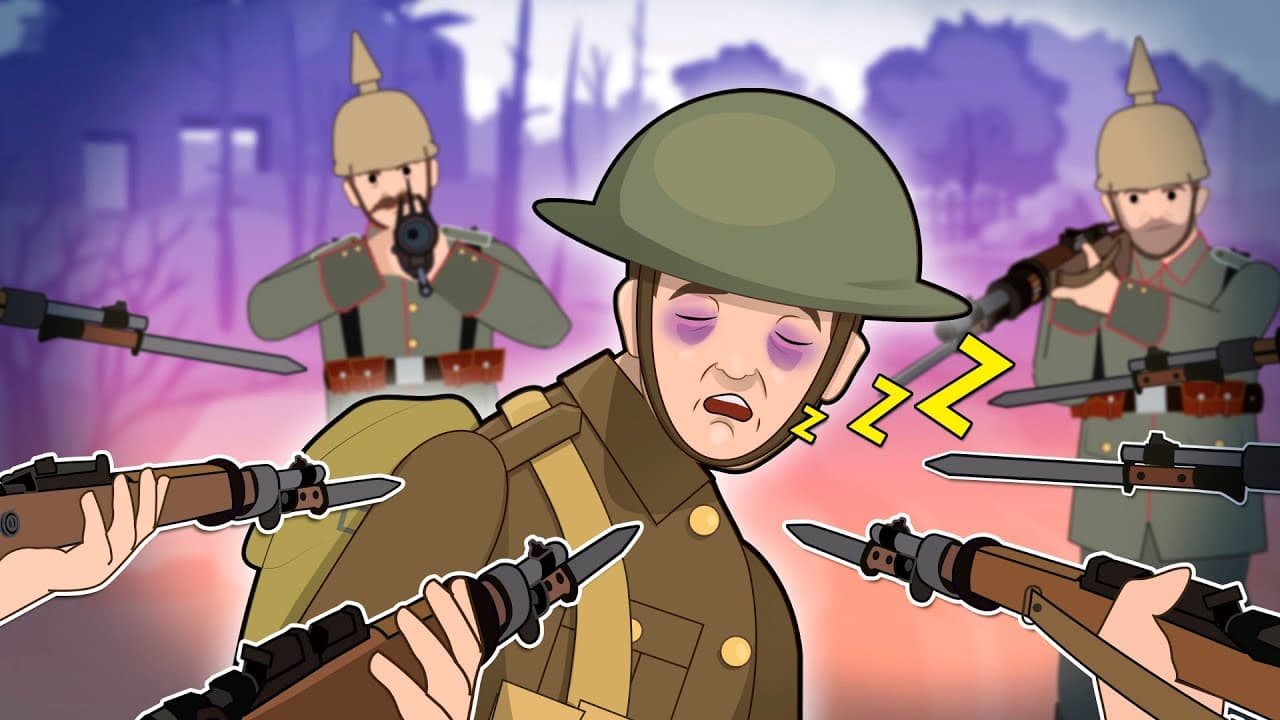
Falling asleep in war can have dire consequences, from endangering oneself and others to facing severe punishment or even death.
Transcript
why you must not fall asleep in war nothing is more closely intertwined with war than extreme sleep deprivation which can have Major Performance and morale sapping effects on the rank and file it's pretty hard to remain enthusiastic on a campaign where your eyelids feel like lead blocks you can get yourself and your buddies killed it's a truth abou... Read More
Key Insights
- 😪 Extreme sleep deprivation can significantly impact the performance and morale of soldiers in war.
- ❤️🔥 Falling asleep on duty can result in fatal consequences, either from enemy attacks or friendly fire.
- 🧡 Throughout history, falling asleep in war has been met with brutal punishments, ranging from execution to public humiliation.
- 🥺 Falling asleep on duty was a significant issue during the Vietnam War, leading to acts of violence against despised officers.
Install to Summarize YouTube Videos and Get Transcripts
Explore YouTube Video Summarizer or Get YouTube Transcript Extractor
Questions & Answers
Q: Why is falling asleep in war so dangerous?
Falling asleep in war can lead to personal endangerment and jeopardize the safety of others. It impairs alertness and increases the risk of being attacked by enemies or friendly fire.
Q: What were the punishments for soldiers who fell asleep on duty in ancient times?
In ancient Greece, General Epikrates famously stabbed a sleeping sentinel to death. The Romans would beat soldiers to a pulp with cudgels and stones. These punishments aimed to deter others from falling asleep.
Q: How were soldiers punished for falling asleep during World War I?
In World War I, soldiers who were caught sleeping on duty at the Battle of Gallipoli were court-martialed and initially sentenced to death. However, many death penalties were later commuted to less severe punishments like field punishment number one.
Q: Did falling asleep on duty continue to be a problem in more recent wars?
Yes, during the Vietnam War, soldiers resorted to "fragging" – tossing live grenades into the tents or quarters of despised senior officers. This phenomenon was fueled by low morale and drug use.
Summary & Key Takeaways
-
Sleep deprivation in war can negatively impact performance and morale, making it difficult to remain enthusiastic and alert.
-
In World War I and II, soldiers who fell asleep on duty often faced grave danger, as they could be attacked by enemy forces or even their own comrades.
-
Throughout history, falling asleep on duty has been met with severe punishments, including execution, beating, and public humiliation.
Read in Other Languages (beta)
Share This Summary 📚
Summarize YouTube Videos and Get Video Transcripts with 1-Click
Try YouTube Summary with ChatGPT & Claude or YouTube Transcript Generator
Explore More Summaries from Simple History 📚

Summarize YouTube Videos and Get Video Transcripts with 1-Click
Try YouTube Summary with ChatGPT & Claude or YouTube Transcript Generator