Now We Can Relight Paintings…and Turns Out, Photos Too! 🎨
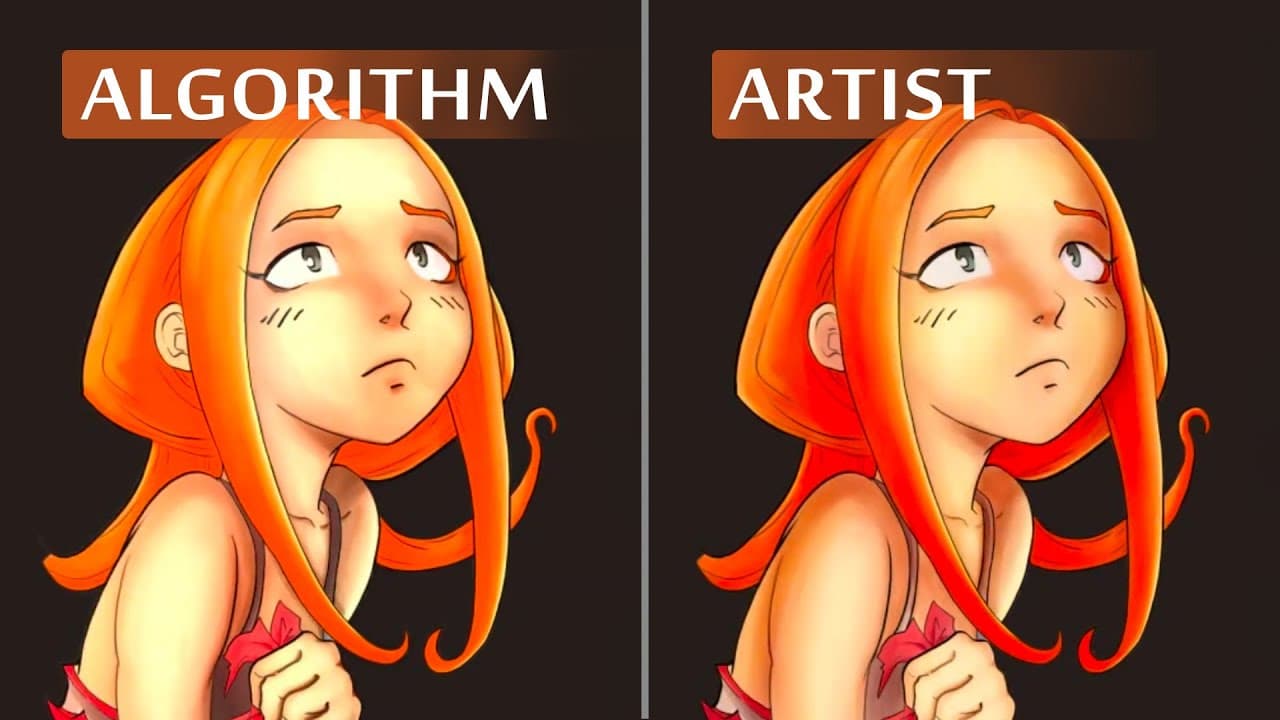
TL;DR
A new algorithm can generate digital lighting effects for paintings and photographs, revolutionizing computer graphics.
Transcript
Dear fellow scholars, this is Two Minute Papers with Dr. Károly Zsolnai-Fehér. When I was a bachelor student and took on my first bigger undertaking in computer graphics in 2011 it was a research project for a feature length movie where the goal was to be able to learn the brush strokes of an artist; you see the sample brush stroke here. And what i... Read More
Key Insights
- 🎰 The algorithm combines machine learning and computer graphics to create digital lighting effects from a single image, whether it is a painting or a photograph.
- 🎒 The algorithm estimates the brush strokes used in the image and applies assumptions about densely packed and sparser regions to create the lighting effects.
- 💋 A comparison with previous works shows that the algorithm outperforms them, marking significant progress in computer graphics research.
- 👤 The algorithm's user study demonstrates its efficiency, generating the lighting effects within seconds.
- 🤗 Weights & Biases' support for the algorithm showcases the usability of their system in tracking deep learning experiments and is available for free to academics and open source projects.
- 🙂 The attention to detail in the paper, such as providing visual diagrams of light source positions, enhances the overall quality of the research.
Install to Summarize YouTube Videos and Get Transcripts
Explore YouTube Video Summarizer or Get YouTube Transcript Extractor
Questions & Answers
Q: How does the algorithm generate digital lighting effects?
The algorithm breaks down an image into individual brush strokes and estimates the differences between the strokes used in the painting and the strokes it generates. By assuming densely packed regions are more impacted by lighting, it can create realistic lighting effects.
Q: Can the algorithm be applied to photographs?
Yes, the algorithm can generate lighting effects from a single photograph by breaking it down into brush strokes and applying the same assumptions about densely packed and sparser regions. The results are impressive and comparable to previous works.
Q: How long does it take for the algorithm to generate the lighting effects?
The algorithm can generate the lighting effects within a matter of seconds, as shown in the provided user study. This fast generation time makes it highly practical for various applications.
Q: Can the algorithm be used for free?
Weights & Biases, the organization that created the algorithm, offers their tools for free to academics and open source projects. Their platform is lauded for its usability and is used by prestigious labs such as OpenAI and Toyota Research.
Summary & Key Takeaways
-
The algorithm breaks down an image into individual brush strokes and estimates their differences, allowing for realistic lighting effects.
-
Densely packed regions of brush strokes are more impacted by lighting effects, while sparser regions are less affected.
-
An artist's manual creation of the brush strokes confirms the algorithm's effectiveness, even when applied to photographs.
Read in Other Languages (beta)
Share This Summary 📚
Summarize YouTube Videos and Get Video Transcripts with 1-Click
Try YouTube Summary with ChatGPT & Claude or YouTube Transcript Generator
Explore More Summaries from Two Minute Papers 📚
Summarize YouTube Videos and Get Video Transcripts with 1-Click
Try YouTube Summary with ChatGPT & Claude or YouTube Transcript Generator